Intro:
First, apologies for the lack of updates over the past two months. Things have been busy, and I have a sizable backlog of comments and messages to get through… I will.
In the meantime, something I have been waiting for finally arrived, and I don’t want to sit on this one for too long.
The Hongshu EH-1 V4 may be new to many, but the EH-1 is not new to me. I bought a V2 more than two years ago, back when it was still sold under the Halo Acoustics name, and liked it almost immediately: mature tuning, a design that made sense, and exceptional value for an electrostatic system. But I did not review it, because early units had a mixed reliability reputation, like channel imbalance and intermittent noise issues. That is not something a few weeks of listening can rule out.
Two years later, my V2 is still working perfectly. Hongshu has since renamed the brand and revised the EH-1 several times, and describes V4 as its first formal production version intended for international distribution, with stability among the areas it focused on. My V4 has been faultless over several weeks. Two samples cannot establish anything about reliability across production, but this is the point at which I am comfortable reviewing it.
Sound-wise, it was worth the wait. The EH-1 V4 is one of the most competitive electrostatic systems I have heard anywhere near this price.
Disclaimer: Both the EH-1 V2 and V4 used for this review were purchased by me. This review is not sponsored, and there are no affiliate links.
Pros:
+ Excellent overall tuning, especially with Bass Boost on
+ Outstanding clarity and natural, open staging
+ Lightweight, comfortable, and pad-swap friendly
+ Excellent value for money; comes with a decent energiser
Cons:
– Stock pads have some upper-mids forwardness
– Mild treble emphasis
– Softer dynamism than DD and planar alternatives
Specs:
RRP: $650 USD / ~$840AUD
Design: open-back, over-ear
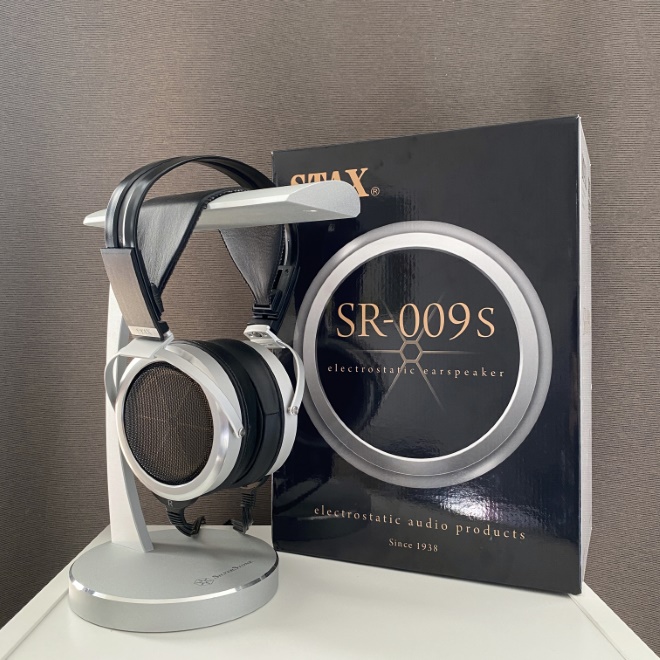
Driver: 100mm (80mm effective approx.) circular electrostatic, 580 V Pro Bias
Capacitance: 100 pF including cable
Sensitivity: 102 dB / 100 Vrms @ 1 kHz
Cable: 1.8 m detachable
Connector: EC-1 electrostatic 5-pin (Stax compatible)
Weight: 295 grams, excluding cable
Clamping force: medium
Accessories:
EHA-1 amplifier
– 12 V DC input, 580 V bias, RCA input
– features include Bass Boost, L/R balance adjustment
– 110 × 120 × 38 mm chassis
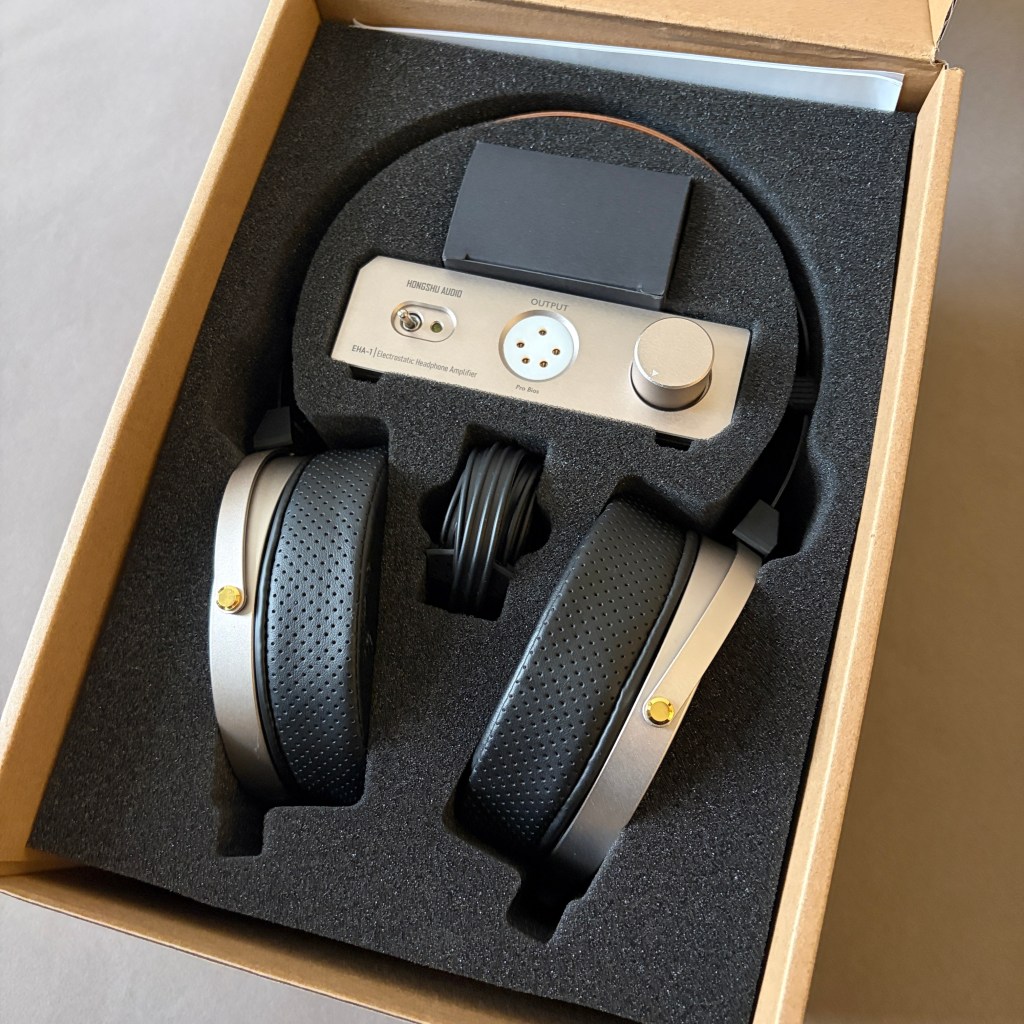
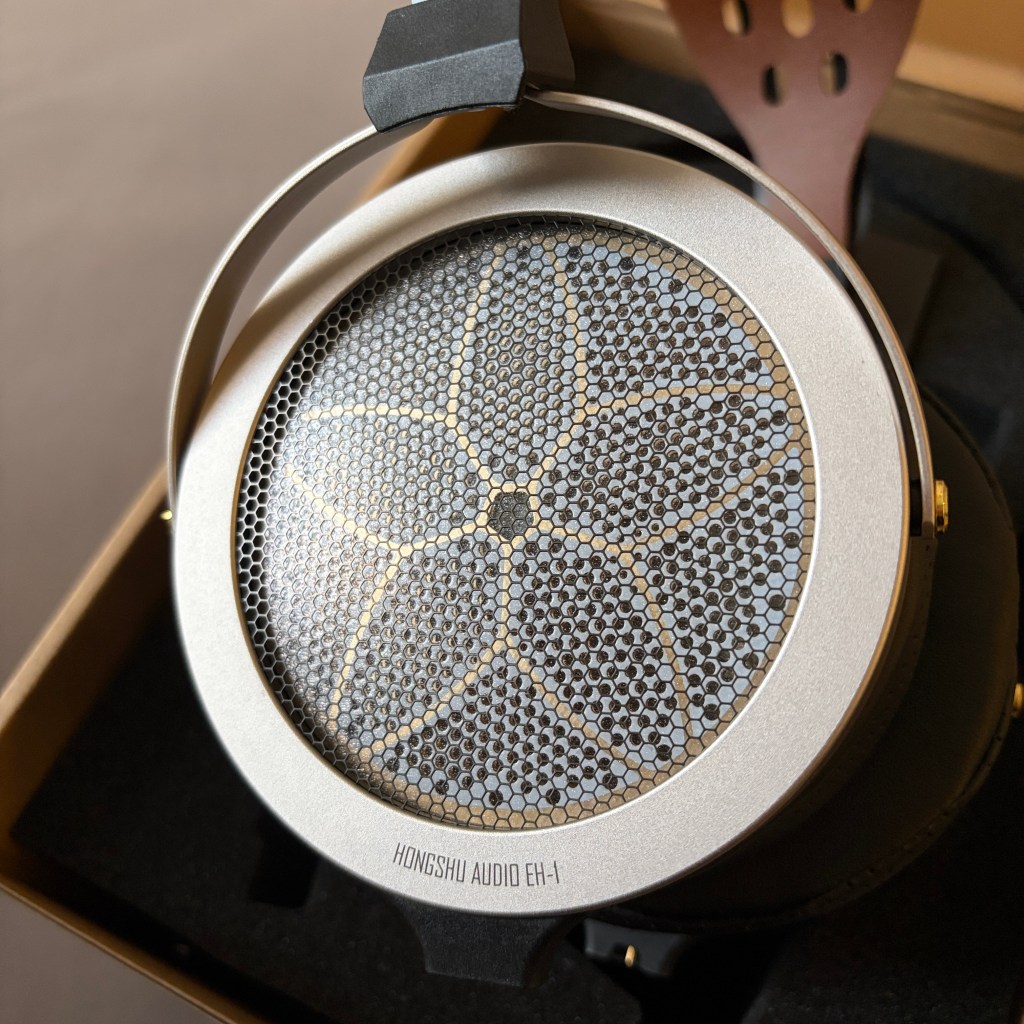
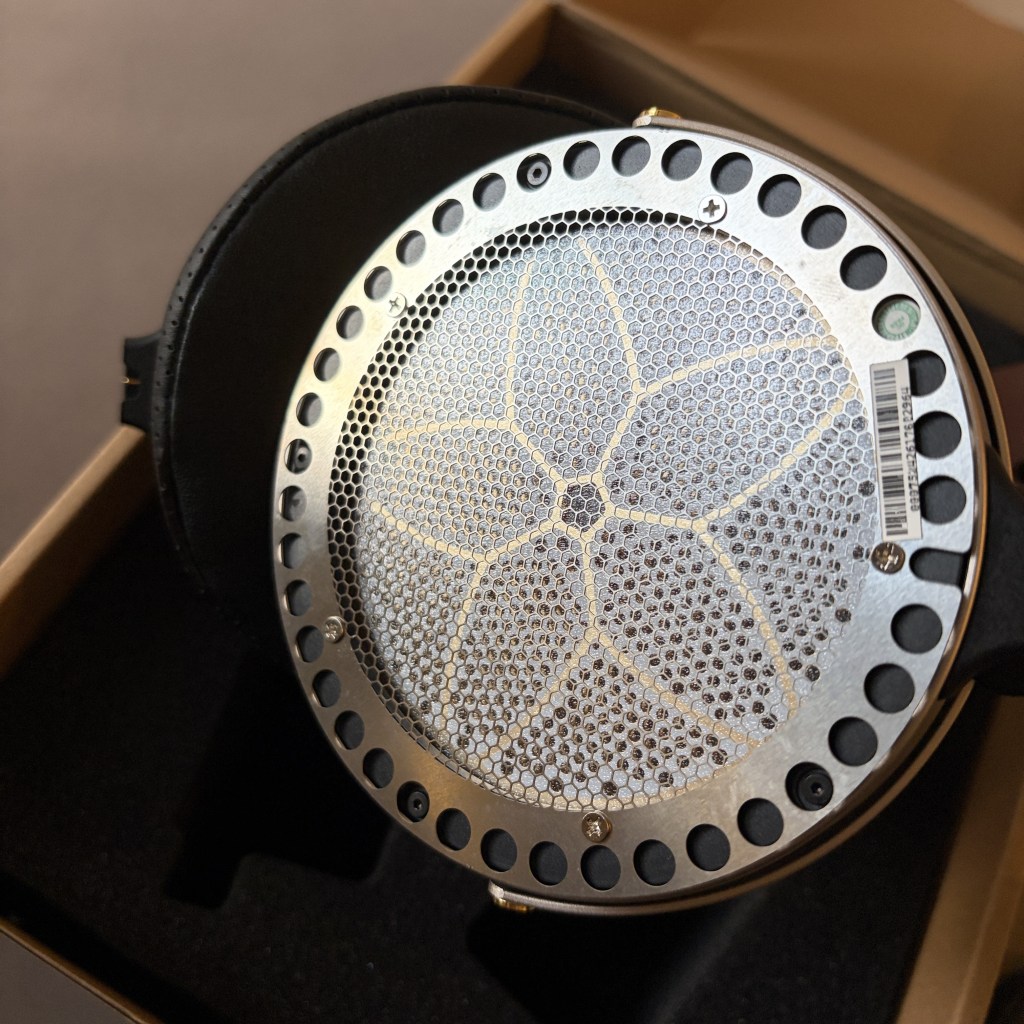
The pads use a simple slip-on mounting system, sliding around the metal rim of the earcup (right).
Build and Comfort:
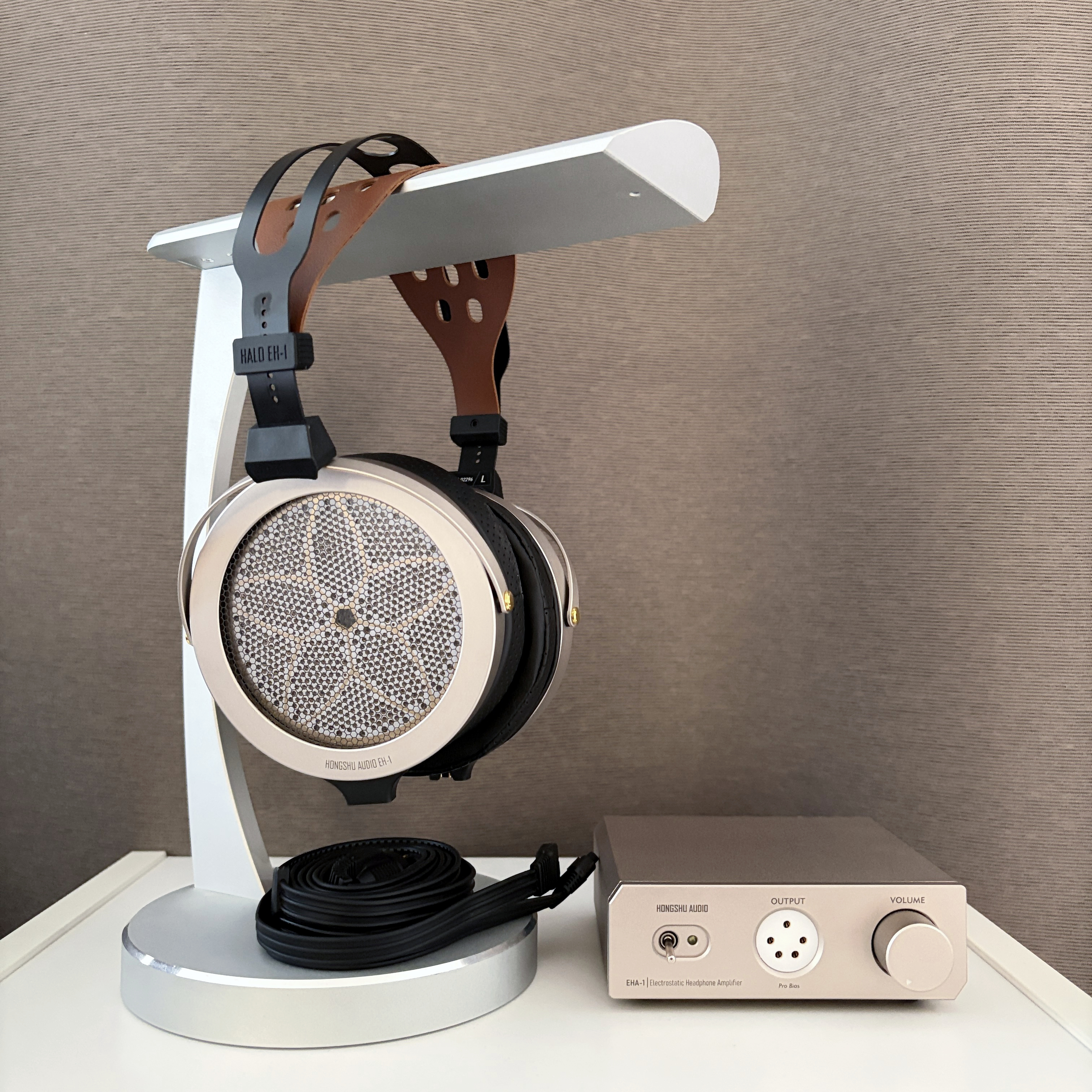
The EH-1 is simple and lightweight: large circular housings, a metal headband, suspension strap and, on V4, a detachable cable. At just 295 grams without the cable, it is exceptionally light for a full-sized headphone. There are some usage of 3D-printed parts, but the build feels decent overall.
Comfort is excellent. Weight distribution is good, the pads are spacious, and I can wear it for long sessions without hotspots. V4 clamps more firmly than my V2, which I prefer, although very large heads may find it slightly tight.
My only real complaint is the headband adjustment. There are relatively few positions and the mechanism does not lock particularly firmly, so it can occasionally slip while handling the headphone. Otherwise, the construction feels straightforward and reasonably solid.
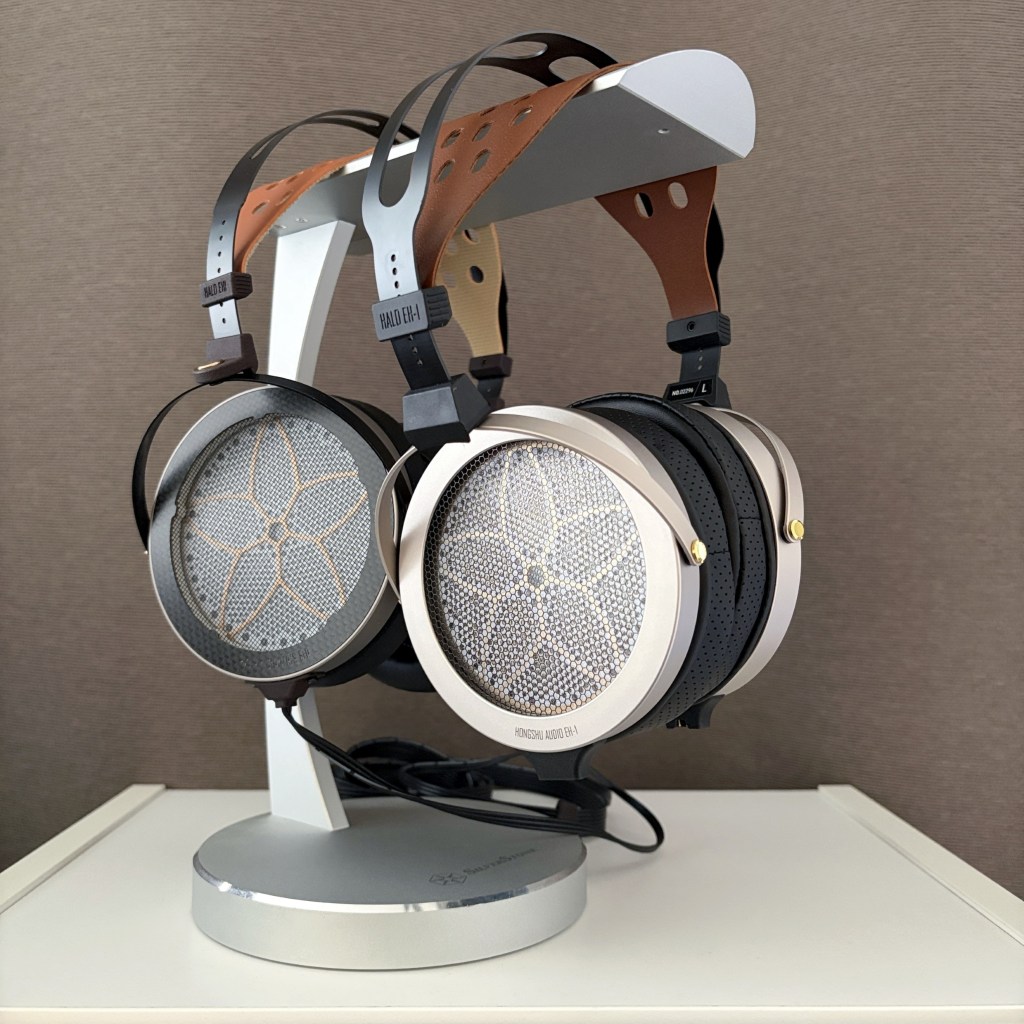
Build and look, side by side with the V2.
The included energiser, EHA-1
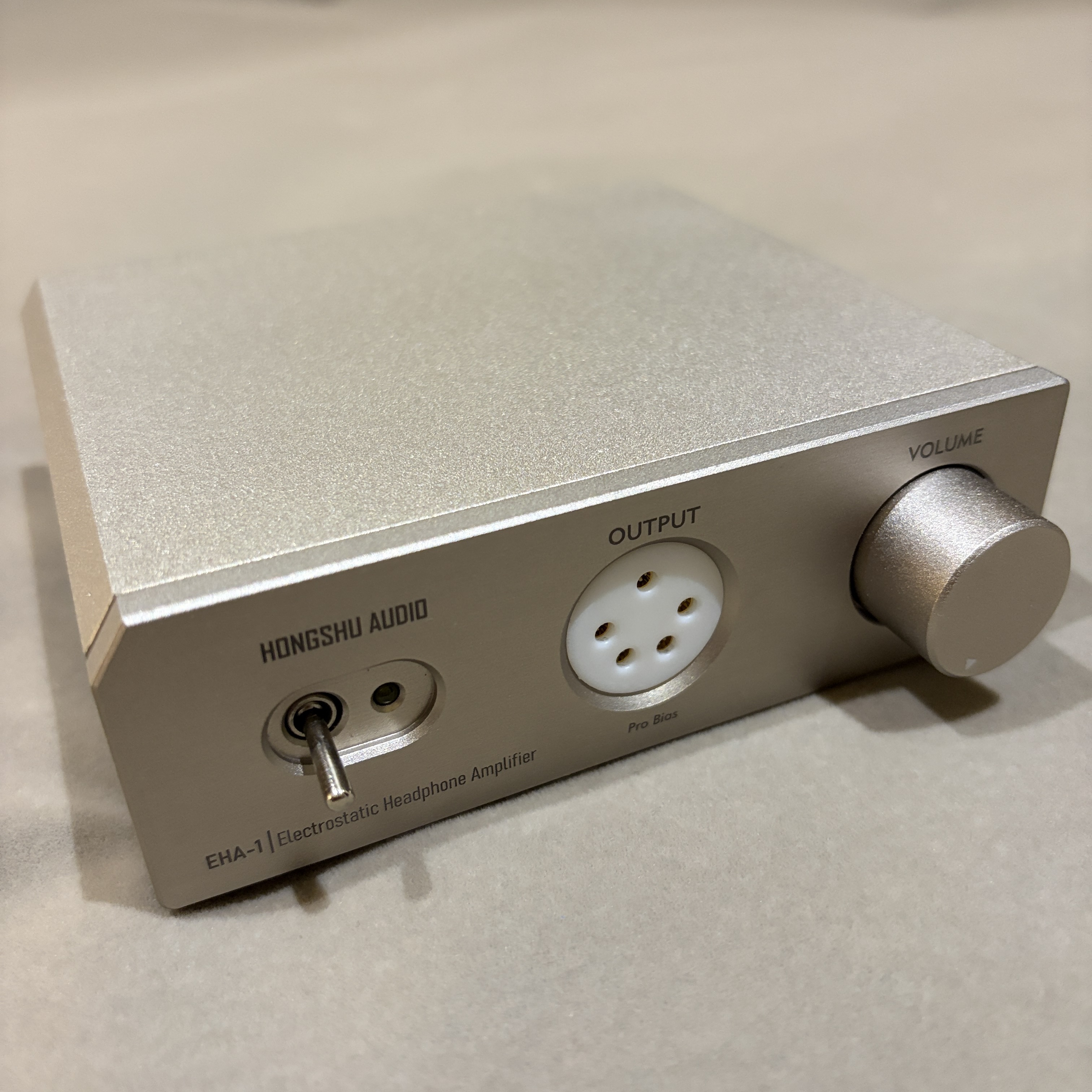
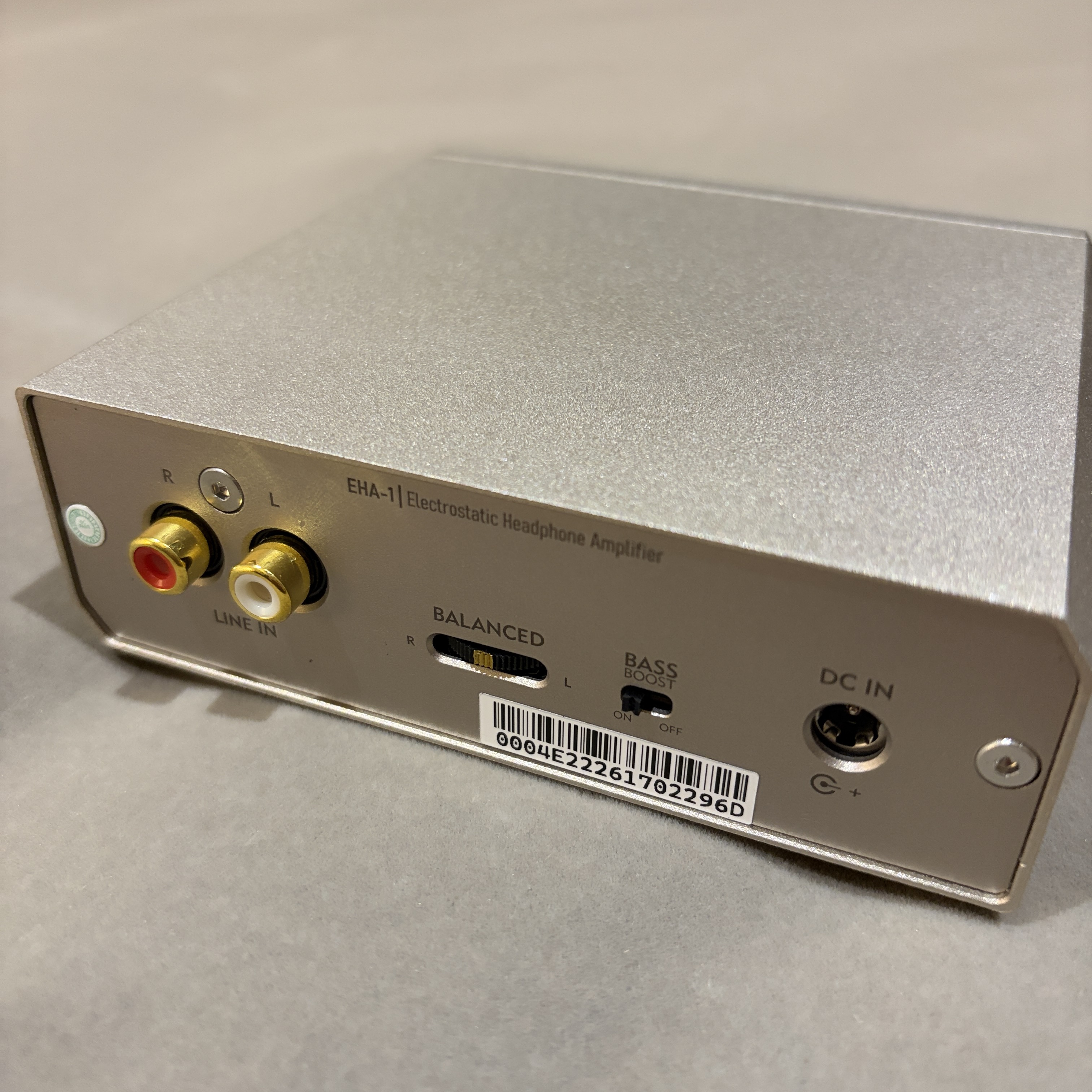
The V4 bundle includes the revised EHA-1 Pro, now simply called the EHA-1 in Hongshu’s international material. It is tiny next to a typical Stax energiser, but functionally there is little to complain about.
My unit has no audible hum or noise floor, it has adjustable channel balance, and measured frequency response is flat without the Bass Boost fucntion engaged. Hongshu rates it at 300 Vrms maximum output at 1 kHz and 1% THD, versus 400 Vrms for the Stax SRM-353X.
In normal listening, I do not hear an obvious quality penalty from the EHA-1 at my usual levels, although at very high volumes the SRM-353X maintains better control in the treble. For the EH-1 itself, the supplied energiser is more than adequate. More importantly, its Bass Boost is very well designed, which makes it a major part of the headphone’s tuning.
Sound
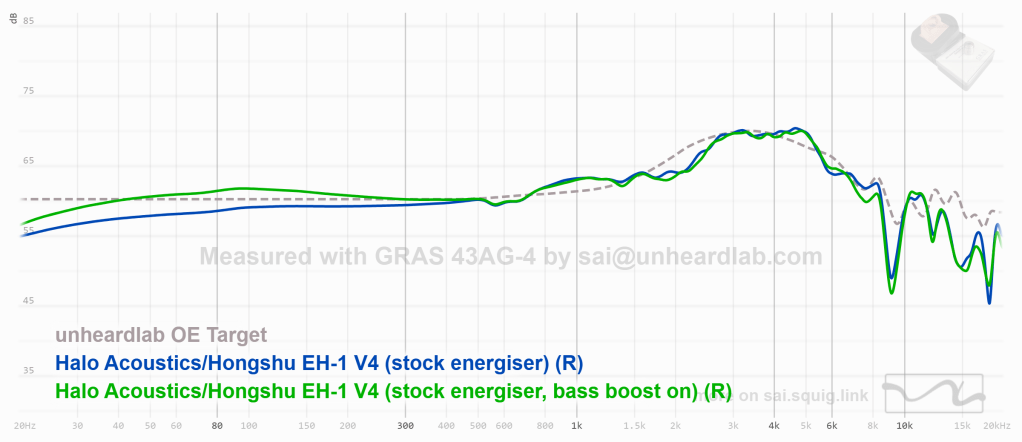
For more comparisons, visit my squiglink database.
Overall impression
Balanced is the first word that comes to mind.
This is somewhat uncommon among electrostatic headphones. Many estats sound excellent in individual areas while carrying some obvious tonal eccentricity: too little bass, too much upper midrange, a sharp brilliance peak, or some combination of the above. The EH-1 V4 is not like that.
With the EHA-1’s Bass Boost engaged, its broad tonal balance is remarkably conventional. I would even put it in the same league as the Sennheiser HD6X0 family: neutral through the mids, enough bass weight to avoid sounding thin, and a clean treble without obvious upper-treble spikes. Out of the box the balance is still decent, but it tilts forward through the mids and slightly bright up top.
That makes it an unusually safe first electrostatic. You are not buying a specific flavour of sound and hoping you like it.
Bass
Bass quantity is the weakest part of the EH-1, at least with Bass Boost switched off. Quality was never the question. Bass is fast, clean and well controlled, but it is a bit lean in quantity terms. Among estats, the bass performance here is decent, even class-leading in its own price category; but among headphones in general, it is not its strength.
The reason is structural rather than a tuning choice. To hold the same SPL as frequency falls, a driver has to move rapidly increasing amounts of air, and a tightly tensioned electrostatic diaphragm has relatively little excursion available. Almost every electrostatic has leaner bass compared to planars for the same reason, and the EH-1 is no exception.
What the driver does have is headroom. The 84 dB and 104 dB compression sweeps overlap almost exactly, so there is no excursion limit waiting to be hit and no penalty for adding level down low. That is a large part of why the EHA-1’s Bass Boost works as well as it does.
And it is well judged. The boost is far broader than a typical sub-bass shelf, beginning below roughly 500 Hz and reaching around +3 dB near 80-100 Hz. It restores the whole bass and lower-mid foundation rather than simply adding rumble, which is the correct shape for the problem. An electrostatic does not need sub-bass so much as it needs body.
With Bass Boost on, bass quantity is no longer an issue. It is not a bass-forward headphone and never will be, but it stops being a compromise you have to accept. I would happily take another couple of decibels below 40 Hz, but that is largely a preference rather than a shortfall.
Midrange
The EH-1’s midrange is fundamentally excellent. What you hear out of the box has a mild colouration, but it comes from the pads rather than the driver.
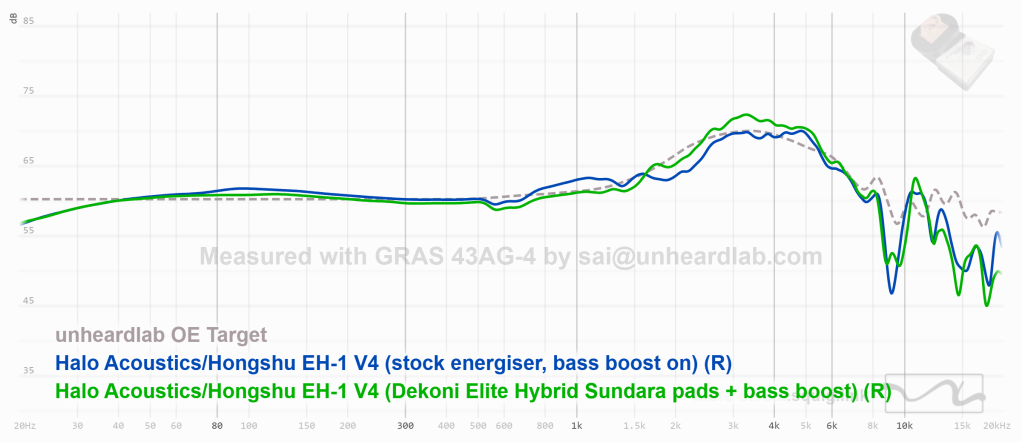
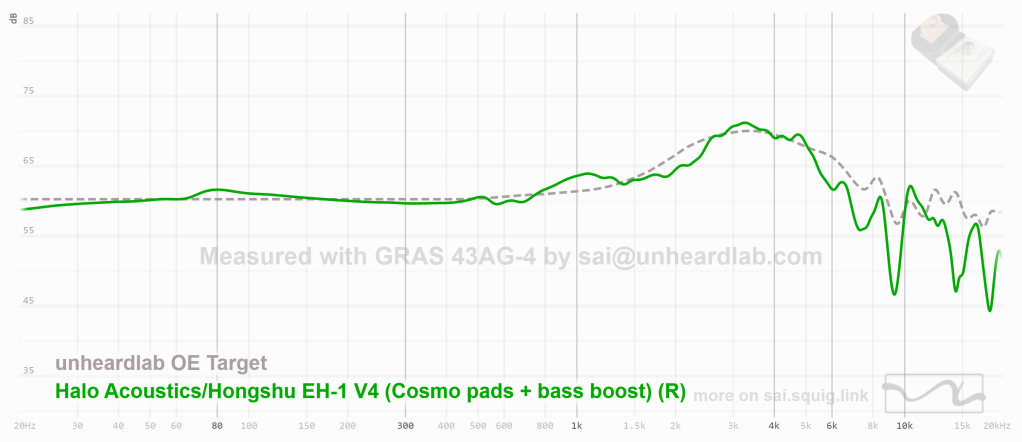
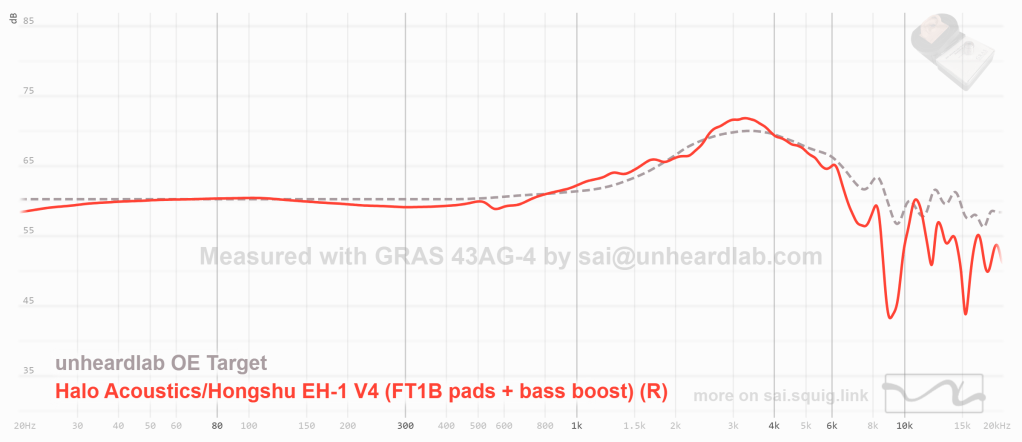
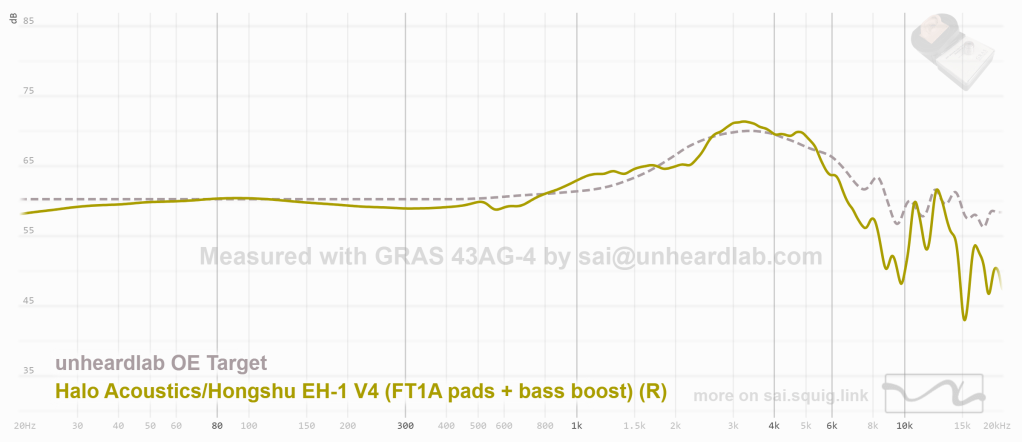
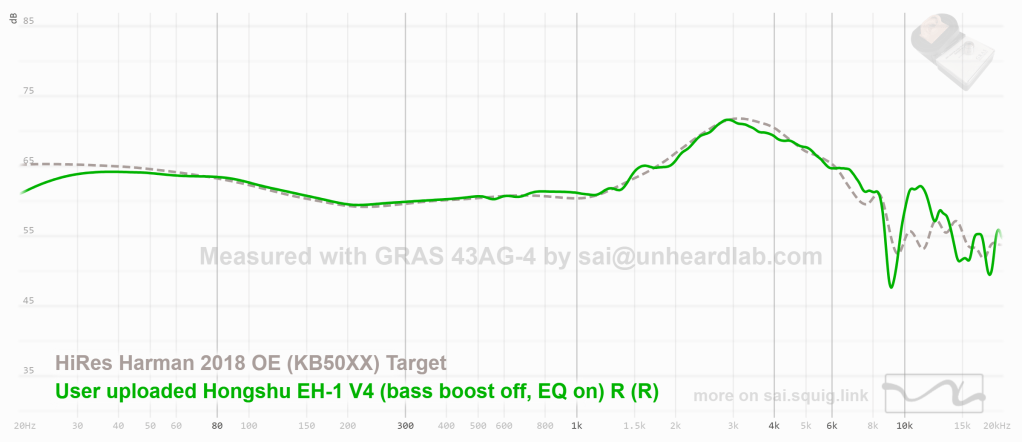
With the stock V4 pads there is a mild 1 kHz hump, and it does show up in listening. Vocals sit a little forward in the mix, with slightly more nasal resonance than they should have. Piano picks up some extra glare, and the harder attacks can sound a touch clanky. Snare drums come with extra crack off the top of the hit. Timbre is not meaningfully distorted, it is just tinted, and the effect is consistent enough that you likely stop noticing it after a while.
Whether that matters depends on what you want from the headphone. For general listening it is a colouration, not a fault, and most people will likey read it as vocals being present and forward. But if you want the EH-1 as a reference, it is worth fixing, which is easy with just a pad swap: a more breathable perforated, hybrid or velour pad and the midrange goes essentially flat.
So the short version: the underlying midrange is reference-grade. Stock, it is very good with a slight forward tint. With the right pads, it is exceptionally neutral, clean and natural.
Treble
Treble is one of the EH-1’s stronger qualities. It combines a mild mid-treble emphasis with smooth upper-treble extension, giving the headphone clarity and air without making brightness the centre of attention.
There is a small mid-treble emphasis around 5-7kHz, adding a little extra breathiness and edge. Cymbals and consonants can sound slightly sharper or more forward than neutral, but I would not describe the EH-1 as harsh. The effect is noticeable mainly on brighter recordings or at higher listening levels.
The upper treble is better controlled than on many planar and electrostatic headphones. There are no obvious brilliance-region spikes dominating the presentation, and extension sounds smooth and well integrated. At the same time, the EH-1 does not produce the spectacularly airy, glittery presentation associated with some electrostatics. It has plenty of air and clarity, but does not exaggerate either.
For a sense of where it sits, the treble level here is well short of an Arya Stealth. If treble level is what usually stops you buying a headphone, the EH-1 is not going to be the one that catches you out, despite being an estats.
V2 versus V4
The V2 and V4 sound more similar than different. V2 has slightly more bass and fullness, while V4 sounds tighter, cleaner and more linear through the mids and lower treble. The differences are small, and both remain broadly comparable in overall technical performance. The biggest difference is that the V2 fits significantly looser on the head. Given Hongshu’s focus on improving stability with V4, I would buy the current version.
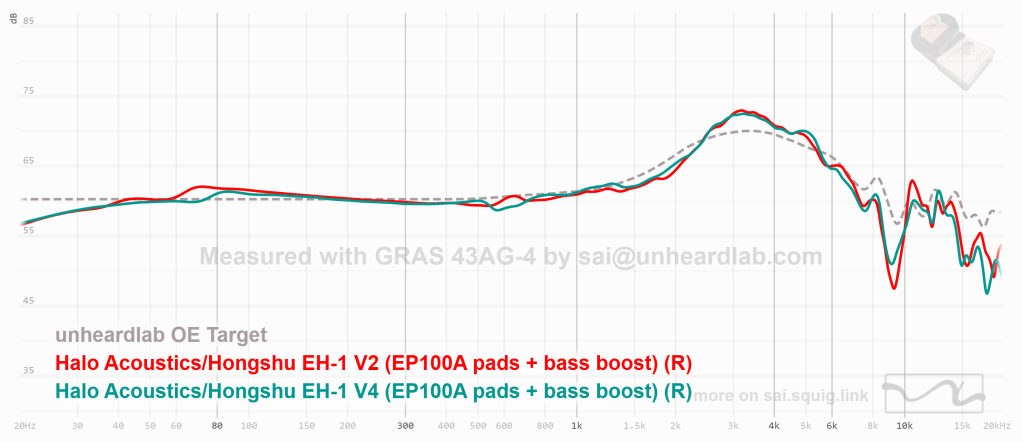
with the exact same ear pad, the differences become much more nuanced
Other impressions:
Spatial presentation
Soundstage is very good. The EH-1 sounds large, open and transparent, although it does not create the artificial impression that everything has been stretched away from your head.
Width is generous, depth is convincing, and recordings with room information come across naturally. This is one of those cases where “open” describes the presentation better than simply “wide”. The sense of space also feels significantly more natural than on the Koss ESP/95X or the Stax SR-L500, which can sound comparatively closed-in.
Imaging is good, although it is not one of the EH-1’s standout qualities. Individual elements are reasonably easy to locate, but they do not always lock into sharply defined objects. I find this fairly common with large planar and electrostatic drivers.
The overall performance is around the level I would expect from a good mid-tier planar such as the Hifiman HE600: clear and spacious, with respectable positioning, although not an imaging specialist.
Clarity
Clarity is excellent, and this is where the EH-1 clearly moves beyond conventional mid-fi dynamics such as the Sennheiser HD490 Pro or the Focal Clear. Low-level information through the midrange and treble is particularly easy to hear. Because the frequency response is relatively smooth, the headphone rarely creates the impression of detail through narrow treble peaks.
The main limitation appears at the very top end. The EH-1 does not quite produce the extremely fine upper-treble texture, air and nuance like with flagship electrostatics such as the Stax SR-009. That distinction matters because “bright” and “resolving” are often confused. The EH-1 is resolving without being especially showy about it, which is a very good place to be at this price.
Dynamics
Dynamics are average by the standards of headphones overall, but quite decent by electrostatic standards. Macro impact is clearly better than the Koss ESP/95X, and I also find the EH-1 more convincing than the Stax SR-X1 and SR-L500, even though the SR-X1 can subjectively carry a little more low-frequency quantity. There is enough contrast for music to feel alive, and transients arrive cleanly without sounding overdamped.
Still, this is not where I would choose the EH-1 over a strong dynamic or planar headphone. The SR-007 produces considerably more physical slam and weight, while the SR-009 is better at small gradations. Dynamic headphones like the Focal Clear and planars like the Hifiman HE6se remain more convincing if visceral impact is the priority. Within electrostatics it sits above the mid-fi cans and below the flagships.
Conclusion:
At $649 USD / ~$840 AUD for the headphone and energiser combo, the Hongshu EH-1 V4 is one of the easiest headphones to recommend.
The value is exceptional, and the low price does not come from the EH-1 being a novelty that merely demonstrates what an electrostatic driver sounds like, which is how I read the Stax SR-X1.
The midrange is neutral and clean, treble is unusually smooth for estats, clarity is excellent, staging is large and natural. The supplied energiser is transparent enough for normal listening, and its Bass Boost addresses exactly the region where this type of headphone needs. A few more decibels down low would be even better, but that is a minor quibble.
The shortcomings are real but small. The stock pads have a slight forwardness through the upper mids that a pad swap can remove. There is a mild 5-7 kHz lift. Dynamics are competent for an electrostatic rather than impressive in absolute terms, and the energiser loses some treble composure if you push the volume hard. None of it changes the recommendation.
The only caveat worth taking seriously is still reliability, which is why I waited over two years to write this. But my V2 has been stable throughout and my V4 has been faultless so far. Hongshu describes V4 as its mature production version. For a relatively new brand, only time and volume will show whether that holds.
Everything considered, this is where I would now send anyone curious about full-sized electrostatics. It is also good enough that I would not treat an upgrade as urgent until you are looking at Stax SR-L700 MK2 territory and above, which is several times the money before you have bought an amplifier.
Value Grade:
If there are other comparisons you would like to see, let me know in the comments.
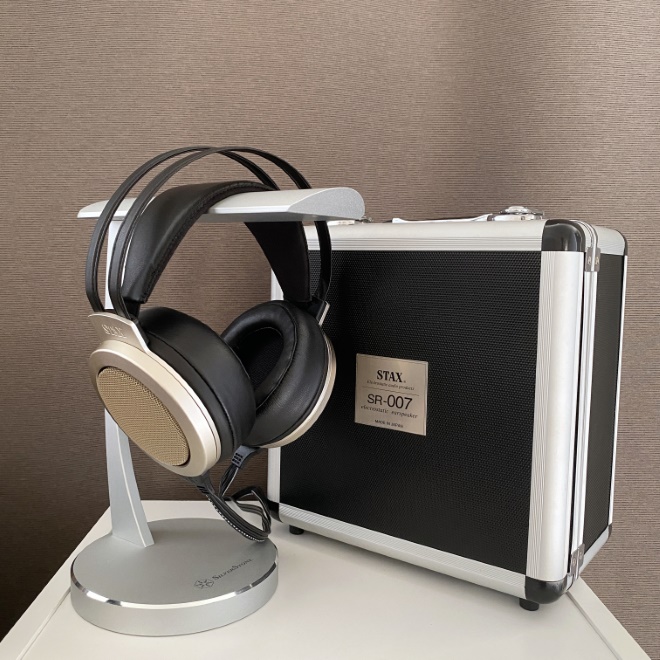
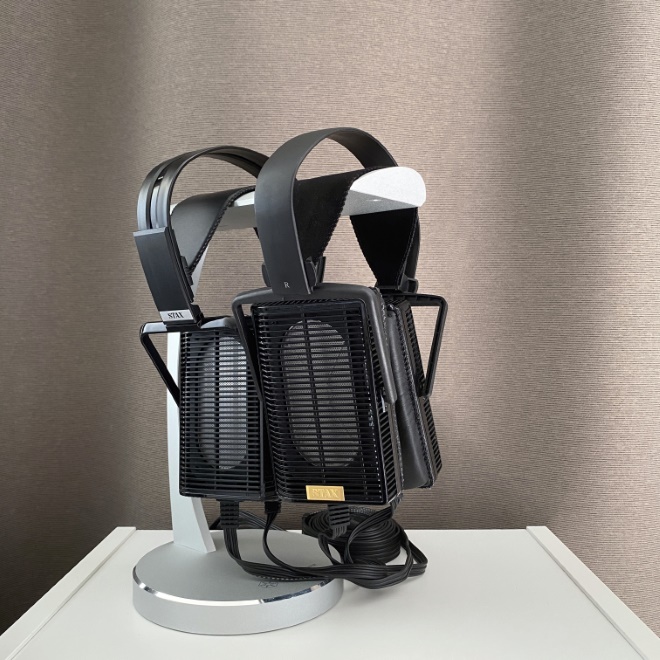
Ear pads and pad rolling
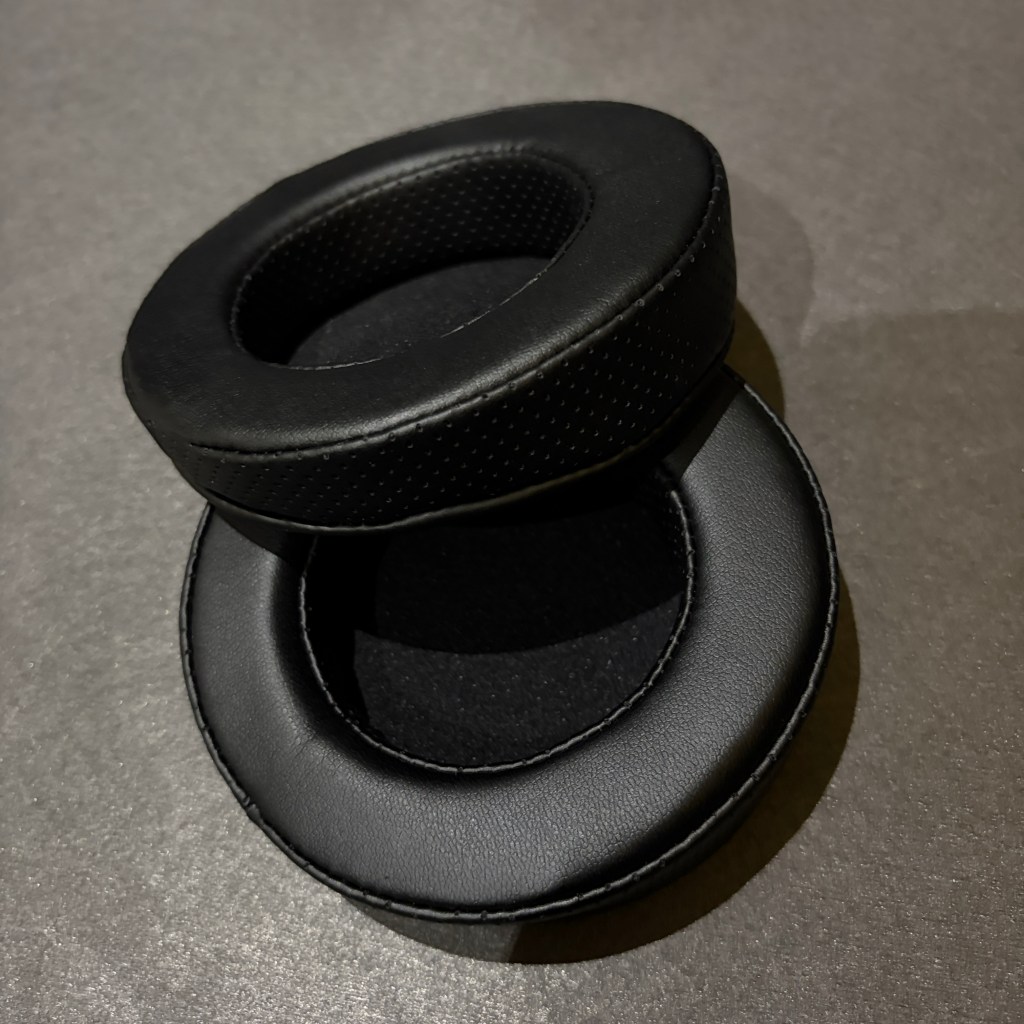
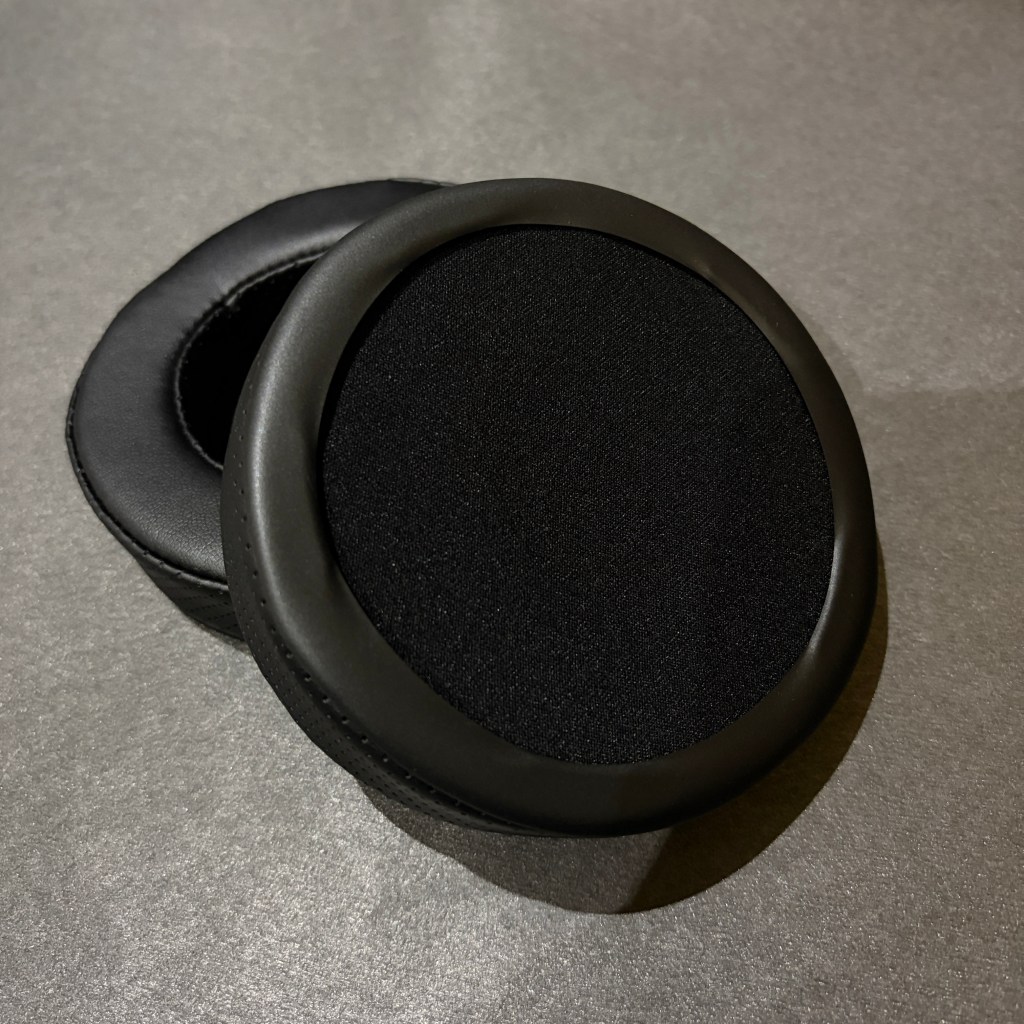
The EH-1’s tuning is very sensitive to pad choice, as with most headphones.
The stock V4 pads are lightly micro-perforated synthetic leather. They contribute to the mild 1kHz hump mentioned above. Moving to a slightly more breathable pad, such as a more heavily perforated leather, hybrid or velour design, can flatten the midrange almost completely and reduce the slightly nasal or forward character of vocals.
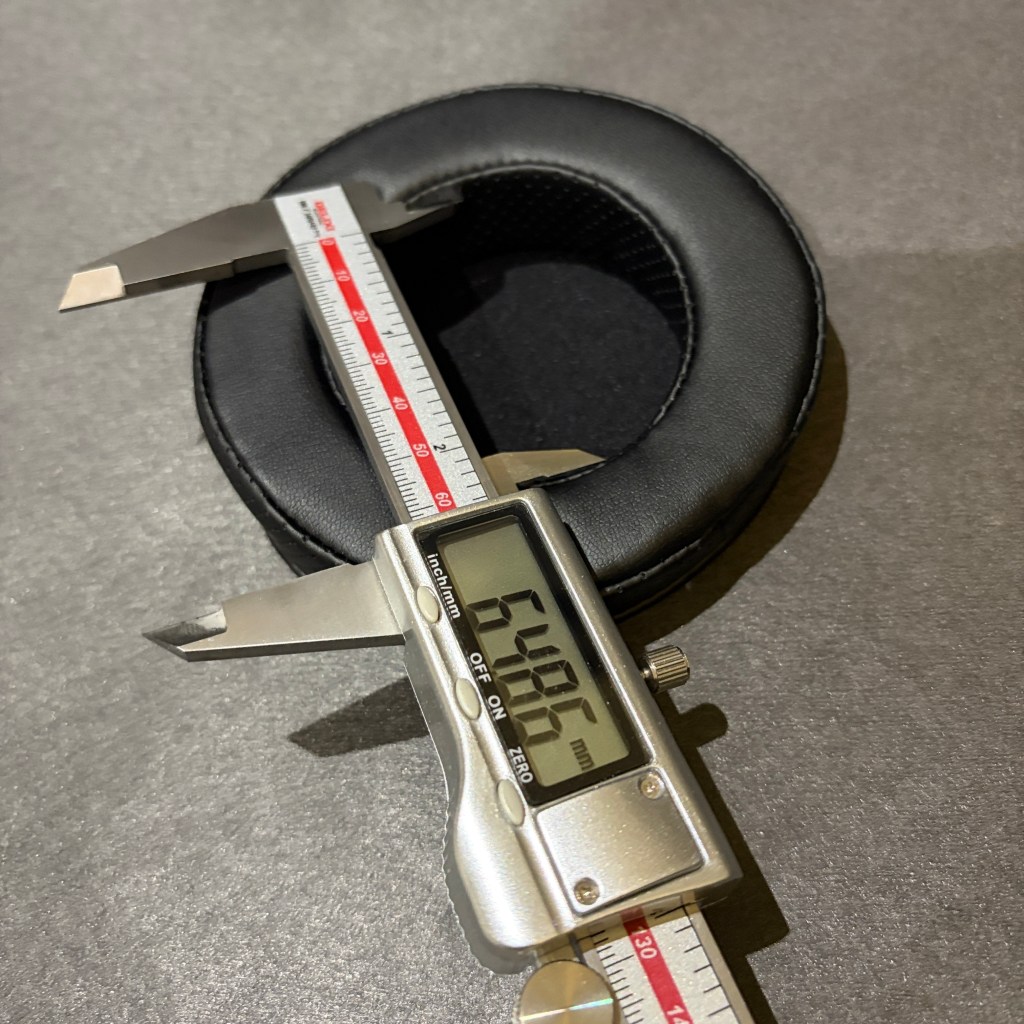
The fit mechanism is very easy to work with. Hongshu also uses a simple elastic-lip mounting system, and many generic 100-110 mm pads fit well. That gives the EH-1 considerably more tuning flexibility. If you want the most neutral response possible, pad rolling is well worth trying.

Recommended EQ setting
Copy and paste the below into a TXT file, then import it to EqualizerAPO or similar apps. It is advisable to adjust the bass and treble filters to your own taste (i.e. below 300Hz and above 3kHz):
Preamp: -7.3 dB
Filter 1: ON PK Fc 28 Hz Gain 7.0 dB Q 0.500
Filter 2: ON PK Fc 74 Hz Gain 1.5 dB Q 1.000
Filter 3: ON PK Fc 210 Hz Gain -1.0 dB Q 2.000
Filter 4: ON PK Fc 600 Hz Gain 1.0 dB Q 2.500
Filter 5: ON PK Fc 1100 Hz Gain -3.5 dB Q 2.000
Filter 6: ON PK Fc 2300 Hz Gain 3.0 dB Q 1.500
Filter 7: ON PK Fc 5000 Hz Gain -3.0 dB Q 3.000
Filter 8: ON PK Fc 16500 Hz Gain 2.0 dB Q 2.500
If your goal is to EQ the response to match the Harman Target, consider the AutoEQ function provided by Squiglink as a convenient starting point. I personally recommend customising the filters to better suit your own hearing, especially in the treble. While the AutoEQ provides a useful baseline, individual adjustments can often significantly improve your listening experience.
If you’re new to EQ, I’d recommend checking out this video by Resolve from The Headphone Show — it’s a really solid intro and walks through the basics in a clear, no-nonsense way. Great place to start!
Measurements
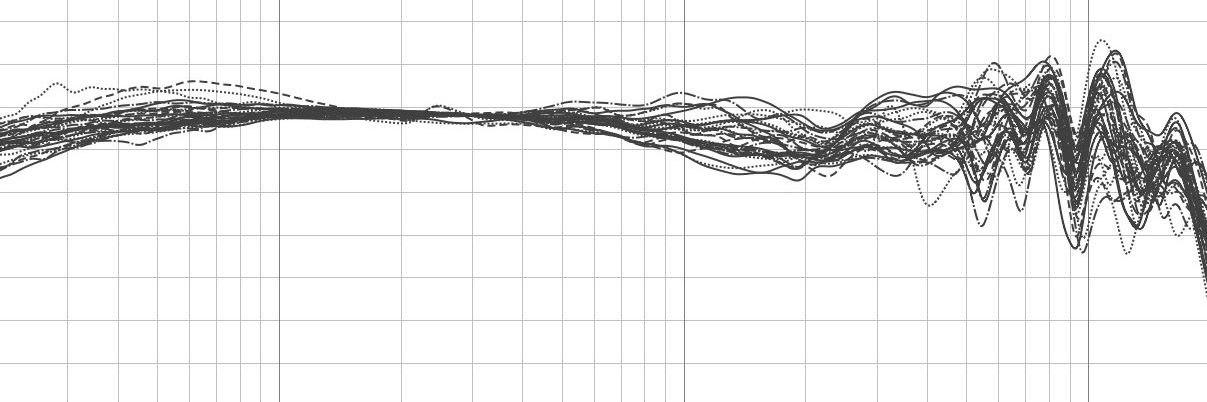
Frequency Response:
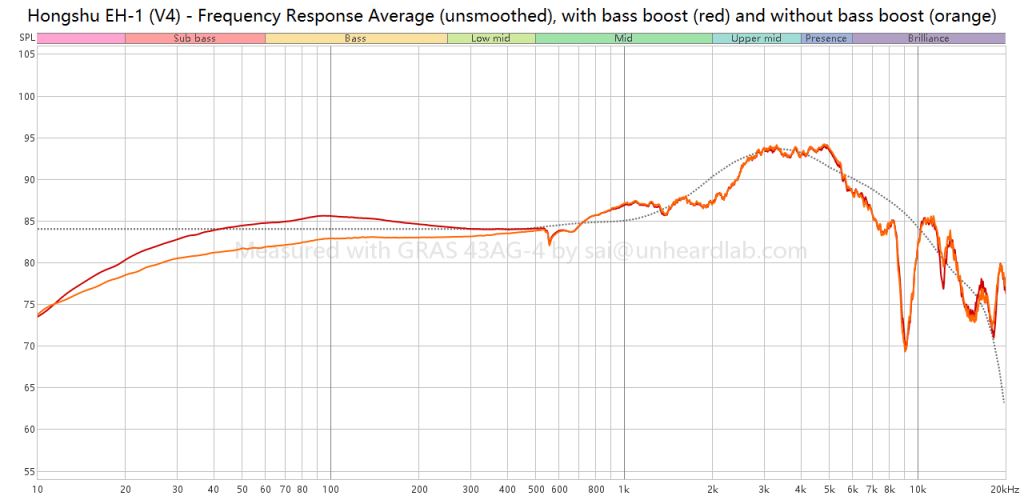
The response is obtained by an average of 5-6 positional variations. The FR shown on the graph is unsmoothed.
Comment: Broadly balanced with Bass Boost engaged. The main deviations are a mild ~1 kHz hump and modest 5–7 kHz emphasis; upper treble is comparatively smooth.
Positional Variation:

This graph illustrates how headphone placement on the head affects perceived tonal balance: with the ear positioned at the front (blue), centre (green), and back (red) of the headphone. The FRs shown on the graph are 1/24 octave smoothed.
Comment: Positional variation is generally well controlled, with most differences confined to the treble above 7kHz.
Leakage Tolerance:
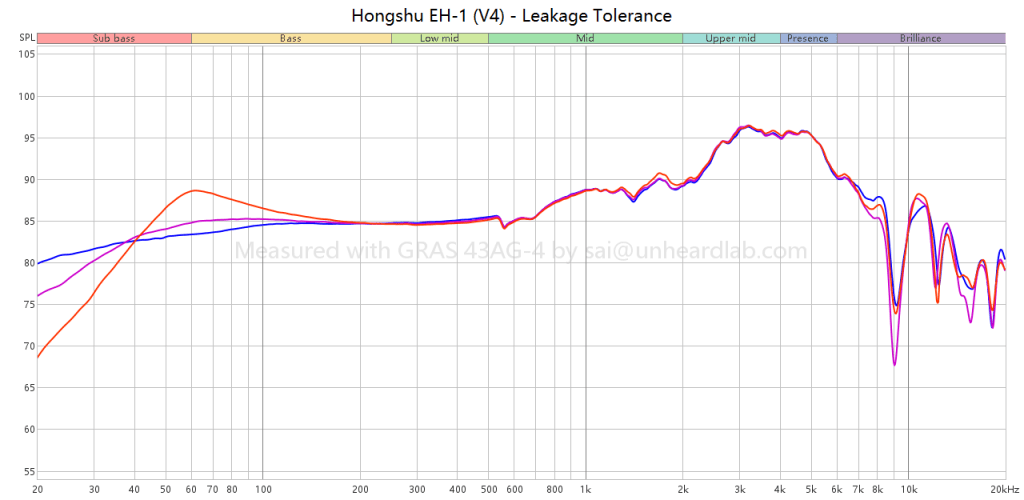
This graph demonstrates how leakages to the front volume can result in FR change: blue (good seal), purple (thin arm glasses), red (thick arm glasses). The FRs shown on the graph are 1/12 octave smoothed.
Comment: As expected for an open, high Fs design, seal loss affects the bass noticeably.
Linearity and Compression:
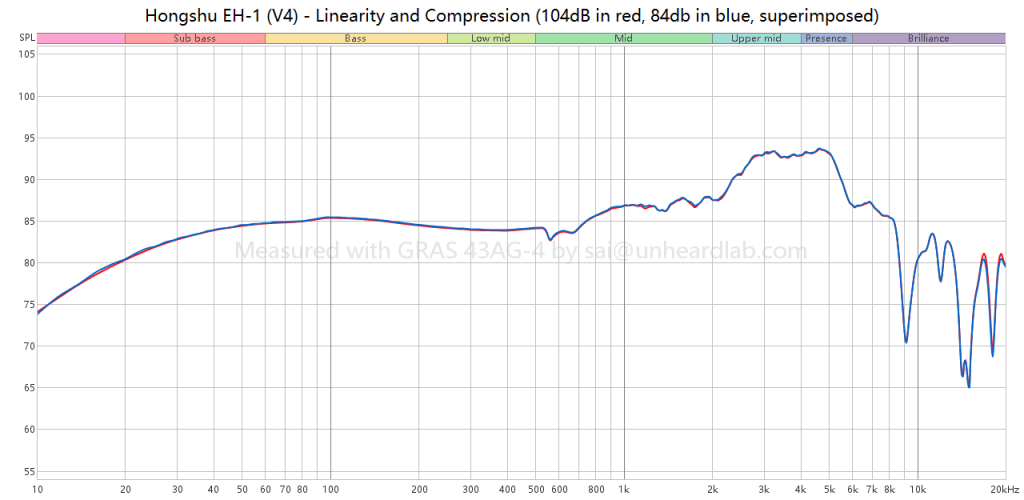
Linearity and dynamic compression testing plots the headphone’s frequency response at two input levels to show how it reproduces signals as loudness changes. Any divergence between the high-level and low-level curves points to where the transducer’s dynamic range begins to compress or distort. Here, the measurements are superimposed to allow direct comparison. The FRs shown on the graph are 1/6 octave smoothed.
Comment: Excellent linearity. The 84 dB and 104 dB responses essentially overlap, with no meaningful compression visible at very high SPL, even at 10Hz(!).
Impulse Response:
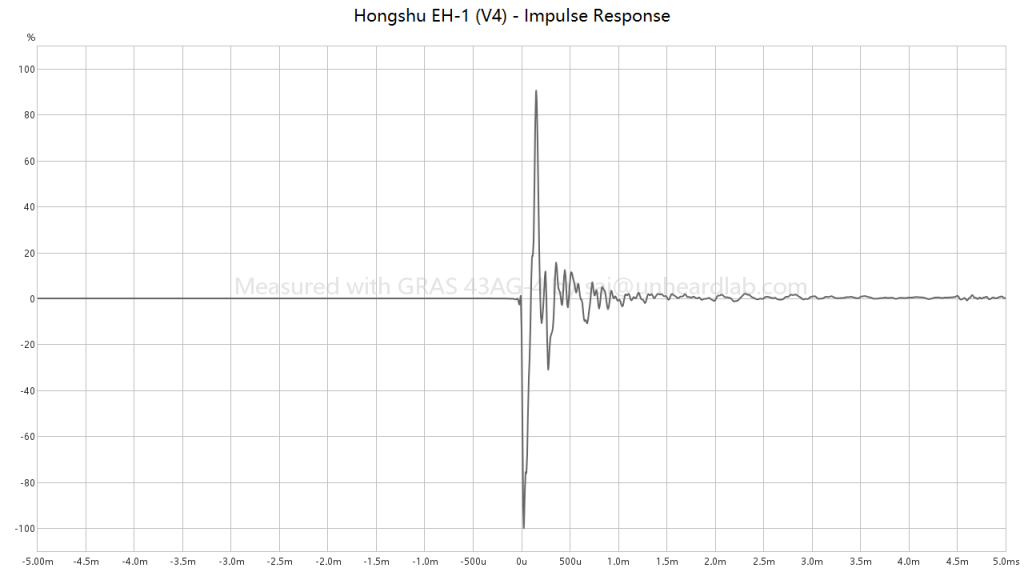
The impulse response test measures the initial response, overshoot, and decay of a transducer upon receiving a signal. An initial upshoot indicates a normal/non-inverted polarity, vice versa.
Comment: The EH-1 measures inverted polarity, which is not uncommon on planar magnetic and electrostatic designs and reflects the drive convention more than a meaningful acoustic choice. Both channels invert together, so it has no audible consequence on its own, in most cases.
Total Harmonic Distortion (THD% 2nd-9th) & Excess Group Delay (94 dB):
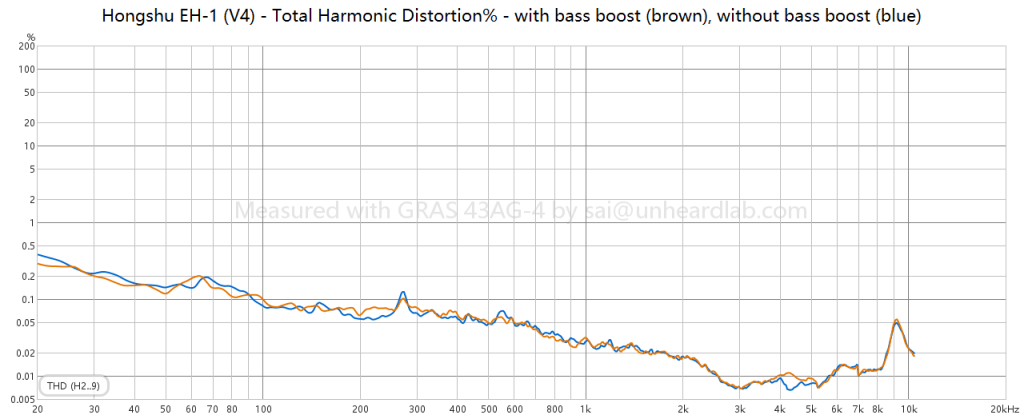
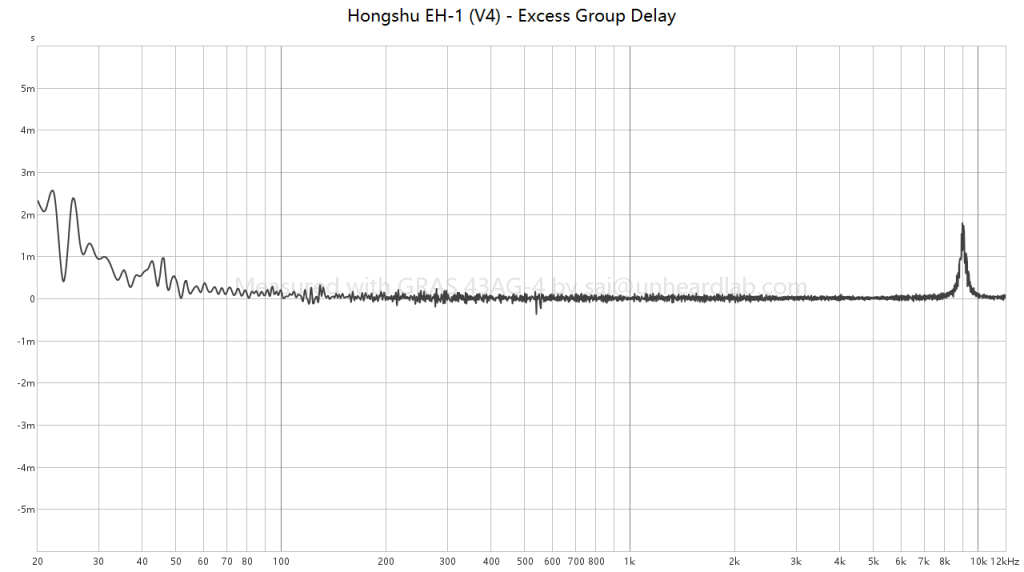
These measurements are conducted in quiet, normal room conditions (as opposed to an anechoic chamber), meaning there may be some influence from ambient room and external noise. These results should be considered a preliminary assessment of performance, primarily for identifying major issues, and do not reflect the best-case performance scenario. Any peaks or dips around 9 kHz are likely artefacts from pinna interaction or phase cancellation, rather than inherent features of the device under test.
Comment: Distortion is very low, with no obvious areas of concern. Engaging Bass Boost does not change that, which is worth noting given the amount of gain it adds below 500 Hz.
Channel Matching:
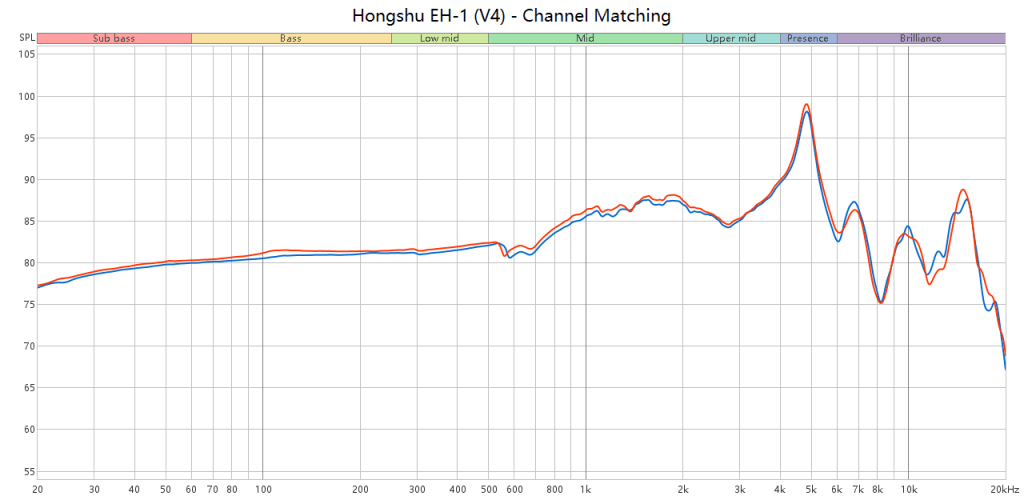
Channel matching graphs are intended for quality control checks and do not relate to the perceived sound profile. A specialised configuration is used in this test to capture differences between channels, mitigating interference from positioning on the rig and the asymmetry in the GRAS pinnae design, a legacy of KEMAR. The left (blue) and right (red) channels are measured using a flat plate coupler with an IEC60318-4 ear simulator.
Comment: Channel matching is great.
HpTF Variations (uncompensated):
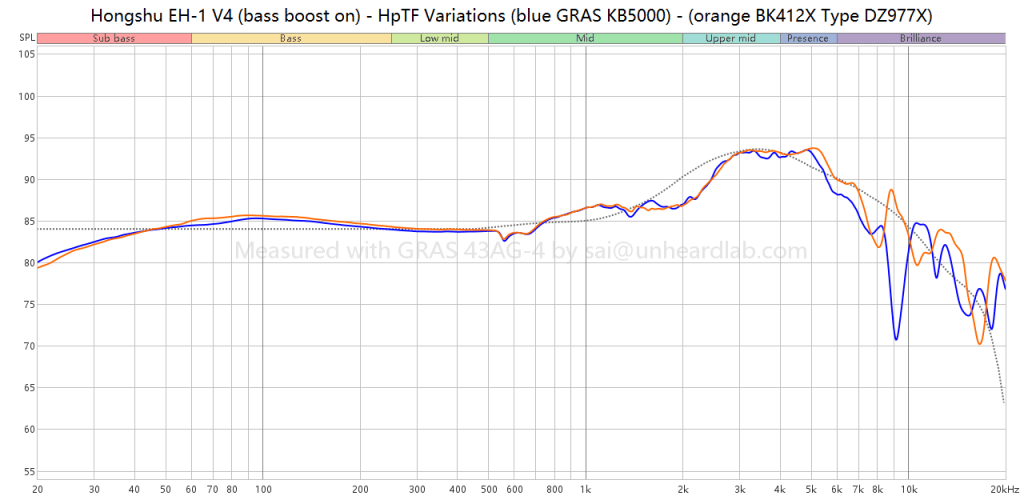
Headphone Transfer Function (HpTF) describes how sound is shaped by headphone design and ear anatomy before reaching the eardrum. Different measurement rigs (with varying pinnae designs) introduce unique reponses/resonances and potential deviations from actual human perception. Understanding HpTF helps translate measured data into real-world listening experiences.
Estimated system fundamental resonance (Fs):
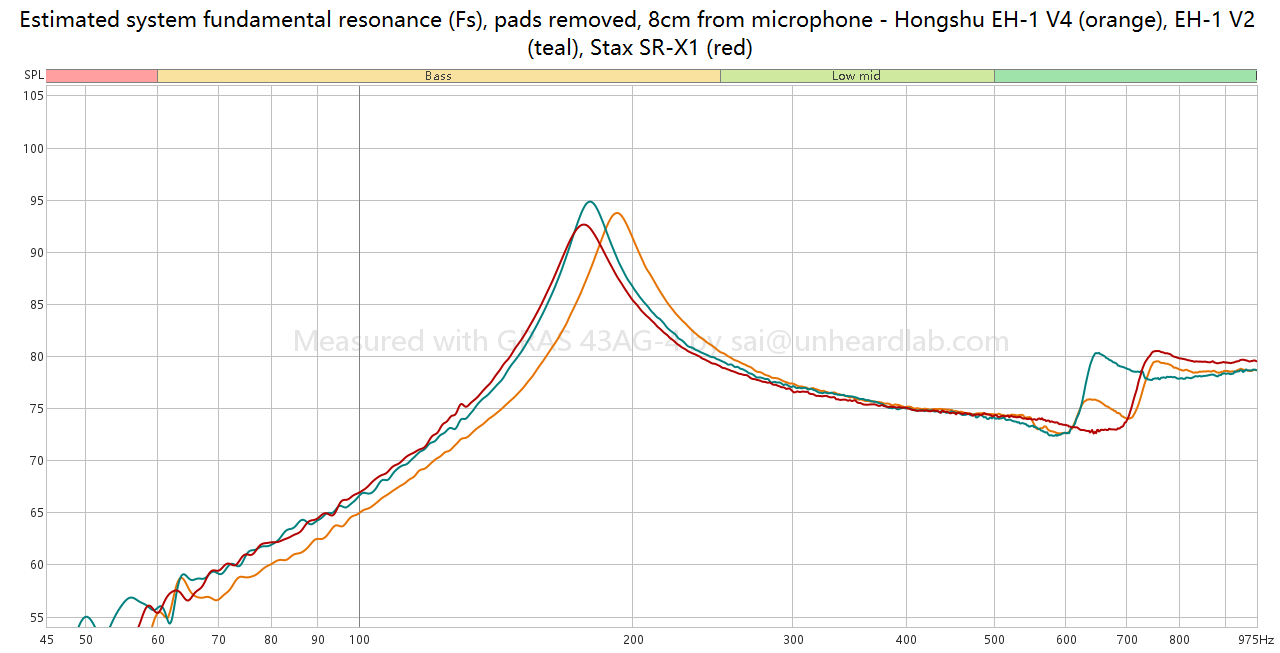
With the pads removed, all three drivers show a pronounced free-air resonance around 180–195 Hz, a range typical of electrostatic headphones. The EH-1 V2 and SR-X1 resonate at roughly 180–185 Hz, while the EH-1 V4 shifts slightly higher to around 190–195 Hz. These peaks are used here as an estimate of the system fundamental resonance rather than a direct mechanical measurement of Fs/F0.
END OF THE ARTICLE
Disclaimer: This review was not sponsored by any company or affiliated entity. Any links or product references are provided for informational purposes only and are not associated with any financial compensation or affiliate arrangement.

I’m seriously considering buying these.
Price is extremely affordable considering bundled energizer.
LikeLike
Yeah, the bundled energiser is really what makes the value so strong.
LikeLike
Thank you! I’ve been waiting for this review. Do you think the EH-1 is a significant upgrade over the STAX SR-X1s?
LikeLike
Yeah overall I’d say it’s a pretty significant upgrade. The SR-X1 is a decent entry point into estats, but the EH-1 feels much more complete to me: more natural staging, and a more conventional tonal balance, especially with the Bass Boost on.
LikeLike
Damn – and I thought I was done buying headphones this year…
It is good to have you back!
LikeLike
Haha sorry about that. And thanks, good to be back! I’ve got quite a backlog to work through, but this one was too interesting to sit on.
LikeLike
This is a review I’ve been hoping to see from you for some time. Definitely one of the most exciting headphones released in a good long time. It’s good to have you back, hope all has been well!
LikeLike
All’s been well though, thank you mate. Hope the same for you too! Haha yeah I know I’m partly to blame, I’ve been teasing this review for way too long… I actually planned to review the V2 at first, but then the V4 came along, so that delayed things for another while.
LikeLike
Welcome back
LikeLiked by 1 person
Thanks Alain! Good to be back mate
LikeLike
Hey there! would you happen to be able to compare this to say, an audeze lcd2c / lcd2 or sennheiser hd600? 🙂
LikeLike
Sure thing. I’d say they are very different from the LCD-2/C’s warmer, more laid-back tuning. Of course it’s pad-dependent but overall I’d think of the EH-1 as much airier and more spacious, while also sounding clearer and more articulate. The Audezes have more bass weight and physical slam, whereas the EH-1 feels lighter (in both tone and physical weight..) and more open.
Compared to the HD600, the EH-1 has a similarly great midrange tuning especially with the more breathable pads. Bass has less quantity and heft but extends flat into the low bass with a good seal. Treble is airier, and the stage is noticeably more expansive as well.
So I’d say it’s much closer to the HD600 in overall tonal balance, while sounding more spacious and estat-like in presentation. The LCD-2 family is quite a different flavour.
LikeLike
Thank you so much for your impressions on those headphones! I bought a pair based on your review and it didn’t disappoint sound wise! However, I’m noticing an audible hum (sometimes faint , sometimes louder) when the amp is plugged into the wall with the supplied adapter, even with no RCA source connected. I noticed yours didn’t have this issue. Is this normal for electrostats, or do you think my unit is faulty? It’s quite distracting at low volumes, so I’m trying to decide if I should request an exchange😅
LikeLike
Ah, that’s a real bummer… could you describe the hum a little more? Is it coming through the headphones themselves, and is it more of a low hum or a buzz/squeak?
If it happens even with no RCA source connected, I’d first suspect something PSU/ground-related, though of course the headphone/driver itself could also be the cause. Estats can sometimes develop odd noises from the charged diaphragm.
Either way, if it’s clearly audible at low volume I’d definitely reach out to Hongshu and probably ask for an exchange if they can’t resolve it quickly.
LikeLike
it is coming through the headphones! It’s more of a low hum than a squeak. I’ve noticed certain quirks regarding this hum:
1) Plugging the amp to the source temporarily stops the hum for a few seconds before it resurfaces (it then comes goes whenever it wants to).
2) On a few occasions, the hum gets louder when i place my hands near the headphone driver.
3) When plugged into source via the rca cable, touching the rca tip itself stops the hum
And yes, i’ve reached out to the physical store i bought it from. I hope they are able to diagnose this or allow me to exchange it for another unit without these quirks!
Thanks for replying 🙂
LikeLike
That extra detail does make me suspect a grounding/PSU issue more than the headphone driver itself ie. disappears when you touch the RCA tip. Have you tried different wall sockets/power boards or another 12V/1A PSU if you have any lying around?
It still shouldn’t be doing that of course, so I’d definitely let the store diagnose it or just exchange the unit if they’re willing. Hopefully it’s something simple with the amp/adapter rather than the headphone itself.
Let me know how it goes, I’d be curious what they find.
LikeLike
Hi, I am Poloyo Audio, the overseas general agent of Hongshu Audio, Sorry for the bad experience, If this issue persists, please contact me, I can handle the RMA service and cover the shipping cost.
LikeLiked by 1 person
Thanks for jumping in and clarifying this, Weng. Good to know international RMA and shipping are covered!
LikeLike
Would you recommend these or Moondrop Cosmo for an own-one-headphone-only under $1000? How would you say they compare on technical performance and overall value?
LikeLike
This is a tough one. If I were starting from scratch and could only keep one headphone under $1k, I’d probably lean toward the EH-1 at full retail pricing.
They’re actually pretty close in performance, just with different strengths. I’d still give the Cosmo a small edge in the finest detail/dynamic nuances and probably image precision, especially with something like the EP100A pads. The EH-1 has more natural spatial presentation to me, while clarity is excellent on both. Neither is really a slam machine.
Tonally, both can also get very close to neutral once you get the pads right. Cosmo with the EP100A pads is still one of the most neutral planar setups I’ve heard, while the EH-1 with Bass Boost and more breathable pads gets into a similarly balanced place.
Value is where the EH-1 wins pretty clearly for me. $650 including a competent energiser plus the much lower weight is hard to argue with. And the Cosmo also weighs much more. If the Cosmo is discounted into the $600-700 range and you already have a good amp, then it becomes much closer. The remaining caveat with the EH-1 is still long-term reliability.
LikeLiked by 1 person
Hi, I just got EH-1 recently and wanna ask a few questions:
1. The default clamp force is a bit too strong for me, mostly due to my glasses. I’ve also noticed the 1k bump and would like to alleviate that. What pads would you recommend the most in this situation?
2. I have tried the ES-Lab ES-2A and plan to get it in the future (the rabbit hole continues haha). What bothers me is that I want to stick with the energizer that comes with the EH-1 bundle, but I’ve heard from some people that it’s just an entry-level energizer which is not competent. Sadly, I don’t have the chance to A/B test those gears since I just got into electrostatic headphones recently. Kinda curious about how much of a difference a good energizer would bring out. I’d love to hear your opinion on this and maybe any thoughts you have on the ES-Lab ES-2A as well!
Welcome back, and just wanna say your reviews are really helpful!
LikeLike
Hey Ludwig, thanks for the kind words and welcome to the estat rabbit hole haha.
For what you’re describing I’d probably start with the Moondrop EP100A pads. The Dekoni Elite Hybrid and FiiO FT1B are also good options, and all of them help bring down that 1 kHz bump. I still have quite a bit more pad rolling to do though (mainly cheaper Aliexpress ones), since the EH-1 can basically take most 100-110 mm pads.
With glasses, I’d just keep the Bass Boost on or use EQ, since the EH-1 does lose some bass with a broken seal. The clamp can be a bit strong. I haven’t tried bending the metal headband arc, not sure how much that would help.
Unfortunately I haven’t heard the ES-Lab models yet, though I’ve heard great things about them. The EHA-1 is obviously not in the same league as the bigger Stax/KG amps, but how much that matters depends a lot on listening volume. I listen relatively quietly, and at my normal levels the difference is often much smaller. I’d try the ES-2A on the EHA-1 first before spending big on another energiser. If the Bass Boost is why you want to keep it, that part can also be reproduced pretty easily with EQ.
LikeLike
Great review as always!
Insane value from such a new brand! I would take the EH-1 over most planar headphones under a thousand dollar.
Back then I ran the EH-1 combo from Cayin’s IDAC-8 (which has a very warm-sounding tube mode). Very enjoyable.
Version 4’s bass boost does the same thing for basically free.
LikeLike
Btw that particular EH-1 unit died a few months after and was sent back to China for service. They have good aftersale, but it used to be for mainland customers only.
I hope things get better with the international release.
LikeLike
Moondrop Moonzero is cheaper, seems better-built but does not come with an energizer. Looking forward to your opinion on this one as well!
LikeLike
Thanks mate. Yeah the V4 Bass Boost is probably one of the smartest changes they made, basically giving you that extra body and warmth without needing anything else upstream.
It’s sad to hear about your EH-1… that’s exactly the kind of long-term issue I was worried about. Good to hear their aftersales was solid though. Hopefully the international release also means proper support ex China now. Any idea how it happened?
Yeah the Moonzero is definitely on my radar. Hopefully they are available soon for real this time…!
LikeLike
It wasn’t mine but a friend’s.
His unit has distortion on one side. Still making sound. Hongshu agreed to fix it free of charge, but my friend had to pay for shipping both ways (costed him about 1/10 the price he paid for the EH-1 itself).
LikeLike
Ah gotcha, thanks for clarifying. Still a useful data point. Good that Hongshu covered the repair, but having to pay shipping both ways is definitely less ideal especially they’re selling internationally. Hopefully that side of the aftersales improves in the future
LikeLiked by 1 person
I’ve ordered these, they seem like a nice change from my other setup (s17 pro evo + he6sev2). Have you try them with a different energizer?
LikeLike
I compared it with the Stax 353X and the 700T. At my normal listening levels the difference is actually pretty small with the 353X, though the 353X keeps better control especially in the treble. The 700T is in another league. Since the EH-1 leans on the harder to drive side of estats, I would say a better energiser does have benefits.
Curious to hear what you think of them when they arrive, and how they compare to your HE6se V2.
LikeLike
I really like the sound with bass boost.
Maybe I would make some small PEQ tweaks, but nothing like the PEQ from the article as it completely changes the character of the headphones.
As for the comparison with he6sev2, they are angrier, harder hitting, but EH-1 is more resolving.
As I have aune s17 pro evo, I plan to get Estatron Inductatron and try that combo versus the included energizer.
LikeLike
Fair enough mate, I can see the appeal of keeping more of the stock character. And I think that’s a pretty good way of putting the HE6se V2 comparison.
The Inductatron looks interesting. I don’t have a spare speaker amp otherwise it’s very tempting at that price.
LikeLike
It seems that EH-1 V4 with Moondrop EP-100A earpads almost coincides with the diffuse field target. Also, when the bass boost is on, it reaches the tilted DF.
LikeLike
Yeah, pretty much at least on my ears. I wouldn’t read the treble match too literally of course, since everyone can perceive that very differently. But through the bass and mids, the EP100A+bass boost combo does get remarkably close to that kind of tilted DF sound.
LikeLike
Thank you for posting this amazing review, I bought a pair of these after reading your review. It is my first pair of Hi-Fi over rear headphones, before this I mostly use high-end IEMs to enjoy music. It definitely sounds balanced and airy, however I feel like I’m looking for a bit more detail, dynamic and prob wider sound stage. Would you suggest something like HE1000se or Arya Unveild?
LikeLike
Thanks, glad you’re enjoying them! But yeah, I think that’s a fair assessment.
Between those two, I’d probably lean towards the Arya Unveiled for what you’re describing. It gives you a noticeably more open feel, less diffused imaging, and better dynamics. The HE1000se can sound even more incisive and detailed, but it’s also muchg brighter and more unforgiving up top, which I fear would be too much of a change for you.
I’d also consider the Ananda Unveiled. It’s actually quite close to the Arya in overall presentation and costs a lot less, so I think it’s one of the better value options if you want that Hifiman style. Another interesting one is the Moondrop Para 2. It has a bit of that estat-like treble character but with a fuller and more substantial low end than the EH-1
LikeLike
Welcome Back! Great review as always. Do you think you could graph the new Fiio Snowsky Wind PRO?
LikeLiked by 1 person
Thanks mate. Yeah I’d be happy to graph them. Just wondering if I should buy a pair… I already have a few on-ears and don’t end up using them much compared with my other cans.
LikeLike
Can you compare it to hifiman Arya? I’m interested which is better in the technical department: resolution, separation, speed , imaging etc
LikeLike
Do you mean the Arya Stealth? I actually don’t have enough experience with the original Arya to compare properly.
Against the Arya Stealth, I’d say they’re roughly on the same overall level, just strong in different thigns. The Arya has sharper imaging and a more dynamic presentation, while the EH-1 sounds a bit cleaner through transients, with very good clarity and low-level nuances. So I wouldn’t call either clearly better technically. It depends a bit on which aspects you value more.
LikeLike
If you were to choose just a single pair, which one would it be?
LikeLike