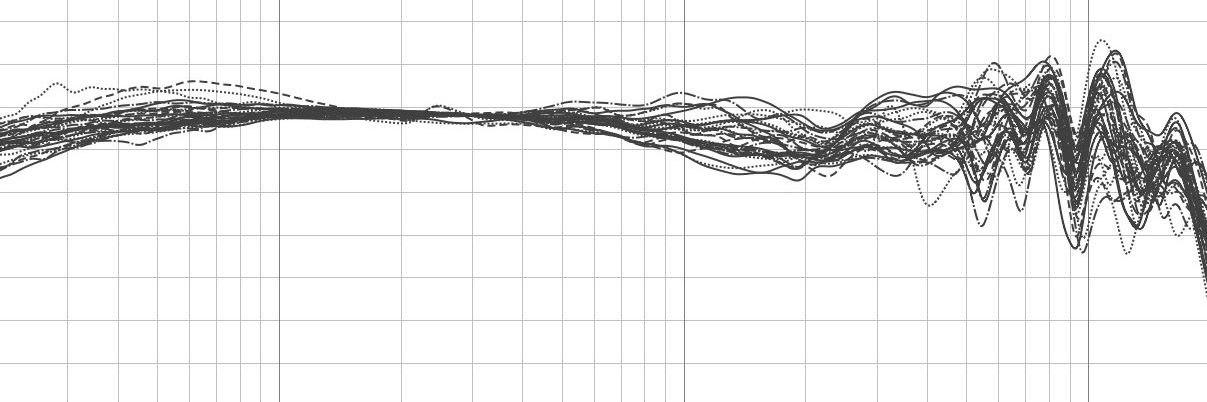

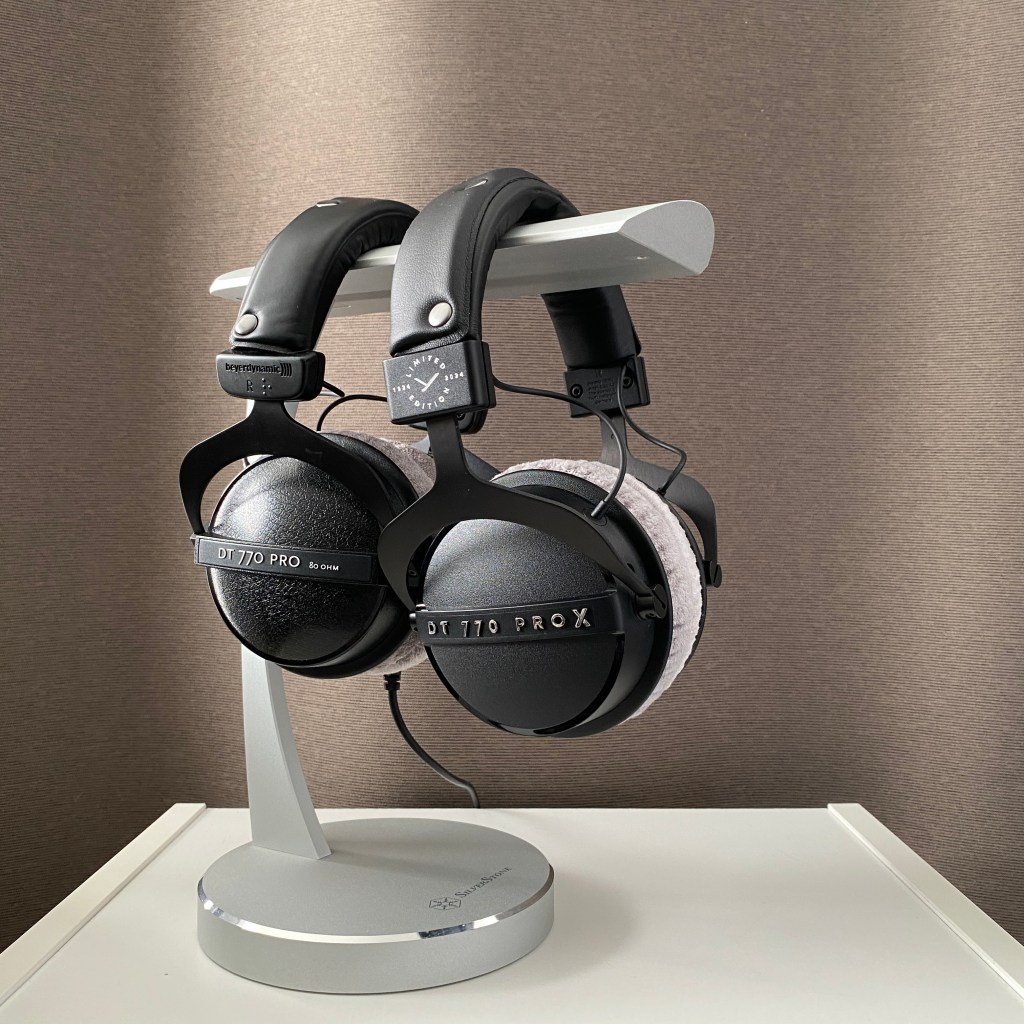
How does it compare to the original DT770 and DT700 Pro X?
Intro:
Beyerdynamic, found in 1924, has been a big name in the industry. The company made history by introducing the world’s first pair of dynamic headphones, the DT48, in 1937. To celebrate its centennial in 2024, Beyerdynamic has released the DT 770 Pro X as a limited edition model.
The original DT770 is a staple in recording studios globally. Known for its U-shaped sound profile, the DT770 has been used for spotting flaws in the mix. However, the brightness can be taxing over long listening sessions. To address this, Beyerdynamic launched the STELLA series DT700 Pro X, which tones down the treble sharpness, albeit at the expense of the sense of air due to a more damped design. The new driver is also significantly easier to drive compared to Beyer’s previous designs, although this may not be a real issue in today’s electronics scene.
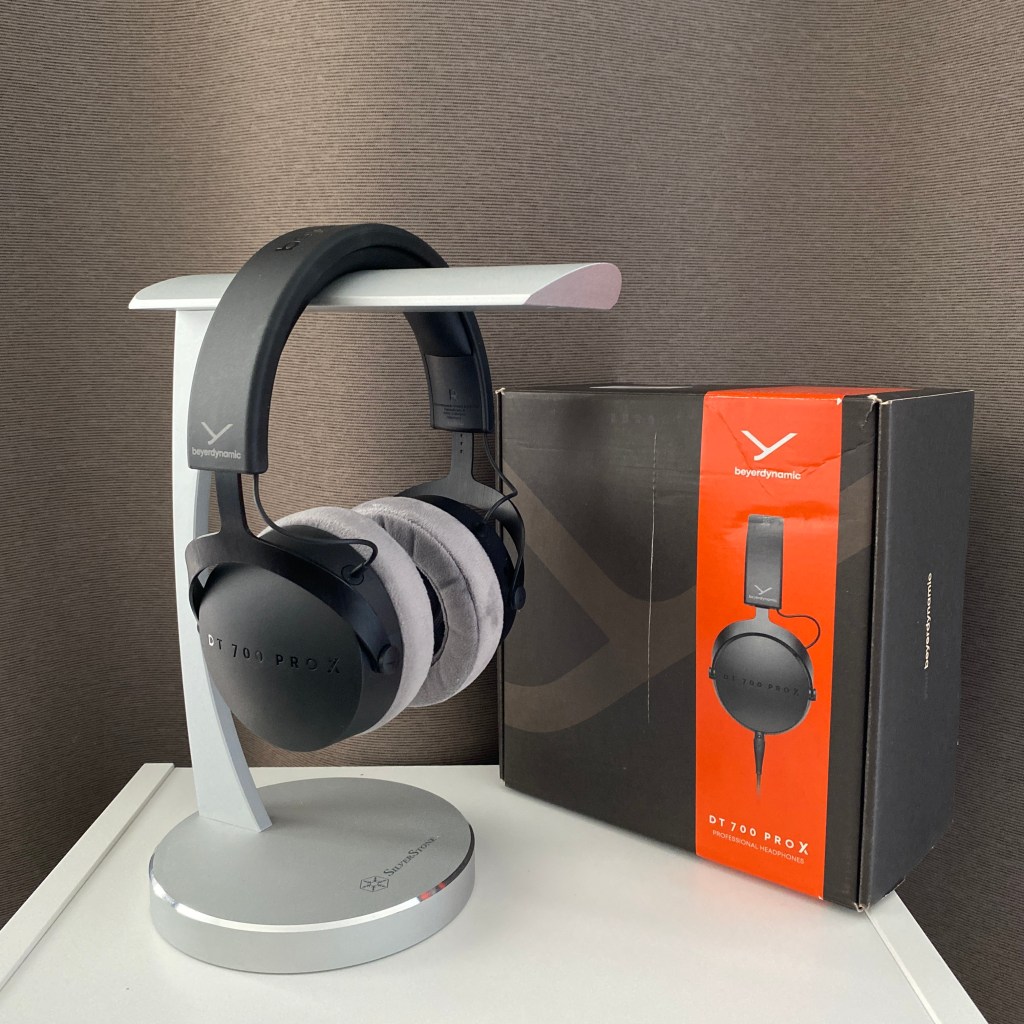
Built with the STELLA DT700 driver and the traditional DT770 housing, the question arises: does the anniversary edition DT770 Pro X strike the perfect balance, or does it offer something else entirely? Let’s find out.
For the full suite of measurements, see the final section of the article.
Specs & Comfort
Price: US$ 199, AU$ 349
Transducer size: 45mm
Effective area: N/A
Transducer type: moving coil
Earpad size: 100*100*20mm
Earpad mounting: stretch-fit
Sensitivity: 98 dB/mw @1kHz
Impedance: 53Ω @1kHz (measured)
Connector: single 3-pin mini XLR
Weight: 305 grams
Clamping force: medium
Headband swivel: 45° approx.
Comfort: 9/10
Measurement & Sound

link to the frequency response measurement & more comparisons
Tonal balance:
Overall, the DT 770 Pro X boasts a distinctly V-shaped sound. While the original DT770 was known for its pronounced bass and treble, the DT770 Pro X takes it to a new level. Some might find this tuning exciting and fun, but others could consider it overpowering due to the sheer amount of lows and highs.
The Bass is punchy and heavy, even more elevated than in both the original DT770 and the DT700 Pro X. This may be a welcome colouration for classic rock and pop music, but for genres like EDM, it can often be overwhelming. Thankfully, the bass boost is cleanly structured, focusing on the lower and mid-bass regions without venturing into the muddiness of upper-bass.
The Midrange sounds clean but tends toward being overly articulate. As such, some female vocals, such as Adele, might seem somewhat thin and sharp due to a dip in the lower-mids combined with a boost in the upper-mids harmonics. With less compatible tracks, like Patricia Barber’s “The Wind Song,” certain tones can get rather grainy. Male vocals generally fare better, as they contain less energy in the upper-mids and highs. The bottomline is, the vocal rendition on these headphones are very track-dependent.
The Treble is sharp, and can sometimes sound harsh and unrefined. Instruments like violins and cymbals are particularly highlighted thanks to a boost between 5-12kHz. Above that, the sense of airiness is moderate, less damped than the DT700 but not as clear as the original DT770. Sibilant tones are accentuated, but they do not ‘stick out’ overly, likely due to the broad nature of the treble rise (instead of having sharp, narrow peaks). Nevertheless, a more linear treble response would be preferable, unless you’re specifically seeking this kind of colouration.

Other qualities:
- Soundstage and Imaging:
The spatial performance of the DT770 Pro X is somewhat constrained. The stage size is not overly expansive, nor does it excel in projecting depth. While it shows a slight improvement over the DT700 Pro X, the original DT770 remains superior in terms of lateral stage width. As for imaging and the distinctiveness of layering, the three models are comparably similar.
- Clarity:
Despite its pronounced treble, the DT770 Pro X does not excel in the sense of resolution. While the midrange clarity is commendable, the overall timbre is heavily skewed by the elevated bass and treble. This imbalance affects percussion instruments in particular, which tend to mask other elements in the mix. Certain vocals and synthetic elements can also sound quite metallic.
Although it shows improvements over entry-level headphones, it struggles to stand out in today’s market, particularly with budget options like the Hifiman HE400se available.
- Dynamics and Impact:
The dynamics of the DT770 Pro X are average. It competes well with similarly priced dynamic headphones, such as the HD600, in reproducing the contrast between softer and louder elements. However, it falls short when compared to entry-level planar headphones today, like the Moondrop Para.
In terms of impact, the DT770 Pro X is a good performer. It delivers a robust and authoritative punch, which, although potentially overwhelming for some, is a definite standout feature. It surpasses both the original DT770 and the DT700 in impact, though the difference with the original DT770 is not stark.
Conclusion and value:
Priced at US$ 199 / AU$ 349, the Beyerdynamic DT770 Pro X is difficult to recommend for the general audience due to its strong character. Is it a good choice for studio use? Probably not. That said, as a ‘fun headphone’ for those who enjoy a radically V-shaped sound, it could be appealing, particularly for gamers who tend to prefer this type of sound. Among such headphones, the DT770 Pro X is a reasonable option for its build quality and engaging, albeit not overly harsh, tuning. I would still suggest the original DT770 for a cheaper but more balanced sound – though it doesn’t come with the updated headband design, dettachable cable, or the allure of the 100th anniversary label. 😉
Pros: flavourful tuning can be enjoyable; treble brightness is relatively even (without major high-Q resonances); powerful bass impact; a more open presentation than the DT700 Pro X.
Cons: radically V-shaped tuning may not suit everyone’s taste; bass may be too pronounced for a lot of genres; treble sharpness can make extended listening sessions challenging; unimpressive technical performance at the price; the original DT770 offers better SQ for money;
Value Grade (NOT sound quality)
Notes on modding
Owners of Beyerdynamic headphones are likely familiar with the challenges of managing the Beyer treble. A popular solution within the community is the ‘TP mod’. This simple but effective mod involves placing a piece of 3-ply toilet paper in front of the driver, which can significantly tame the treble response. For those who prefer a bit more high-end detail, 2-ply tissues might be a better choice.
With the TP mod, the DT 770 Pro X becomes a lot easier to listen to. But the bass dominance does stand out more in this case.
Additionally, there are other modifications you can experiment with, such as sealing the bass port or adding extra damping material to the back volume. None of these modifications have shown a distinct improvement so far, IMO. For those interested in seeing the frequency response graphs of these attempts, I have uploaded the FR of these mods on squiglink.

Notes on EQ
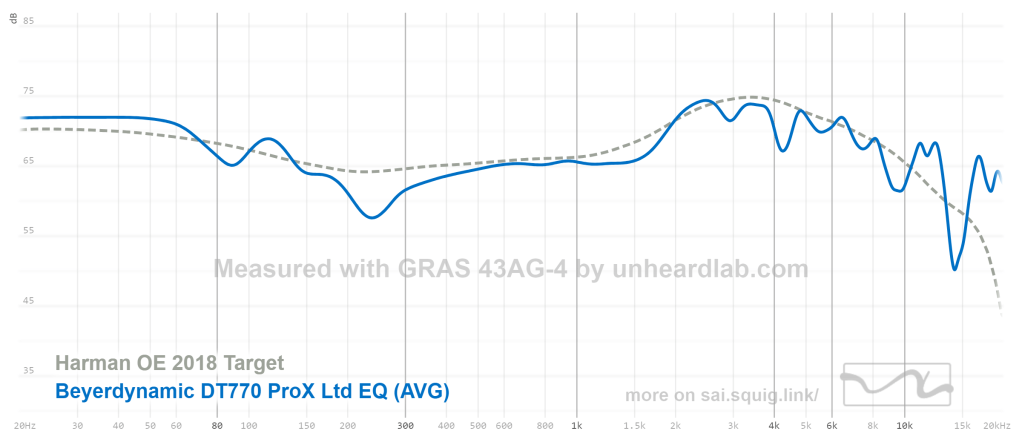
This headphone could significantly benefit from EQ adjustments, particularly if you’re aiming for a more neutral sound. However, if you appreciate the excitement of the default tuning, you might find little need for further EQ modifications. If you’re new to EQ, here’s a useful article worth reading.
My personal EQ setting for this headphone:
Preamp: -3.0 dB
Filter 1: ON PK Fc 35 Hz Gain -2.0 dB Q 0.500
Filter 2: ON PK Fc 150 Hz Gain -6.0 dB Q 2.500
Filter 3: ON PK Fc 250 Hz Gain 3.0 dB Q 1.500
Filter 4: ON PK Fc 650 Hz Gain 2.0 dB Q 1.500
Filter 5: ON PK Fc 1000 Hz Gain -1.5 dB Q 2.000
Filter 6: ON PK Fc 3200 Hz Gain 5.0 dB Q 3.000
Filter 7: ON PK Fc 4300 Hz Gain 1.5 dB Q 3.000
Filter 8: ON PK Fc 5900 Hz Gain -8.5 dB Q 1.200
Filter 9: ON PK Fc 11000 Hz Gain -3.0 dB Q 2.500
If your goal is to EQ the response to match the Harman Target, consider the AutoEQ function provided by Squiglink as a convenient starting point. I personally recommend customising the filters to better suit your own hearing, especially in the treble. While the AutoEQ provides a useful baseline, individual adjustments can opften significantly improve your listening experience.
MEASUREMENTS
Frequency Response Average (unsmoothed):
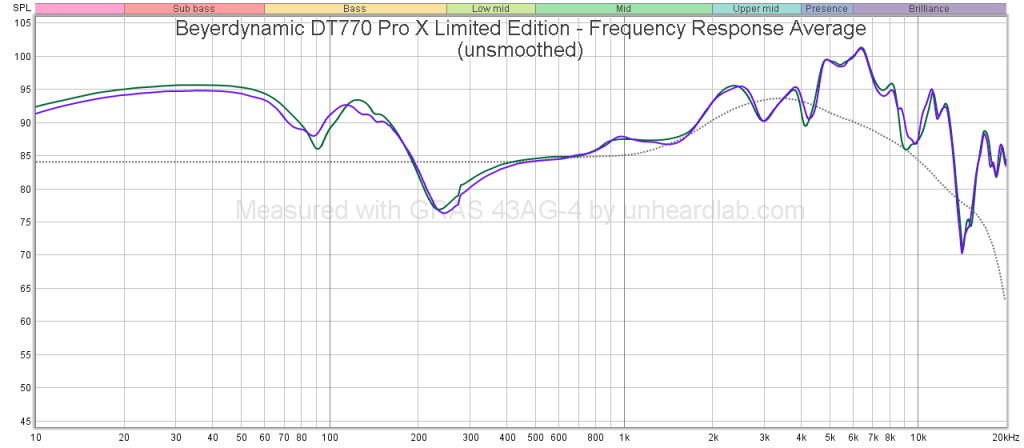
Bass extension cutoff is 10hz so as to fully capture frequencies which though outside of the ‘audible range’, may be felt by our bones and muscles. The response is obtained by an average of 5-6 positional variations. The graph is unsmoothed.
Positional Variation:
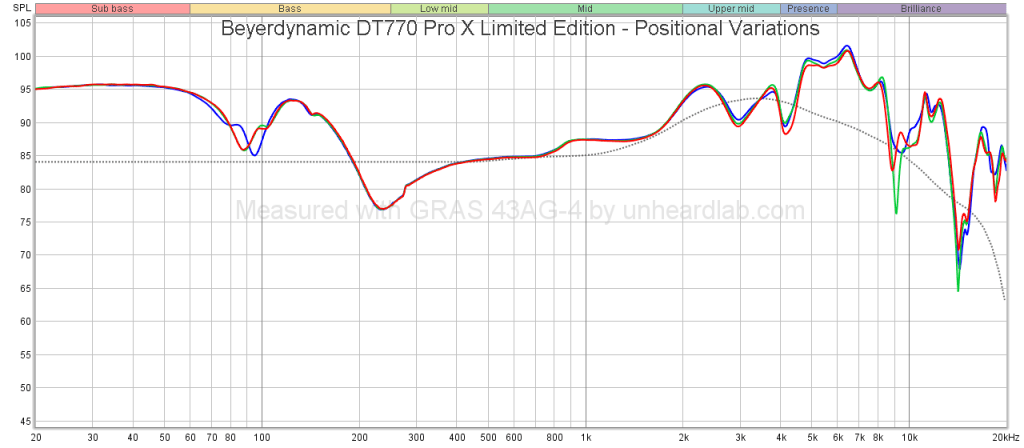
This graph illustrates how headphone placement on the head affects perceived tonal balance: with the ear positioned at the front (blue), centre (green), and back (red) of the driver.
Leakage Tolerance:
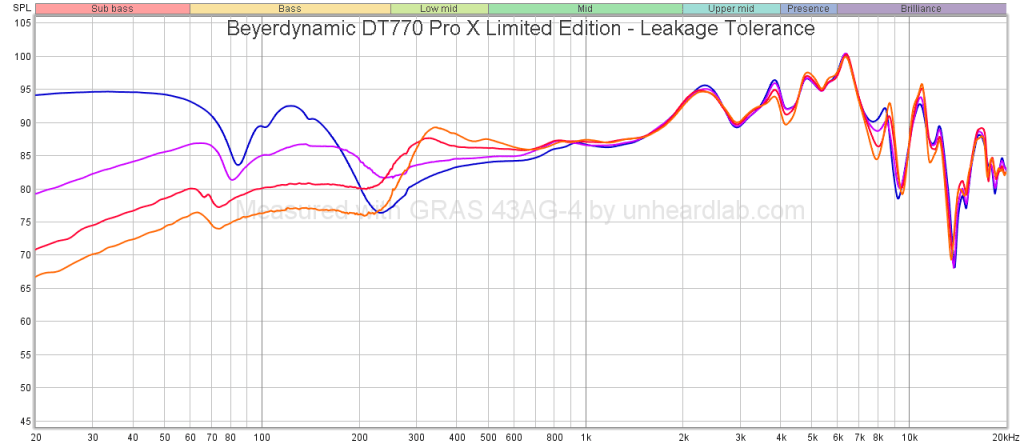
This graph demonstrates how leakages to the front volume can result in FR change.
Impulse Response:
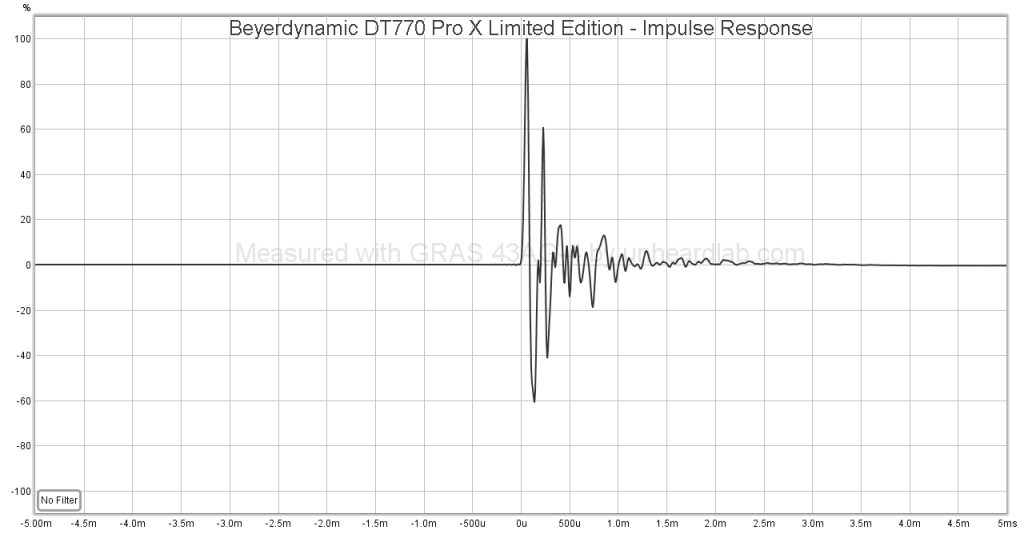
An impulse response graph illustrates a headphone’s ability to respond to sound signals.
Channel Matching:
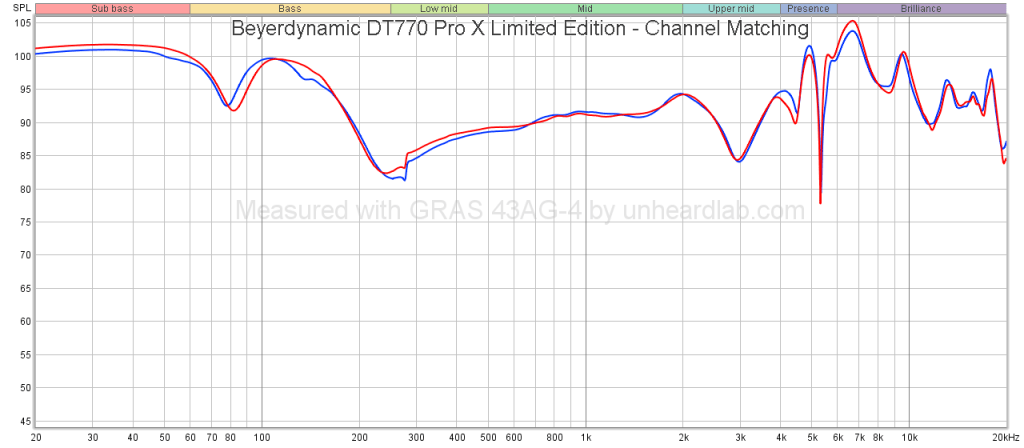
Channel matching graphs do not relate to the perceived sound profile. A specialised configuration is used in this test to capture differences between channels, mitigating interference from positioning on the rig and the asymmetry in the GRAS pinnae design, a legacy of KEMAR. The left (blue) and right (red) channels are measured using a flat plate coupler with an IEC60318-4 ear simulator.
Electric Phase & Impedance:
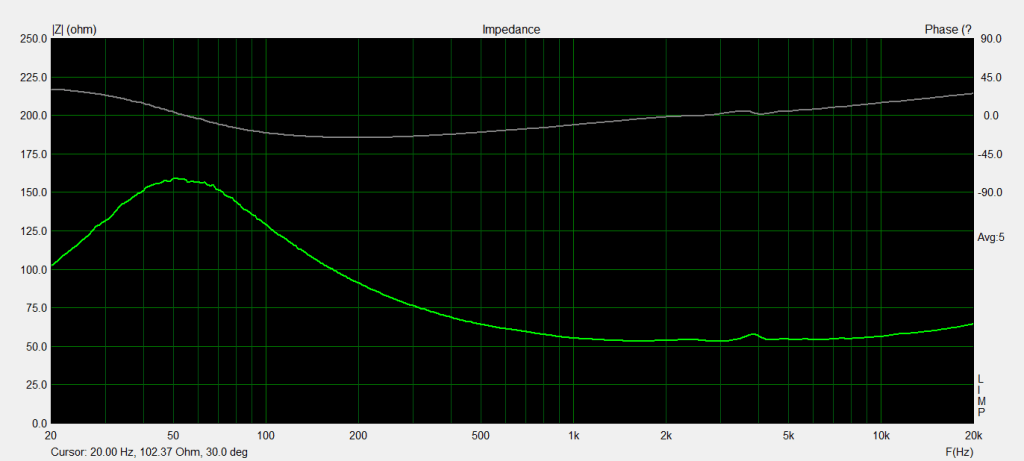
The above graph shows the measured impedance (green) and electric phase (grey).
END OF THE ARTICLE
Disclaimer: This review is not sponsored or endorsed by any business or related entity. The headphones reviewed are my own unless stated otherwise. Any links or recommendations included are purely informational and do not involve any financial affiliation or endorsement on my part.

Finally a honest review!
I had the same thoughts about this headphone when compared side by side with the old one.
LikeLike
Thanks for the kind words! Especially from someone who’s had the same thoughts after a serious comparison.
LikeLike
Me too. I have DT770 pro 250ohm and now 770 pro x. I prefer the sound of the old ones. They sound more airy clean.
LikeLike
Totally get that. It’s a bit concerning where Beyer is heading lately with some of their changes. Hopefully, they drop something great soon!
LikeLike
Now this was honest and really on point, matches my experience! I just compared the DT 770 Pro 80 Ohms, DT 700 Pro X, and DT 770 Pro X LE, and came to exactly the same conclusion. I kept the DT 770 Pro, they just do it for me. The only downsides compared to the Pro X models are the fact that they are quieter and harder to drive, and that they can be a bit too revealing and aggressive sounding in the mids for casual listening. But that’s when I pick the DT 880 Edition anyway.
LikeLike
Hey, glad to hear my review lined up with your experience. Yeah, the DT 770 Pro really holds its own. I haven’t ventured into the 880 series yet, daunted by all the variations. Maybe one day, haha.
LikeLike
I now see why I found them so bright to my ears. Even brighter than the normal version.
LikeLike
Definitely. While I’m glad it’s not super uneven or harsh, that treble level is just a bit much
LikeLike