Intro:
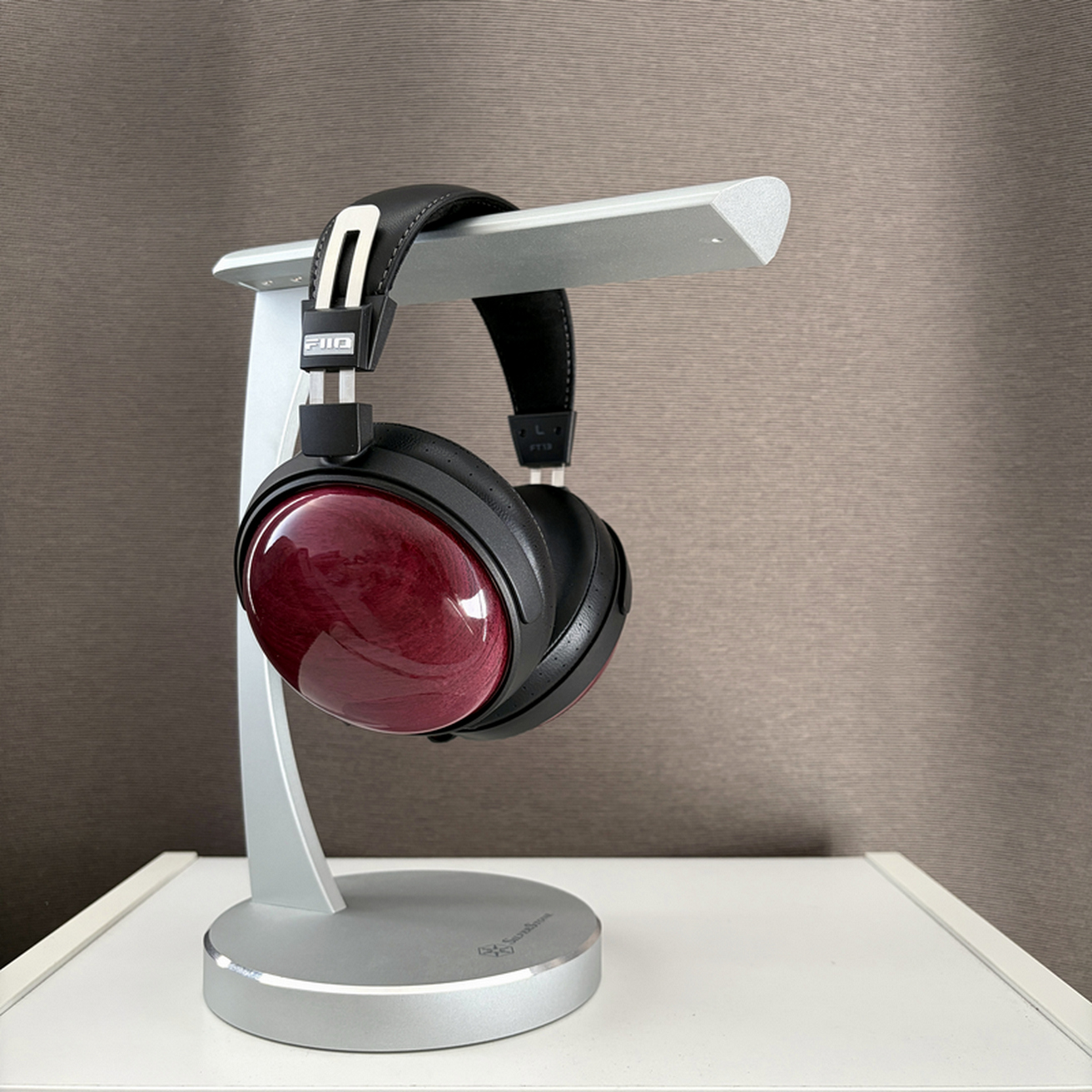
Following the success of the FT1, high expectations were naturally placed upon Fiio’s new closed-back, the FT13. Anticipated to be an upgrade into the more premium segment, the specs certainly show ambition: an updated large 60mm dynamic driver housed in an attractive purpleheart wood enclosure.
Sound-wise, it is more complicated. While the driver shows exceptional raw capability, the tuning feels disjointed and lacks the balance and cohesion that made the FT1 so appealing.
Let’s find out why.
Detailed measurements can be found in the final section of this article.
Disclaimer: This unit was purchased for the purpose of testing and review.
Specs & Comfort
RRP: $299 USD/ $499 AUD
Driver size: 60 mm dia.
Driver type: moving coil
Sensitivity: 112 dB/Vrms @1kHz
Impedance: 35 Ω at 1kHz
Connector: dual 3.5 mm TRS
Weight: 356 grams (excl. cable)
Clamping force: strong
Accessories: 1.5M cable; carrying case; second set of ear pads.

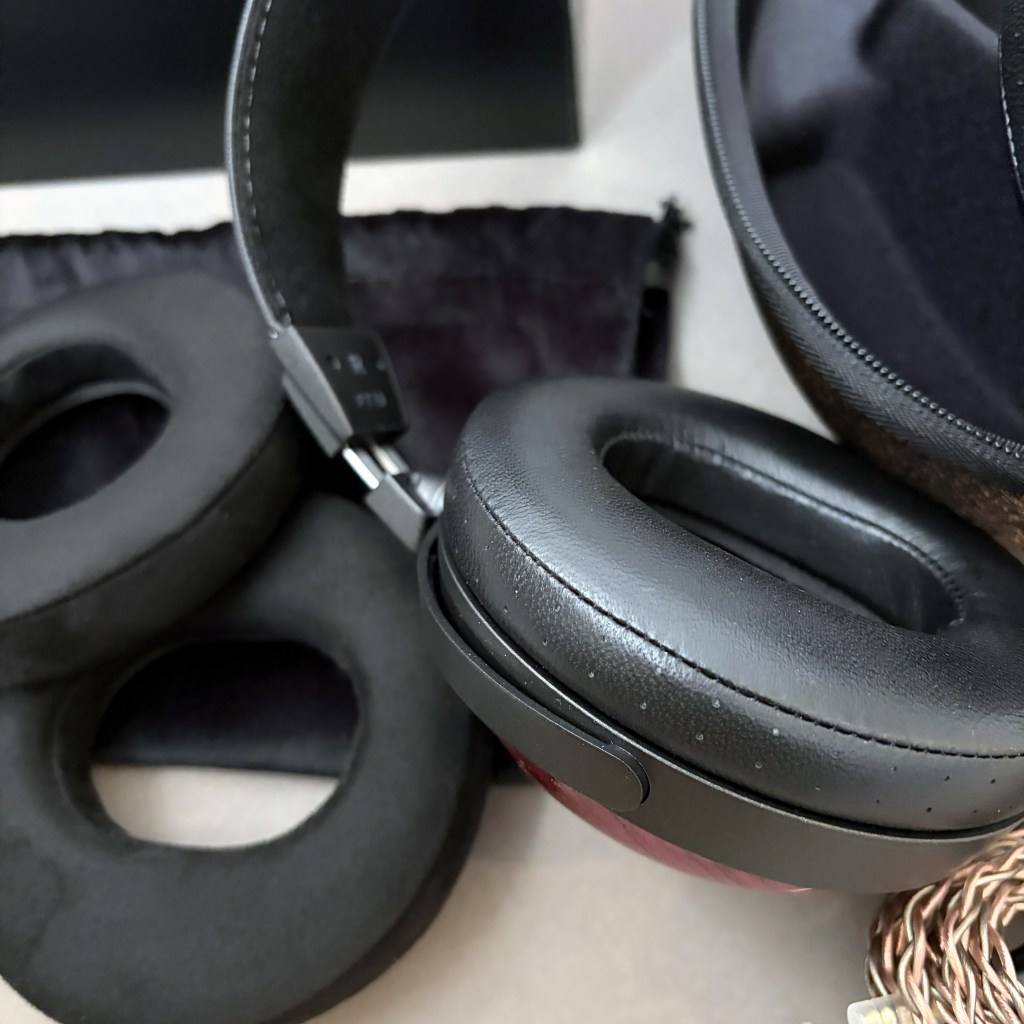
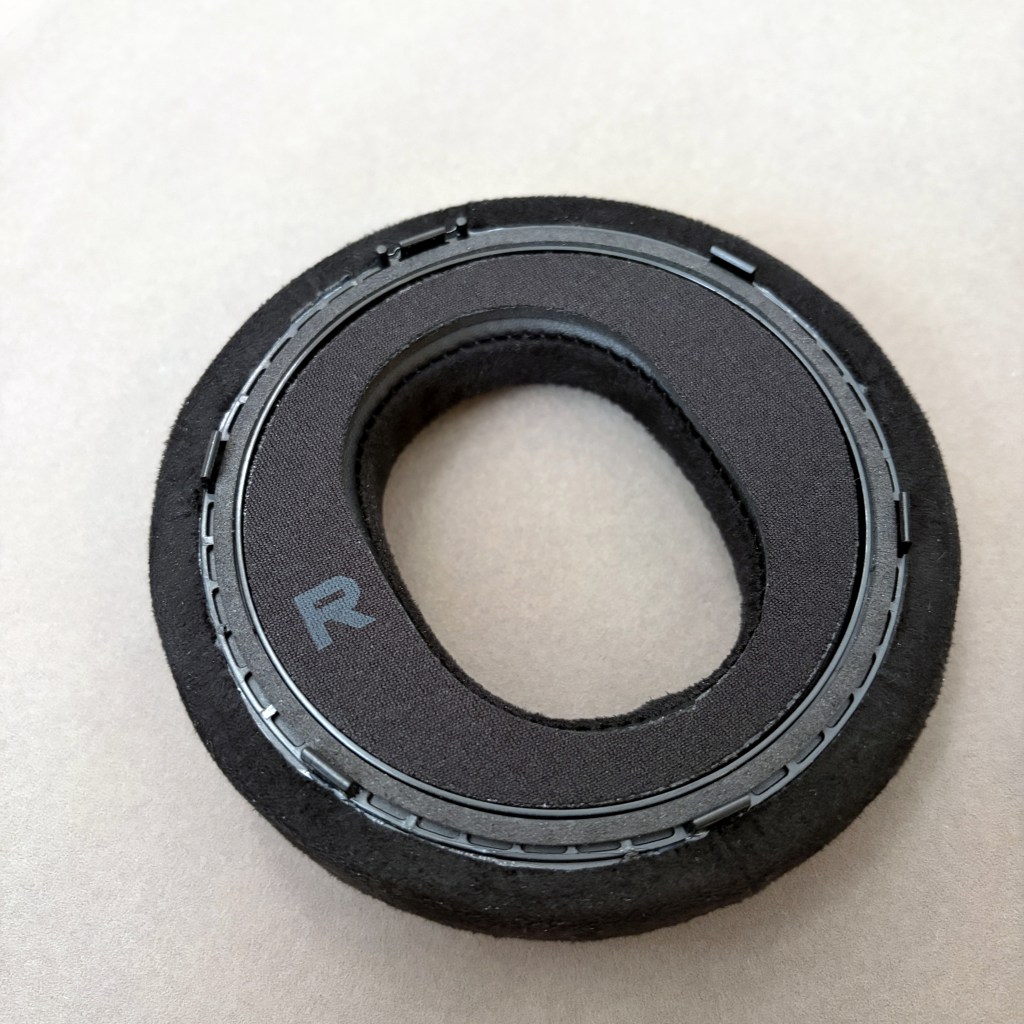
Build: The FT13 features a generally solid build with visually appealing cups. The headband yoke hinge is plastic but seems durable. A clear sign of design effort is the inclusion of two sets of pads. These pads, which feature extra bottom padding, are fitted using plastic clips. While this complicates pad rolling, adapter rings are available from their Aliexpress store for $10 USD a pair.
Comfort: Overall comfort is good. The headphone is reasonably lightweight. Although the headband is somewhat wide, the fit was fine on my head, maintaining good contact without excessive clamping or hot spots.
Sound

For more comparisons, visit my squiglink database.
Tonal balance:
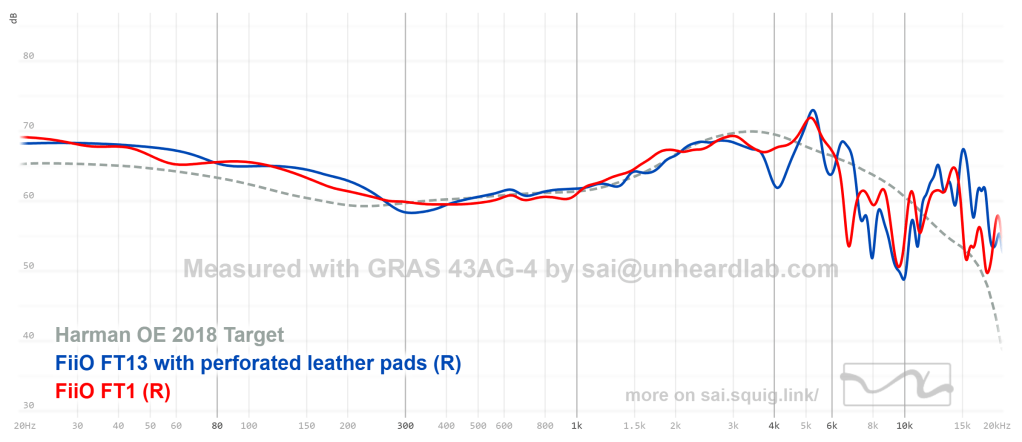
Overall, the tuning of the FT13 is one of sharp contrasts: powerful bass, forward mids, and shimmery treble. This tuning often feels less cohesive than its sibling, the FT1.
Bass
The bass on the FT13 is excellent. It’s deep, punchy, and weighty, offering impressive impact. With the perforated leather earpads, the quantity is well-controlled, delivering a satisfying, authoritative low end. With the suede pads, the bass boost goes up to around 10 dB above the midrange. For a lot of listeners, this could mean a boomy and overbearing bass amount. But for the bassheads among us, this may be a moment of rejoice.
Compared to the FT1, the FT13’s low-end offers greater dynamic range and nuance — it has more texture and power. There are no real complaints regarding the FT13’s ability to move air and reproduce deep frequencies.
Midrange
The midrange is marked by a paradoxical tuning: it’s lean and forward at the same time. This signature results from the lower mids being somewhat obscured by the aggressive tuning of the bass and treble. Conversely, the upper mids (or the presence region) becomes more prominent than the lower mids, giving instruments and vocals a sharp articulation but noticeably thin body.
This emphasis, combined with the elevated treble, becomes more problematic. Sibilance can be grating, and the presentation of grain and texture is often overly emphasised. This makes the FT13 less suitable for many vocal genres, especially those with any hint of aggression or sharp mixing, unless the tracks are already mixed to be buttery smooth.
Treble
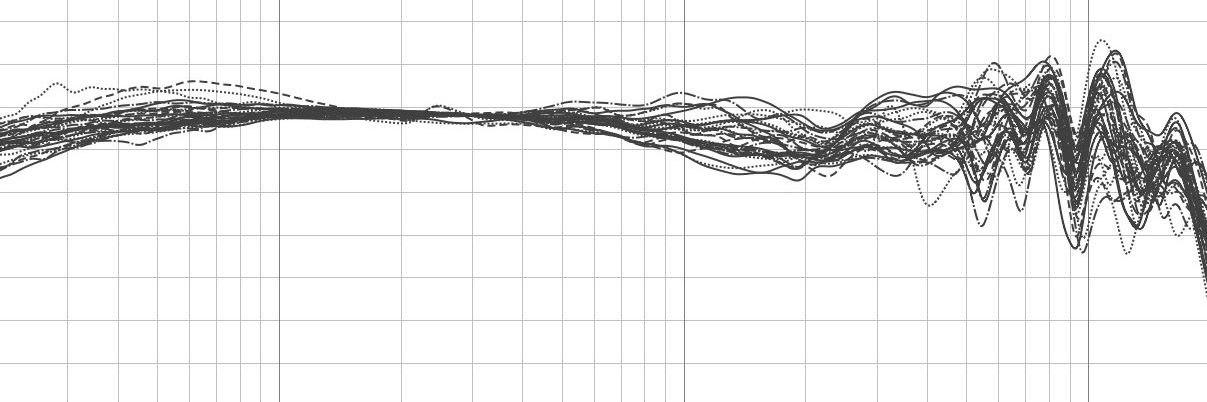
The treble is the most defining and arguably the most problematic aspect of the FT13’s tuning. It is significantly elevated, focusing heavily on the upper end of the spectrum. This results in an abundance of sparkle, shimmer and air.
The whole execution, however, is complicated. On the one hand, the sense of extension is genuinely impressive. It gives the immediate impression of treble extension heard on headphones like the Fostex TH900 MK2, a high-end model known for its dynamics and clarity.
On the other hand, treble quality is not well refined. A series of strong resonances and dips give it a jagged quality, while the overall brightness is simply too much. Even on well-mastered tracks like Tracy Chapman’s “Fast Car”, the highs can easily sound sibilant and harsh. The issue is not a singular peak (like the infamous case of the HD800), but multiple significant ones. As a result, the overall quality of the treble is jagged and unrefined, despite the driver’s underlying capabilities. For comparison, the FT1 is noticeably smoother and more linear across the high frequencies, even though it doesn’t offer the same level of extension or fine-grained detail.
Other qualities:
- Soundstage
The sense of spatial presentation is a mixed bag here. On the one hand, the FT13 delivers a horizontal staging that can feel rather grand and open, especially for a closed-back. Yet, everything in the mix tends to sound very closed-in, creating a strong sense of presence, almost in a pressing way.
This perceived proximity is explained by the aggressive treble, which can create an impression of closeness as high frequencies are more strongly absorbed by air over distance. As such, the resulting spatial impression comes with an unnatural quality: the room or ambient cues may feel large and open, but the actual elements of the mix remain closed-in.
- Clarity
Clarity on the FT13 is a complex factor, driven almost entirely by its aggressive frequency response. The elevated upper-mids and treble, while causing harshness and sibilance, does create a strong impression of articulation and detail. Its impressive treble extension adds a distinct sense of air and fine grain.
However, this clarity feels artificial. The tuning exaggerates texture rather than naturally rendering it. While the perceived clarity of individual elements is excellent, the cohesion and natural texture of the mix suffers.
- Dynamics
Dynamics is strong on the FT13. The bass is notably punchy, weighty, and dynamic, outperforming the FT1 in both impact and nuance. The driver shows impressive excursion capabilities, allowing for satisfying macrodynamics (slam and impact). Those looking for a headphone that hits hard and conveys the full force of a recording will find the FT13’s raw dynamic capability to be a significant strength.
Conclusion:
Fiio has built a commendable reputation this year with the success of the FT1 and FT1 Pro, but the FT13 proves to be a perplexing successor. It’s not a complete failure. I can clearly see genuine driver capabilities. But the final execution leaves much to be desired.
The problem lies in overengineering. It tries to achieve everything and end up with flaws throughout the spectrum. Perhaps this had been difficult because the FT1 achieved so much with its entry-level price, setting a high bar for its successor.
One potential saving grace is its performance in gaming. For cinematic or immersive RPGs, the tuning works quite well due to its V-shaped nature. The forward, aggressive presentation and the specific spatial qualities of the FT13 make it quite proficient for competitive FPS gaming, where directional cues are crucial. The emphasised detail presentation makes subtle cues like footsteps easy to capture. However, gamers should be aware that listening fatigue can occur quicker, as aggressive sound elements, such as gunfire, can be jarring compared to neutral tuning headphones.
At $299 USD/ $499 AUD, the FiiO FT13 falls short of the expectation to outperform its cheaper sibling, the FT1. While I see a niche appeal for listeners who specifically chase that highly dynamic, forward sound for certain genres like metal, post-rock, or specific instrumental jazz, for general enjoyment, it needs quite a lot of work to deliver a cohesive experience.
If there are specific comparisons you would like to see, let me know in the comments.
PROS:
+ Strong, dynamic, and weighty bass
+ Treble extension capabilities
+ Excellent for competitive FPS gaming
CONS:
– Jagged, unrefined, often harsh treble
– Mids lack body and warmth
– Unnatural spatial presentation
– Pricey compared to the FT1
Value Grade:
Notes on Earpads and EQ
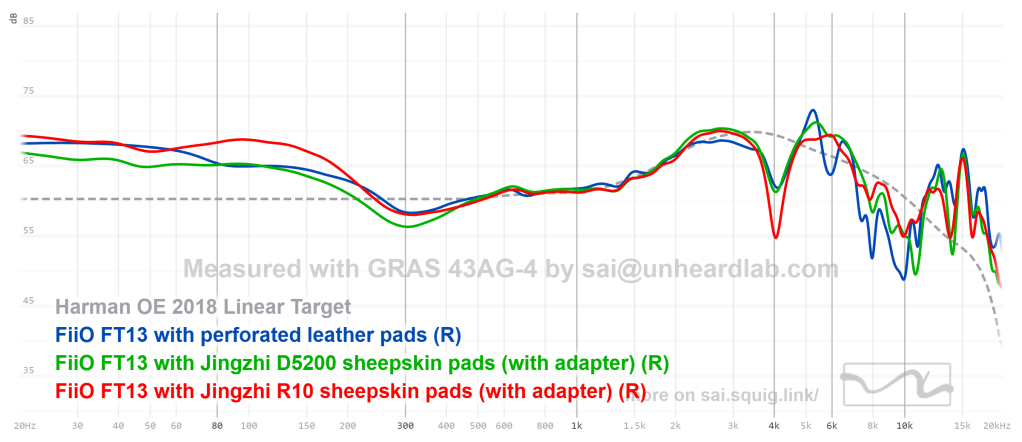
The fact that the stock earpads show a lot of thought, with their small front openings, underscores the difficulty of tuning this design. Pad-rolling with other available options, sadly, didn’t yield significant improvements. This is largely because the most problematic area of the tuning lies in the upper treble.
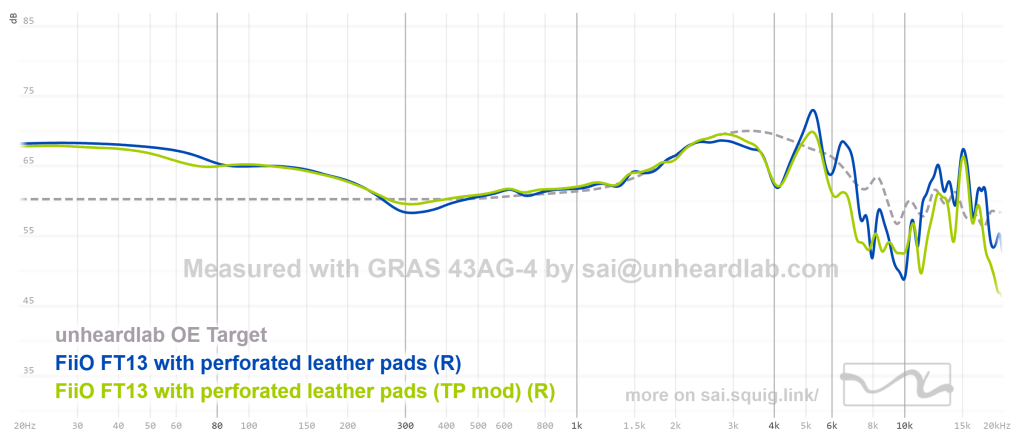
The most effective trick is thus a simple, mechanical fix: the toilet paper (TP) mod. With the perforated leather pads plus a thin layer (1-ply) of tissue placed over the driver, the tuning becomes much more balanced. You still get the powerful bass and clean mids, but the excessive treble sparkle is largely brought in check with the rest of the spectrum.
In this modified state, the overall presentation becomes significantly more cohesive. This is not recommended for the suede pads as the bass amount becomes overbearing with the treble reduced by the TP mod.
Recommended EQ setting for this headphone (adjust the bass and treble filters to taste):
Preamp: -2.5 dB
Filter 1: ON PK Fc 50 Hz Gain -3.0 dB Q 0.500
Filter 2: ON PK Fc 170 Hz Gain -5.5 dB Q 1.500
Filter 3: ON PK Fc 330 Hz Gain 3.0 dB Q 1.500
Filter 4: ON PK Fc 3900 Hz Gain 3.0 dB Q 3.000
Filter 5: ON PK Fc 5300 Hz Gain -3.5 dB Q 4.000
Filter 6: ON PK Fc 13000 Hz Gain -4.0 dB Q 2.500
Filter 7: ON PK Fc 15500 Hz Gain -3.0 dB Q 3.000
If your goal is to EQ the response to match the Harman Target, consider the AutoEQ function provided by Squiglink as a convenient starting point. I personally recommend customising the filters to better suit your own hearing, especially in the treble. While the AutoEQ provides a useful baseline, individual adjustments can often significantly improve your listening experience.
If you’re new to EQ, I’d recommend checking out this video by Resolve from The Headphone Show — it’s a really solid intro and walks through the basics in a clear, no-nonsense way. Great place to start!

MEASUREMENTS
Frequency Response:
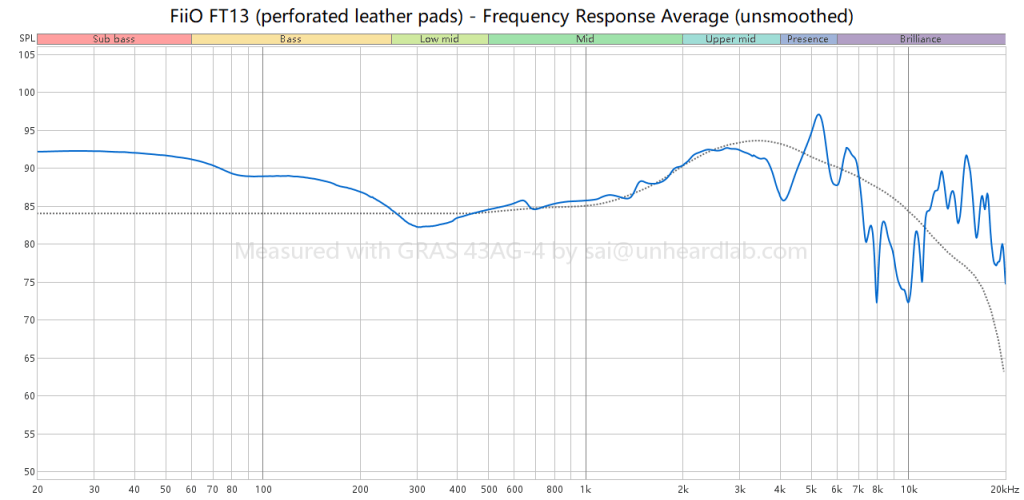
The response is obtained by an average of 5-6 positional variations. The FR shown on the graph is unsmoothed.
Comment: It’s Mt.Beyer, only in the upper treble…
Positional Variation:

This graph illustrates how headphone placement on the head affects perceived tonal balance: with the ear positioned at the front (blue), centre (green), and back (red) of the headphone. The FRs shown on the graph are 1/48 octave smoothed.
Comment: This headphone does not show a lot of positional variation, largely due to the smaller front opening of the ear pads. As such, the upper treble peaks are quite consistent irrespective of the fit.
Leakage Tolerance:

This graph demonstrates how leakages to the front volume can result in FR change: blue (good seal), purple (thin arm glasses), red (thick arm glasses). The FRs shown on the graph is 1/12 octave smoothed.
Comment: Like most closed-back dynamic headphones, this headphone shows significant bass loss when the seal is broken.
Linearity and Dynamic Compression:

Linearity and dynamic compression testing plots the headphone’s frequency response at two input levels to show how it reproduces signals as loudness changes. Any divergence between the high-level and low-level curves points to where the transducer’s dynamic range begins to compress or distort. Here, the measurements are superimposed to allow direct comparison. The FRs shown on the graph is 1/6 octave smoothed.
Comment: Slight compression below 60Hz (0.5-1dB) at 105dB SPL, which shouldn’t be a major concern.
Impulse Response:

The impulse response test measures the initial response, overshoot, and decay of a transducer upon receiving a signal. An initial upshoot indicates a normal/non-inverted polarity, vice versa.
HpTF Variations:

Headphone Transfer Function (HpTF) describes how sound is shaped by headphone design and ear anatomy before reaching the eardrum. Different measurement rigs (with varying pinnae designs) introduce unique reponses/resonances and potential deviations from actual human perception. Understanding HpTF helps translate measured data into real-world listening experiences.
Total Harmonic Distortion (THD% 2nd-9th) & Excess Group Delay (94 dB):


These measurements are conducted in quiet, normal room conditions (as opposed to an anechoic chamber), meaning there may be some influence from ambient room and external noise. These results should be considered a preliminary assessment of performance, primarily for identifying major issues, and do not reflect the best-case performance scenario. Any peaks/dips around 9 kHz are most likely artifacts from pinna interaction/phase cancellation, rather than inherent features of the device under test.
Comment: Excess group delay shows resonances in the upper treble, which aligns with the peaks and dips we see on the frequency response graph. Distortion is acceptable, but not ideal. We see a slight elevation in THD between 1-2kHz, a region where our hearing tends to be more sensitive.
Channel Matching:

Channel matching graphs are intended for quality control checks and do not relate to the perceived sound profile. A specialised configuration is used in this test to capture differences between channels, mitigating interference from positioning on the rig and the asymmetry in the GRAS pinnae design, a legacy of KEMAR. The left (blue) and right (red) channels are measured using a flat plate coupler with an IEC60318-4 ear simulator.
Electric Phase & Impedance:

The above graph shows the measured impedance (green) and electric phase (grey), measured under free-air condition (minimal front volume coupling).
Comment: The very low resonance frequency backs up the FT13’s ability to reproduce powerful bass. However, we see some oddities in the 1.8 kHz region (likely cup reflection) and an upward tilt in the upper treble. Given so, it’s advisable to avoid pairing the FT13 with any high output impedance sources.
END OF THE ARTICLE
Disclaimer: This review is independent and was not sponsored or endorsed by any company or affiliated entity. All headphones reviewed are purchased for review unless otherwise stated. Any links or product references are provided for informational purposes only and are not associated with any financial compensation or affiliate arrangement.

Haven’t had much time with the FT13 yet to form an opinion but I wanted to have a pair of closed backs for times my environment is a bit noisy to mask the background noise , and I wanted bass impact , fell for the beautiful wood design I’ll be honest , my impressions after a few listens were they were just alright, nothing like a memorable experience like first time with the Edition XS for example , and I guess coming from an open backs planars it’s not a fair comparison, but I wasn’t bothered by harsh highs ,probably imply my hearing isn’t 100% , just wasn’t this amazing listening experience I was expecting , but I’m gonna be patient since I’ve had back and forth opinions about the Exs as well , people just have brand loyalty when having a great product like the FiiO BTR17 I own , bought a second one after I dropped the first one in water , after contacting FiiO they offered to repair ,I unfortunately threw it away by then. Anyway point is , they are a company that pumps out products weekly , a lot of them are phenomenal value and quality but some are just buzz word compilation and schtick , I wonder where the FT13 falls , if I had bought thru Amazon I wouldn’t give it a second thought but for some reason went thru Ali , thinking the 90 days is like Amazon , so I guess we’ll have to see what options I have but to keep , perhaps the rate of returns on Amazon will signal FiiO you can’t do that to your loyal customers , eventually we will find alternatives , you can say I’m a victim of the buzz and shallow aspects of the advertising, the least they can do for us is revise the pads with some cloth , silk , something to fix the tuning , maybe the exposed driver with the metal flower grill was form over function …
LikeLike
Hey, thanks for the really thoughtful comment. Yea I definitely agree with your take on Fiio’s brand approach haha. They make great value stuff and it’s mostly well-built, but the sound can be hit or miss sometimes. Honestly I think they put a lot of effort into the FT13, and the build is gorgeous. As for the sound, have you tried simple damping mods like the almighty toilet paper approach? Of course they don’t last, but they could give you a direction to see if you like it (with less treble). After that, we could move to a more sophisticated approach like some acoustic damping material or foam. I’ll look around too.
LikeLike
Dynamic compression measurement! Very interesting. I know a friend who listens very loudly, to the point the Susvara sounds V-shape to him. More measurements like this would be nice! (still, gotta tell him to keep volume in check… if he wants to keep enjoying music lol).
LikeLiked by 1 person
A handsome pair of headphones, sadly the sound isn’t for me. Tried it once and never looked back.
If I were to summerize my experience in one word, it would be “incoherency”.
Fiio was so close with this one.
LikeLiked by 1 person
Yeah gotta love the looks. I definitely give them that.
LikeLike
Do implore that friend bud , trust me tinnitus is a bitch …
But then again , most people in music industry prob suffers and still produce great stuff , but it can drive you mad at times. The good thing I always have to have music in the background to mask that
LikeLike
Hey, glad you like it. Yea it’s a simple test and in a lot of cases it doesn’t reveal anything dramatic. But yeah while there might be large swings and transient peaks, always remember to keep it at healthy levels!
LikeLike
How is compared to E-MU Teak? Especially in the bass. Thanks
LikeLike
It’s meaningfully more generous in terms of bass quantity, so they definitely give you a more thunderous, authoritative sense of impact. Quality-wise though, I still prefer the Teak’s tighter, more agile presentation. As a whole package, I’d still go for the Teaks since the midrange and treble are just tuned much better, even if they’re similarly a bit bright or splashy in the treble.
LikeLike