Intro:
I previously reviewed the FiiO FT1 Pro and found it to be a solid entry in the market. It offered a warmer, more forgiving tuning than the typical Hifimans that have long dominated the budget planar space. It wasn’t perfect. I noted clipping issues at high SPLs, but it was a competent, enjoyable headphone.
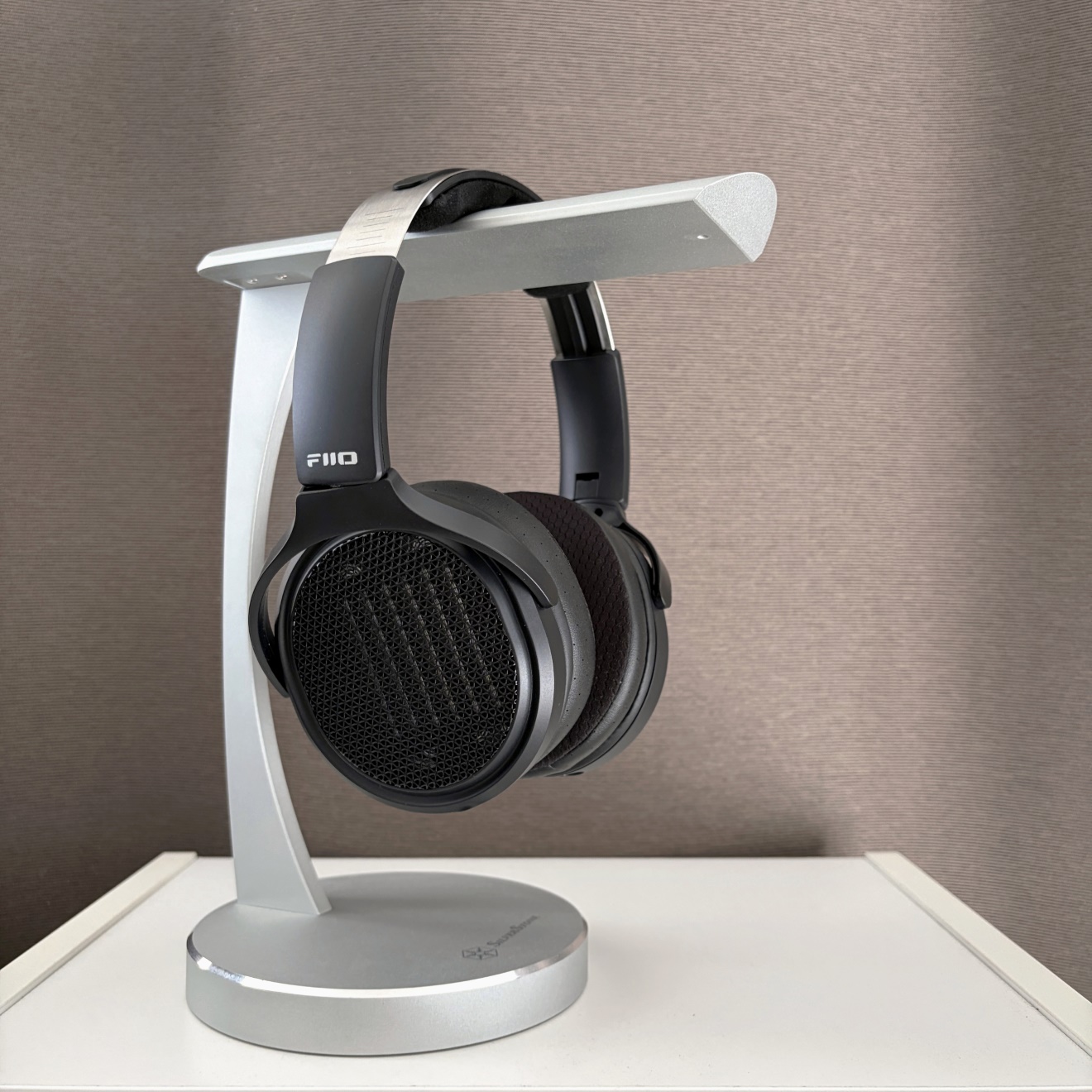
Enters the Fiio JT7. At first glance, this appears to be a redesigned, budget-friendly version of the FT1 Pro. It uses a similar driver architecture and brings a new headband design, all while hitting an incredibly aggressive price point of $119 USD.
On paper, this is exactly what the market wants: planar magnetic performance at dynamic driver prices. Naturally, I was eager to see if Fiio could refine the formula.
After testing, however, my feelings are mixed. The tuning remains very good, but I was let down to see the persistent clipping issue. In fact, on my unit, the clipping is worse than on the FT1 Pro, particularly on one channel. Let’s dig in.
Detailed measurements can be found in the final section of this article.
Disclaimer: This unit was purchased for the purpose of testing and review. Any links or product references are provided for informational purposes only and are not associated with any financial compensation or affiliate arrangement.
Pros:
+ Aggressive price point
+ Improved ergonomics
+ Balanced, warm-ish tuning
Cons:
– Clipping at high SPLs
– Uneven treble timbre
– Cheap build materials
Specs & Comfort
RRP: $119 USD/ $189 AUD
Driver size: 95 x 86 mm (effective area approx. 80 x 70 mm)
Driver type: planar magnetic
Sensitivity: 92dB/mW @1kHz (approx. 109dB/Vrms)
Impedance: 20 Ω at 1kHz
Connector: dual 3.5 mm TRS
Weight: 318 grams (wo. cable)
Clamping force: light-medium
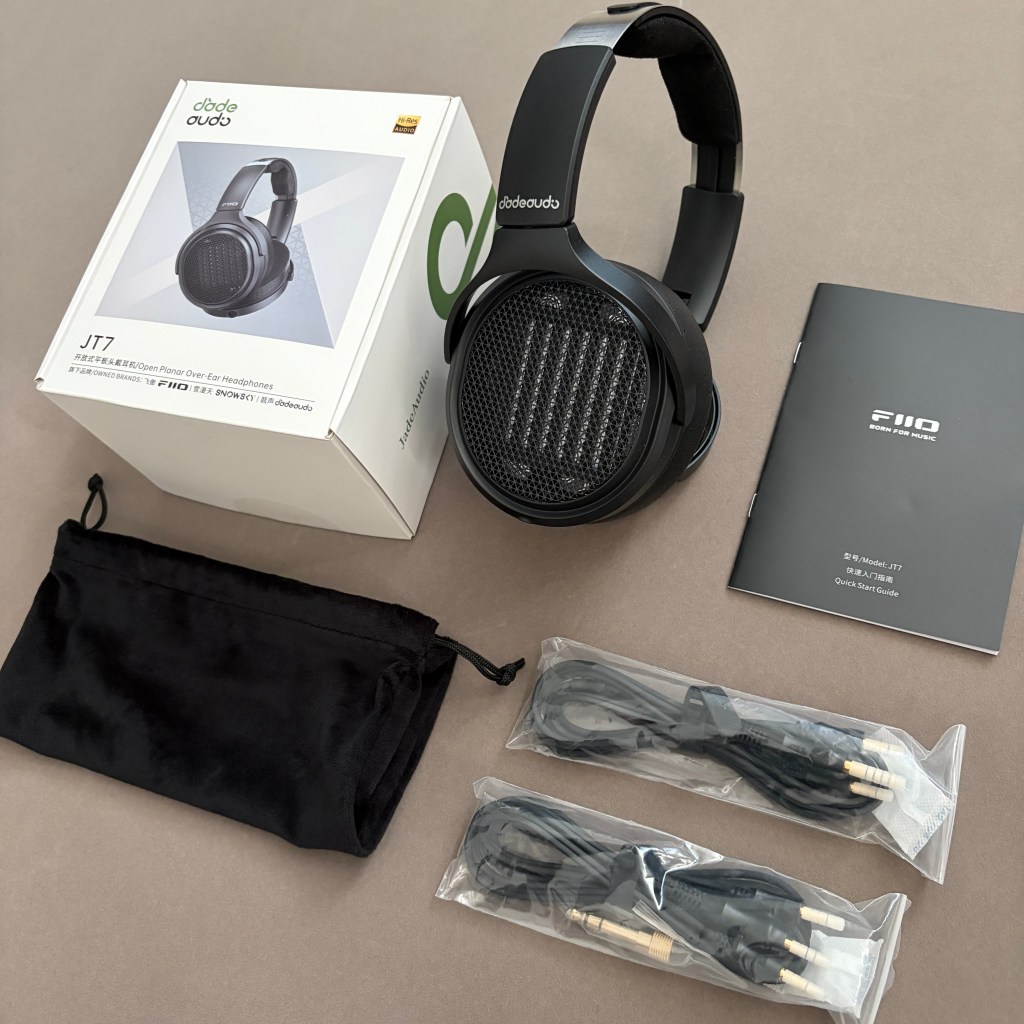
Accessories: 1.5m 3.5mm single-ended cable; 1.5m 4.4mm balanced cable; 3.5 to 6.35mm adapter; pouch
Build and Comfort:
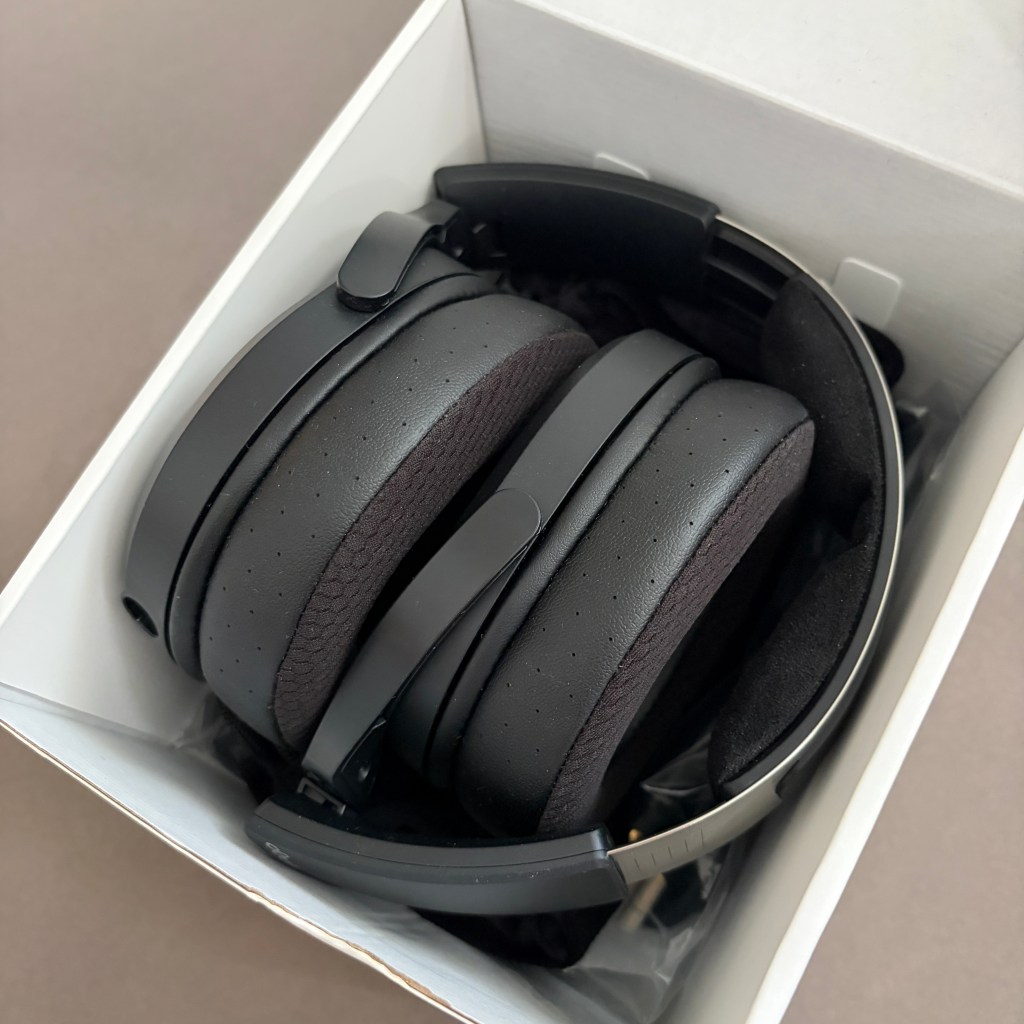
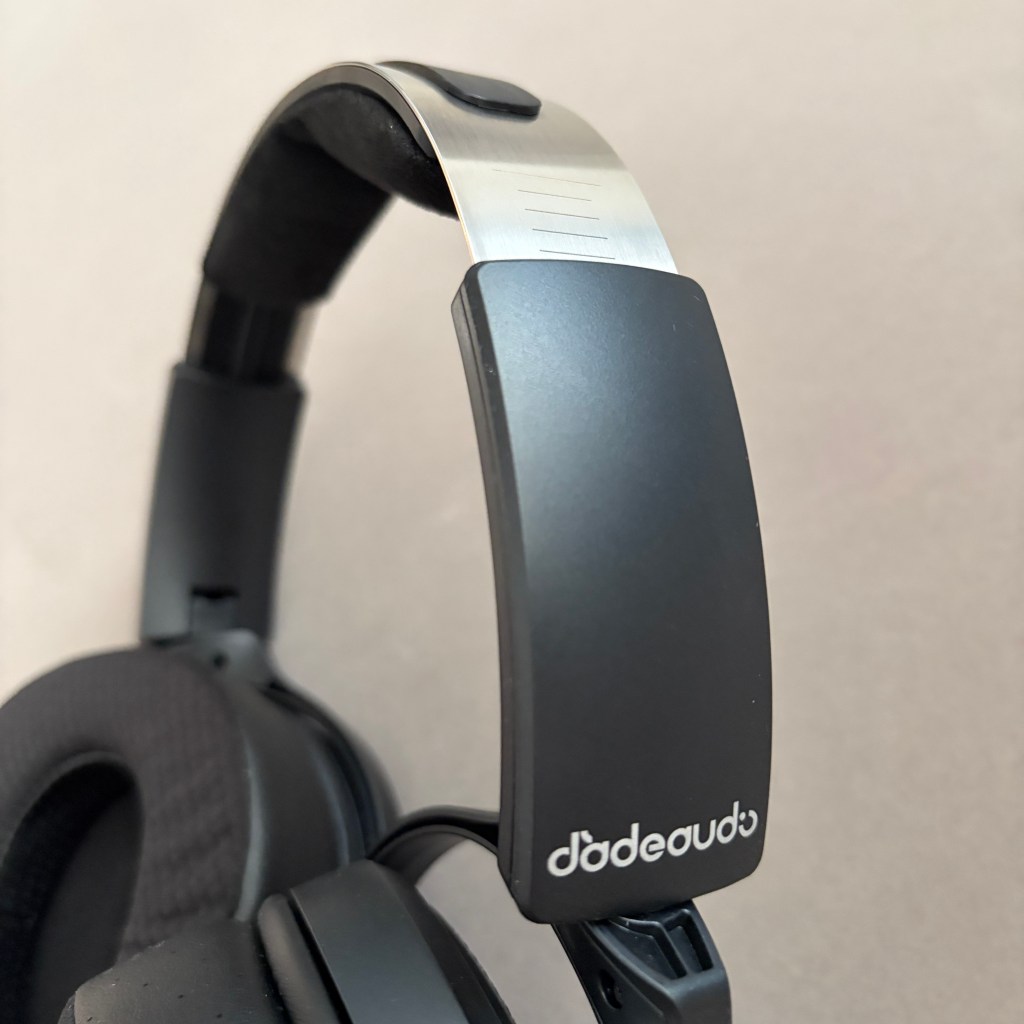
Build and comfort are generally good, with ergonomics that feel arguably improved over the FT1 Pro. The unit conforms to the head slightly better in my experience, and the foldable design is a nice practical touch. The headband structure and aesthetic strongly remind me of the Sennheiser HD 490 Pro, though the materials here feel significantly cheaper in the hand. Forgivable given the price, nonetheless.
The reliance on plastic yokes and connecting parts does raise some durability concerns, though FiiO promises extensive testing. A specific gripe I have is that the yokes make a bit of noise when I turn my head. It’s not a huge issue — and certainly not audible while listening to music — but it is worth raising.
Sound
For more comparisons, go to the squiglink database.
Tonal balance:
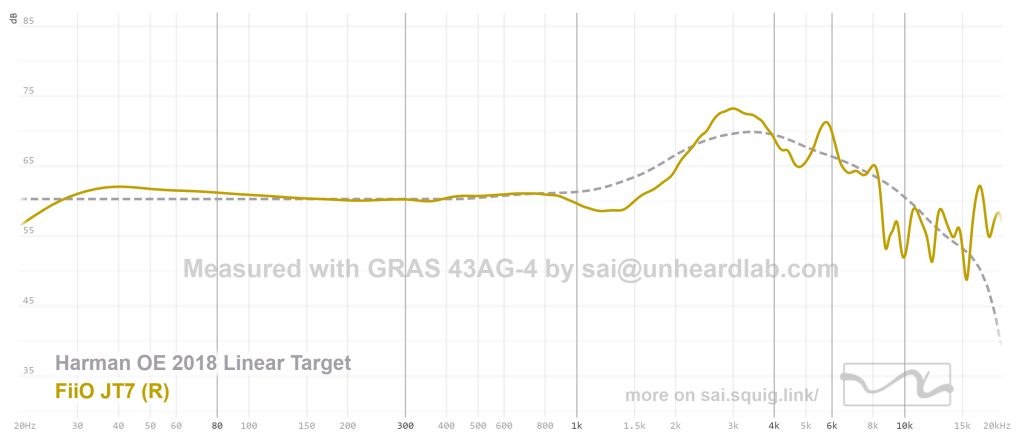
In a nut shell, the JT7 is an FT1 Pro that trades refinement for a lower price tag. It retains that warm-neutral tuning, but trades away the sense of smoothness and air.
Bass is competent and generally fine. It comes across as slightly tighter and quicker in its decay compared to the FT1 Pro, though it doesn’t hit quite as heavy.
Aside from that slight trade-off in impact for speed, everything about the FT1 Pro’s low-end pretty much applies here. Comparison-wise, it leans more toward the “Audeze style” of planar bass — linear and extended — rather than the lighter, more agile bass typical of budget Hifimans, though it naturally lacks the sheer density and weight of a full-sized Audeze driver.
Midrange is where the JT7 remains compelling. One might even argue that it performs slightly better than the FT1 Pro here, although the difference is admittedly small.
The key difference is the sense of presence: the JT7 presents vocals and instruments with a fuller, more forward character. It’s a tuning choice that favours richness and intimacy, making it a solid option if you prioritise vocal texture over space and distance. However, it does lack a bit of energy and ‘bite’ due to a scoope in the upper-mids region.
Treble is, in my opinion, the biggest downgrade from the FT1 Pro. It isn’t that the JT7 has less treble quantity, but it is significantly less linear and refined.
The treble is marred by noticeable unevenness, specifically a trough around the 4–5kHz region. This dip causes instrumental clarity to take a hit, softening the initial attack of percussive elements and string plucks. When I compared them with the FT1 Pro, this was the immediate difference that popped up.
This recession is immediately followed by a slight elevation in the mid-treble. The result is a reduction in the overall quality of the treble presentation. You get the volume of the treble without the smoothness, leading to a timbre that feels less natural than its predecessor. Lastly, the FT1 Pro also has superior clarity and a greater sense of air above 10kHz.
Other qualities:
- Soundstage
The staging is functional but mediocre. There is nothing particularly fancy about the size or expansiveness of the headspace, though to its credit, it doesn’t feel claustrophobic.
It presents as slightly more compact than the FT1 Pro, keeping the presentation intimate. Imaging is adequate for the price but lacks the holographic separation found in something like the HE6se.
- Clarity
Clarity is passable, and this stands out as the main downgrade from the FT1 Pro. In some ways, this is a case of “more treble, worse clarity,” where the extra energy highlights the grain rather than help revealing detail. It does not reach the levels of the Hifiman HE400se, but that is the trade-off for a warmer, more forgiving tone.
- Dynamics
Dynamics are a mixed bag. In the micro department — nuances, textures, and small shifts in volume — the JT7 is very close to, and essentially on par with, the FT1 Pro.
However, the sense of impact is where the headphone struggles. It does not slam as hard as the FT1 Pro, and this is likely compounded by the driver’s limitations. As I mentioned in the introduction, the clipping issue I experienced with the FT1 Pro has returned here. My unit of the JT7 clips at around 88dB in the bass, which is even easier than its predecessor (95dB). This places a hard ceiling on the dynamic range; you simply cannot push this headphone to high SPLs to get that physical slam without the driver distorting. See the section below, and the measurements for more detail.
The culprit? Magnet spacing and Fiio’s F.E.S. tech
Why is this happening? The root cause appears to be a conflict between a diaphragm technology and the physical constraint of planar drivers.
When a planar magnetic driver is manufactured, the diaphragm must be tensioned to a specific degree. This tension can be tuned to be relatively loose or tight depending on the design goals — famous examples of the former include the Hifiman Susvara, while the latter approach is typical of Audeze’s LCD series or Dan Clark Audio headphones. The optimal tension also depends heavily on the specific diaphragm material and conductive trace mass, though that is a complex topic for another day.
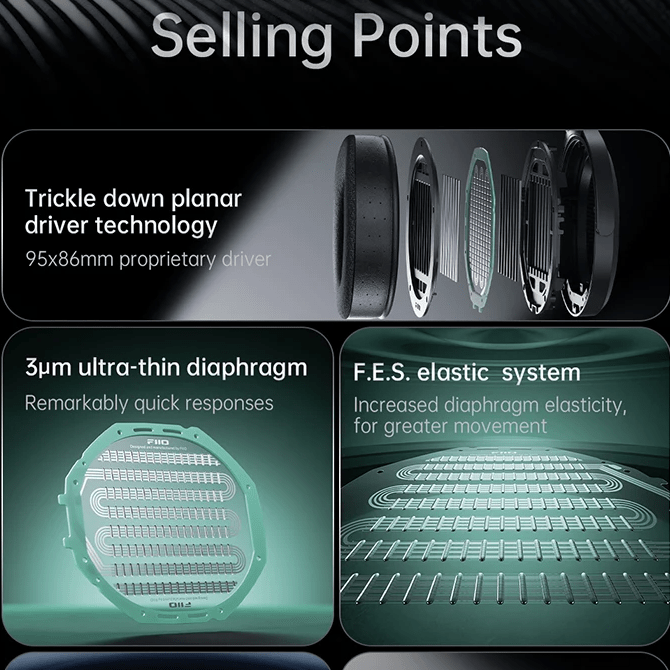
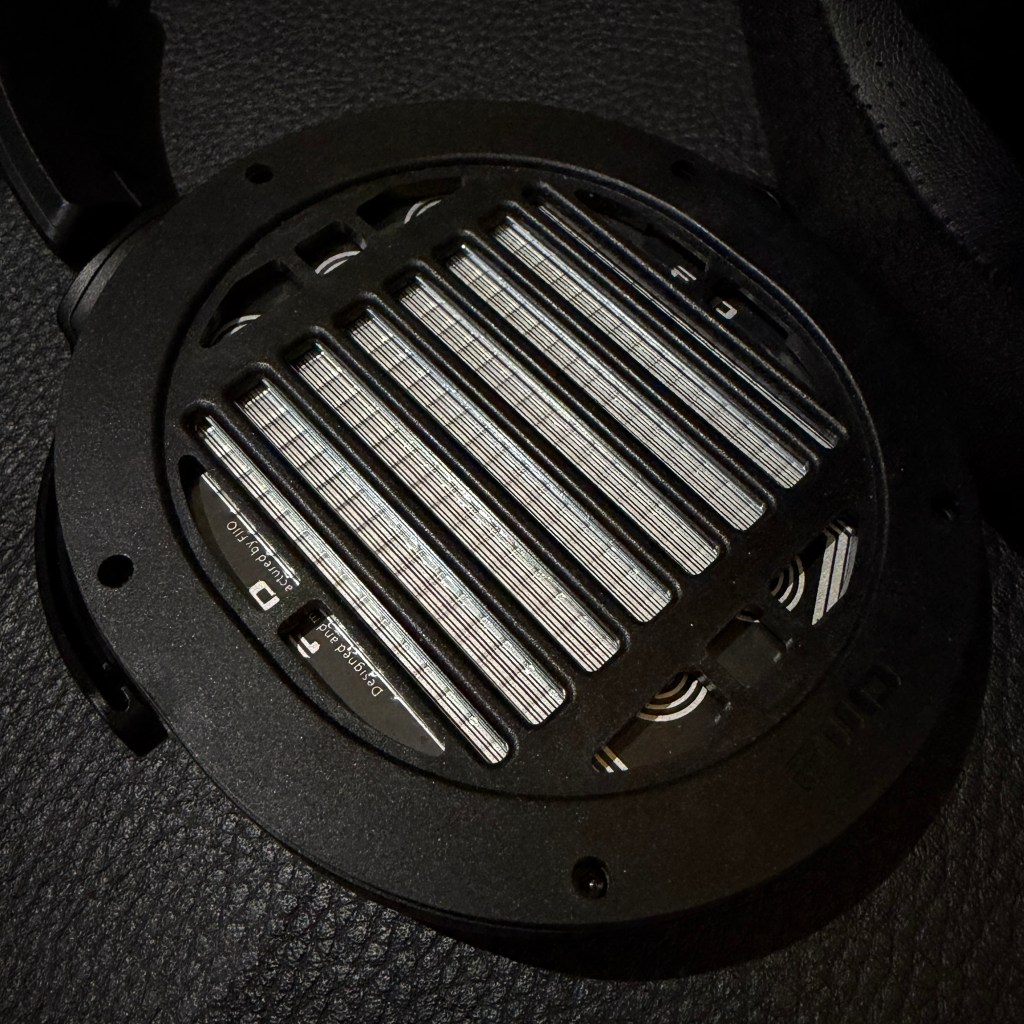
FiiO claims to have adopted an “F.E.S. elastic support system” on the JT7 — a feature absent on the FT1 Pro. On paper, this is sound engineering; it creates extra creases in the conductive traces, functioning similarly to the corrugations on a dynamic driver’s surround. Theoretically, this could enhance compliance and allow for larger excursion capabilities, which should result in better dynamics.
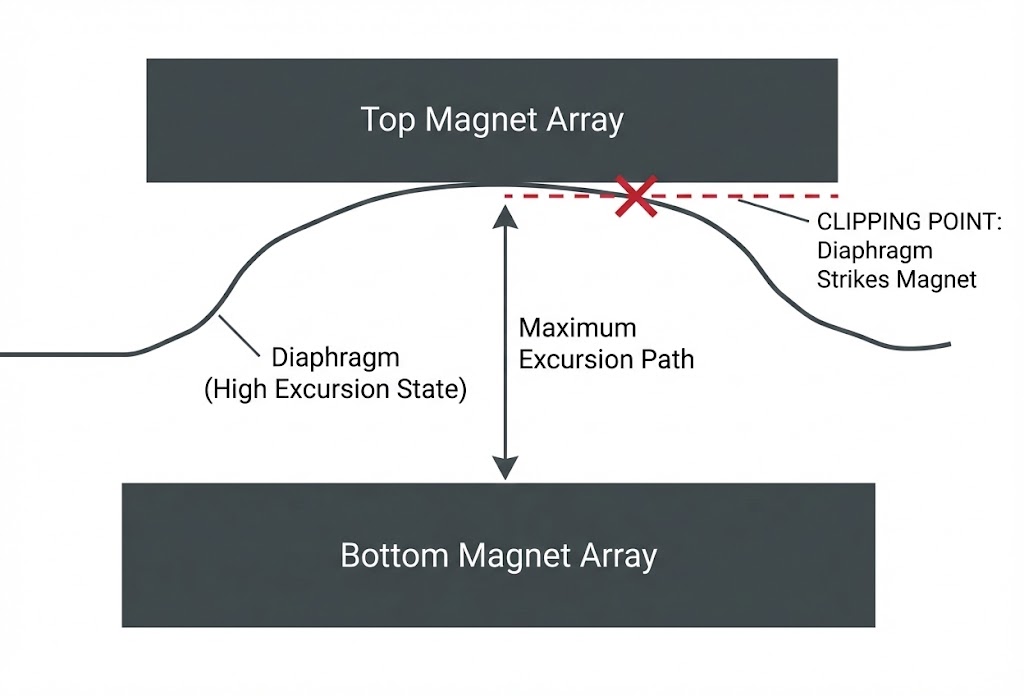
However, in the JT7, this increased compliance seems to be working against the driver structure, or at least adding sigificant higher requirements on QC. The clipping occurs because the diaphragm excursion becomes large enough to physically hit the magnet structure, creating that hard, mechanical distortion sound.
This highlights a classic dilemma in planar magnetic design: the diaphragm-magnet gap.
Larger gap: More room for excursion (better bass), but requires powerful magnets or results in lower sensitivity.
Smaller gap: Higher sensitivity and lower cost (requires weaker/fewer magnets), but limits excursion.
The JT7 uses a mix of high- and low-grade magnets to hit its aggressive $119 price point, resulting in relatively lower sensitivity. To compensate for this and keep the headphone driveable, FiiO may have reduced the gap between the diaphragm and the magnets. When you couple this reduced clearance with the F.E.S. system — which is explicitly designed to increase movement — you create a recipe for mechanical clipping. It would not happen if there is more headroom for movement.
Quality Control: the fact that this clipping was significantly worse on one channel of my unit points to inconsistent tolerances. I reached out to a representative from the FiiO team regarding this, and they confirmed that this is indeed a QC variance they are aware of and intend to improve in future batches.
While I trust they will address it — FiiO has a solid track record of acting on feedback and delivering great products — it is important to highlight this pattern, especially since the FT1 Pro suffered from similar issues. I purchased this unit at retail, so this is not a pre-production sample sent to reviewers. Therefore, if you are considering the JT7, I suggest buying from places with good return policy and warranty support in case you encounter similar issues.
Conclusion:
The FiiO JT7 is a complicated product to verdict. On paper, it checks all the boxes for a market disruptor: a planar with improved ergonomics, a foldable design, and a theoretically promising driver, all for $119 USD. Alas, the radical implementation choices combined with QC issues made my unit hard to enjoy in a fuss-free way.
From a business perspective, I understand the trade-offs made here. FiiO clearly aimed to keep the price low and the sensitivity high, making planar technology accessible to the masses without needing expensive amps. However, these choices have resulted in tangible compromises: the build feels cheaper than the FT1 Pro, the treble timbre has taken a hit in refinement, and the driver physically struggles with the excursion demands of bass-heavy tracks.
So, at $119 USD/ $189 AUD, would I recommend the JT7 if we assume the QC issues are resolved in future batches?
Yes, but with caveats. If FiiO can truly stabilise the driver excursion issues, the JT7 offers amazing value. The tuning is solid, with a forward midrange and a tight, impactful bass that differentiates it from the typical budget planar sound. However, if your budget allows, I would still recommend the FT1 Pro, which remains the more refined sibling, with better build quality.
If there are specific comparisons you would like to see, let me know in the comments.
Value Grade:
Notes on Earpads and EQ
The stock ear pads feature a hybrid construction, with protein leather on the outer walls and a breathable mesh fabric on the face-facing surface. They attach via a simple elastic lip mechanism — always a hassle-free alternative to the proprietary clip systems often found in this price bracket.
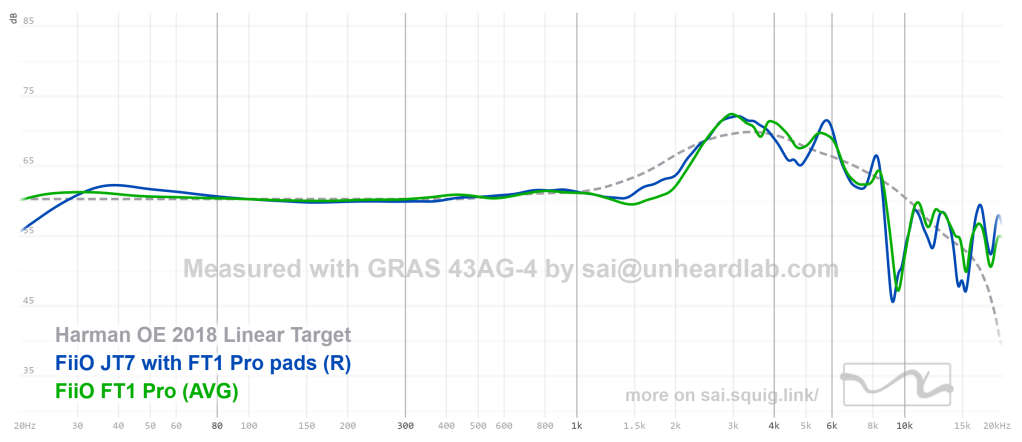
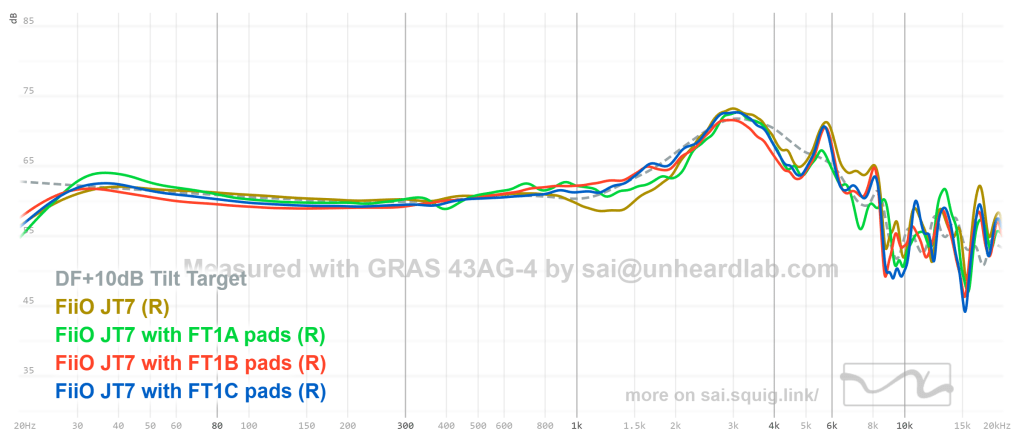
It is also worth noting that FiiO has released a series of interchangeable options for the FT1 lineup: the FT1A, B, and C pads, each made with different materials. Of the three, I found the FT1C offered the most balanced tonality on the JT7. It noticeably improved the sense of clarity while linearising the treble response, resulting in a smoother overall presentation.
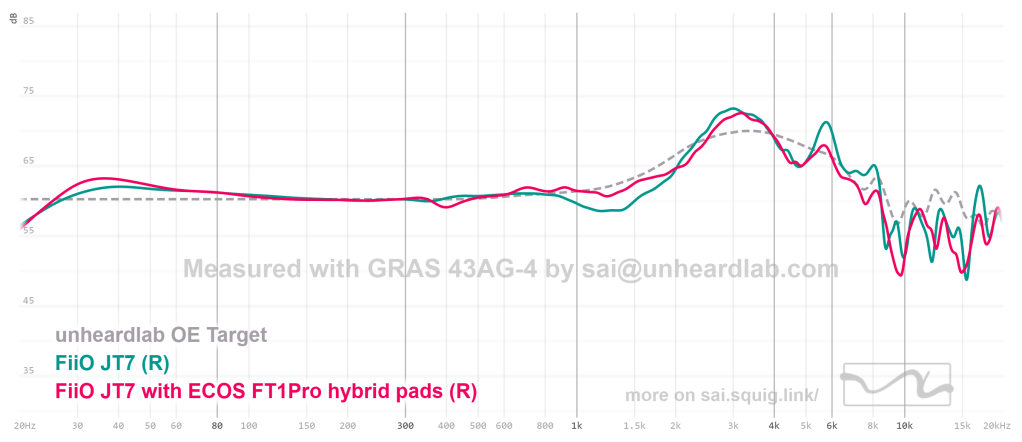
For those willing to explore third-party options, Qianyin (ECOS) offers a compelling lineup for the FT1 series. Their mesh hybrid variant strikes me as a refined version of the stock pads. Coming in under $10 USD, they are a high-value upgrade that I recommend to JT7 owners. Compared to the FT1C, the Qianyin pads present fuller fundamental tones and further reduce treble graininess. The trade-offs are more intimate soundstage and reduced sense of air, but for many, the tonal correction will be worth the compromise.
Recommended EQ setting (adjust bass and treble filters to taste):
Preamp: -3.0 dB
Filter 1: ON PK Fc 1500 Hz Gain 3.0 dB Q 1.000
Filter 2: ON PK Fc 3000 Hz Gain -3.0 dB Q 2.000
Filter 3: ON PK Fc 4700 Hz Gain 3.0 dB Q 4.000
Filter 4: ON PK Fc 5800 Hz Gain -3.5 dB Q 3.500
Filter 5: ON PK Fc 12300 Hz Gain 3.0 dB Q 2.000
If your goal is to EQ the response to match the Harman Target, consider the AutoEQ function provided by Squiglink as a convenient starting point. I personally recommend customising the filters to better suit your own hearing, especially in the treble. While the AutoEQ provides a useful baseline, individual adjustments can often significantly improve your listening experience.
If you’re new to EQ, I’d recommend checking out this video by Resolve from The Headphone Show — it’s a really solid intro and walks through the basics in a clear, no-nonsense way. Great place to start!
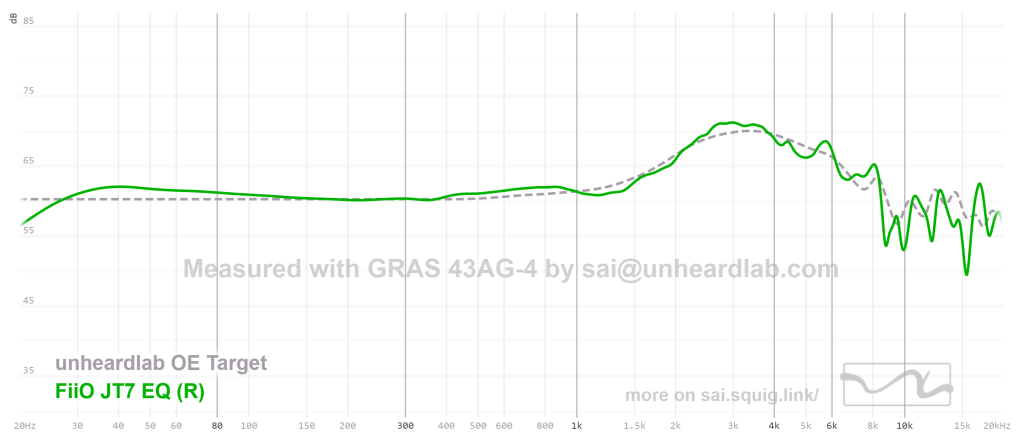
MEASUREMENTS
Frequency Response:
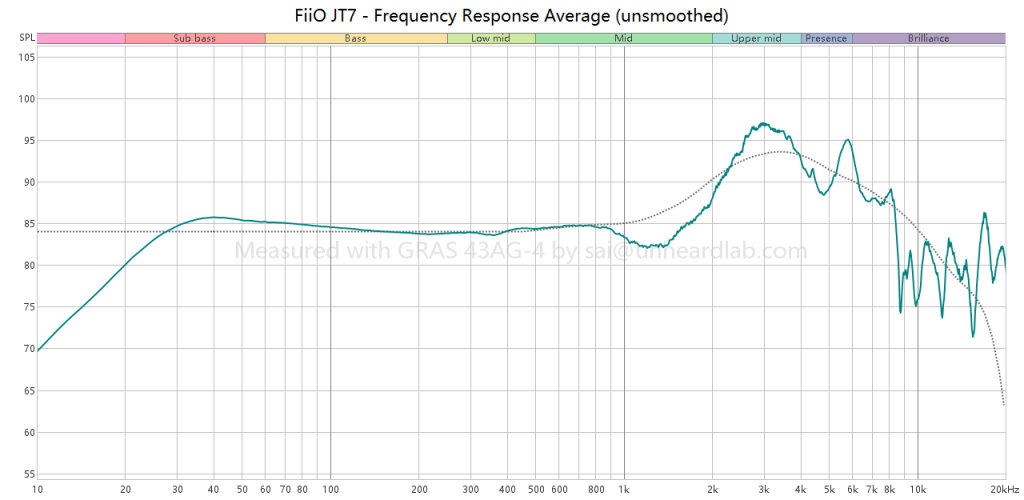
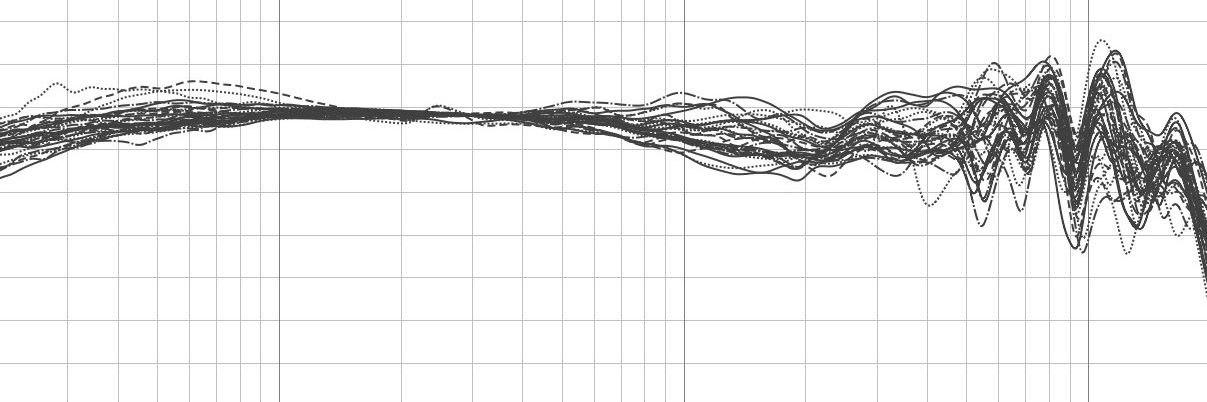
The response is obtained by an average of 5-6 positional variations. The FR shown on the graph is unsmoothed.
Positional Variation:
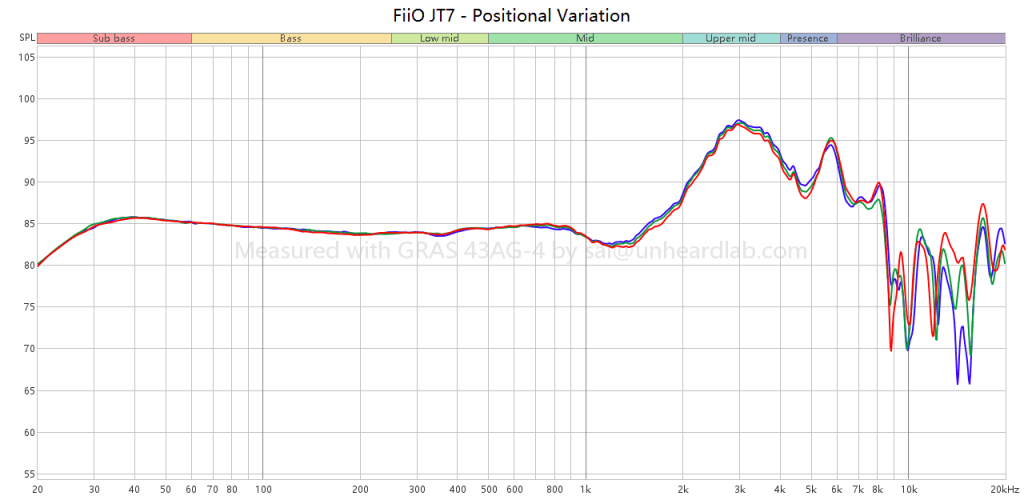
This graph illustrates how headphone placement on the head affects perceived tonal balance: with the ear positioned at the front (blue), centre (green), and back (red) of the headphone. The FRs shown on the graph are 1/48 octave smoothed.
Comment: This headphone does not show a lot of positional variation, largely due to the smaller front opening of the ear pads.
Leakage Tolerance:
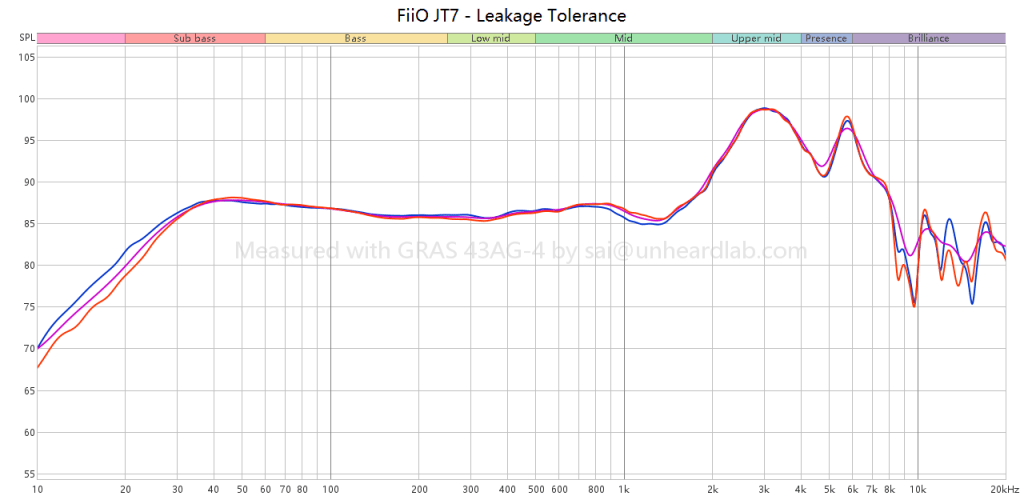
This graph demonstrates how leakages to the front volume can result in FR change: blue (good seal), purple (thin arm glasses), red (thick arm glasses). The FRs shown on the graph is 1/12 octave smoothed.
Comment: Like most open-back dynamic headphones, this headphone shows significant bass loss when the seal is broken.
Linearity and Dynamic Compression:
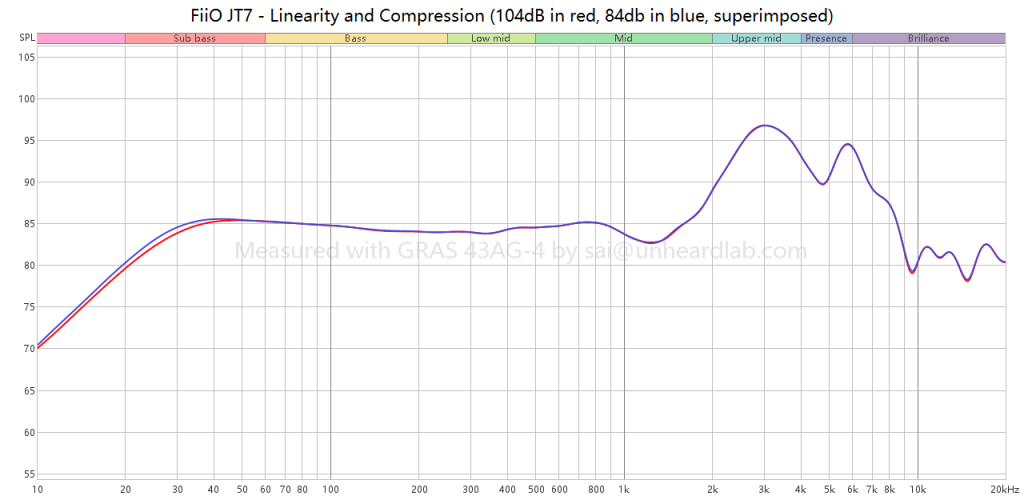
Linearity and dynamic compression testing plots the headphone’s frequency response at two input levels to show how it reproduces signals as loudness changes. Any divergence between the high-level and low-level curves points to where the transducer’s dynamic range begins to compress or distort. Here, the measurements are superimposed to allow direct comparison. The FRs shown on the graph is 1/6 octave smoothed.
Comment: Tiny compression below 50Hz (~0.5dB) at 105dB SPL, which shouldn’t be a concern.
Impulse Response:
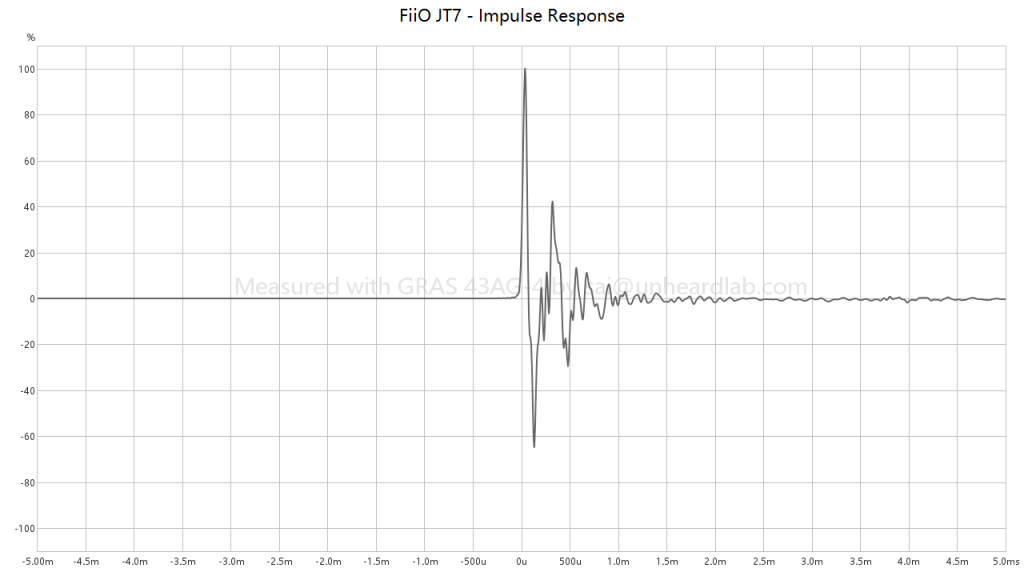
The impulse response test measures the initial response, overshoot, and decay of a transducer upon receiving a signal. An initial upshoot indicates a normal/non-inverted polarity, vice versa.
HpTF Variations:
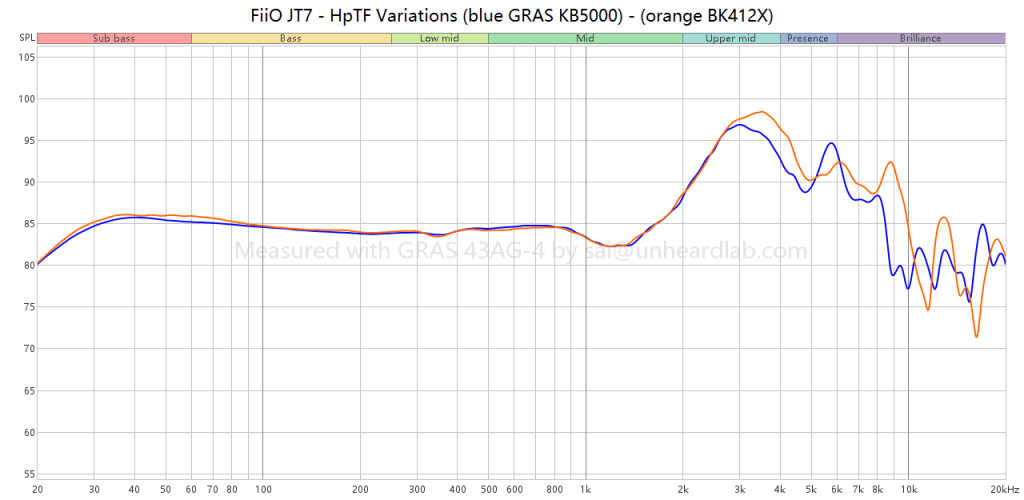
Headphone Transfer Function (HpTF) describes how sound is shaped by headphone design and ear anatomy before reaching the eardrum. Different measurement rigs (with varying pinnae designs) introduce unique reponses/resonances and potential deviations from actual human perception. Understanding HpTF helps translate measured data into real-world listening experiences.
Total Harmonic Distortion (THD% 2nd-9th) & Excess Group Delay (94 dB):
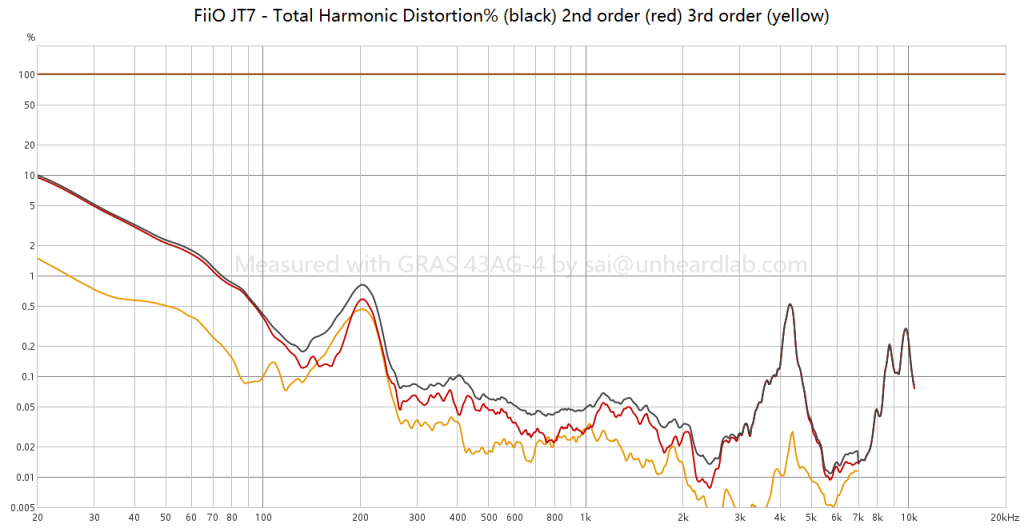
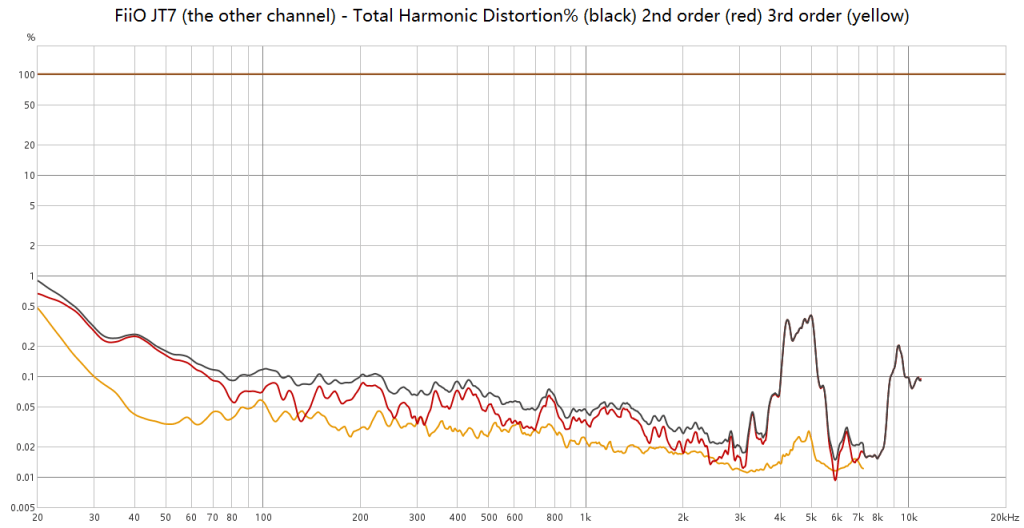
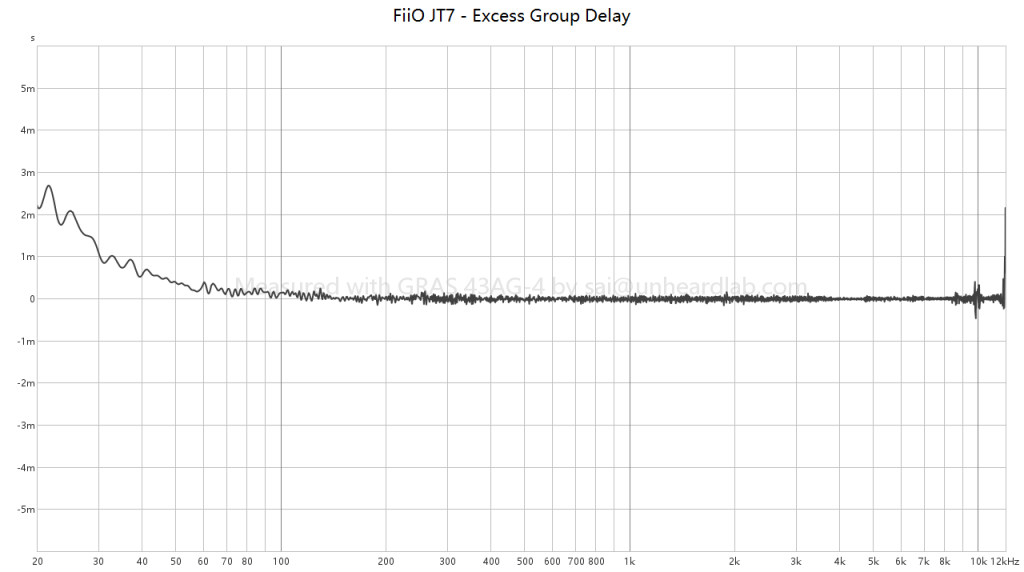
These measurements are conducted in quiet, normal room conditions (as opposed to an anechoic chamber), meaning there may be some influence from ambient room and external noise. These results should be considered a preliminary assessment of performance, primarily for identifying major issues, and do not reflect the best-case performance scenario. Any peaks/dips around 9 kHz are most likely artifacts from pinna interaction/phase cancellation, rather than inherent features of the device under test.
Comment: Bass distortion is significantly higher in one channel than the other. Interestingly, as the channel matching graph below demonstrates, the volume and frequency pairing of the two units is actually very good. This rules out issues with the magnets or conductive trace resistance, which typically manifest as one channel playing louder than the other. Again, it points to a mechanical culprit—inconsistent diaphragm tensioning. As one diaphragm is tensioned more loosely than the other, it will hit its excursion limit earlier, causing the distortion we are hearing without necessarily affecting the overall volume balance.
Channel Matching:
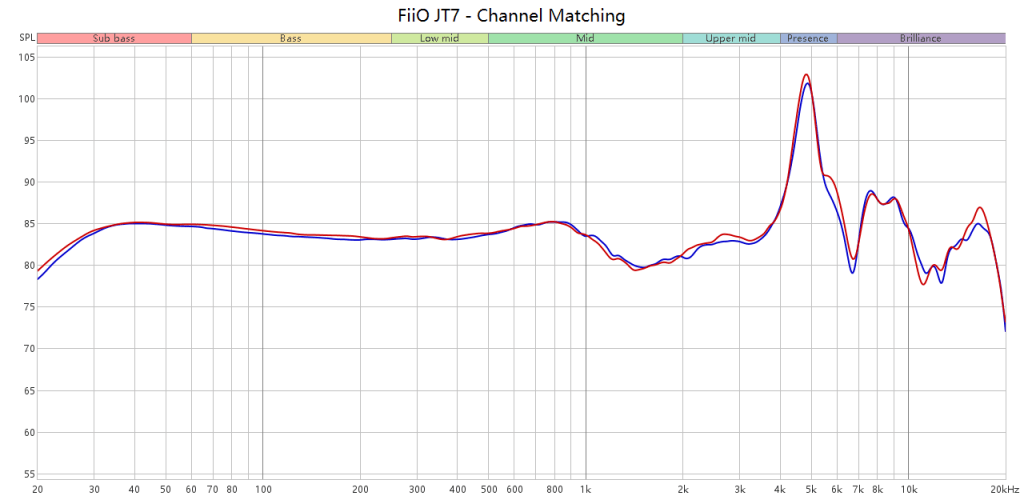
Channel matching graphs are intended for quality control checks and do not relate to the perceived sound profile. A specialised configuration is used in this test to capture differences between channels, mitigating interference from positioning on the rig and the asymmetry in the GRAS pinnae design, a legacy of KEMAR. The left (blue) and right (red) channels are measured using a flat plate coupler with an IEC60318-4 ear simulator.
Electric Phase & Impedance:
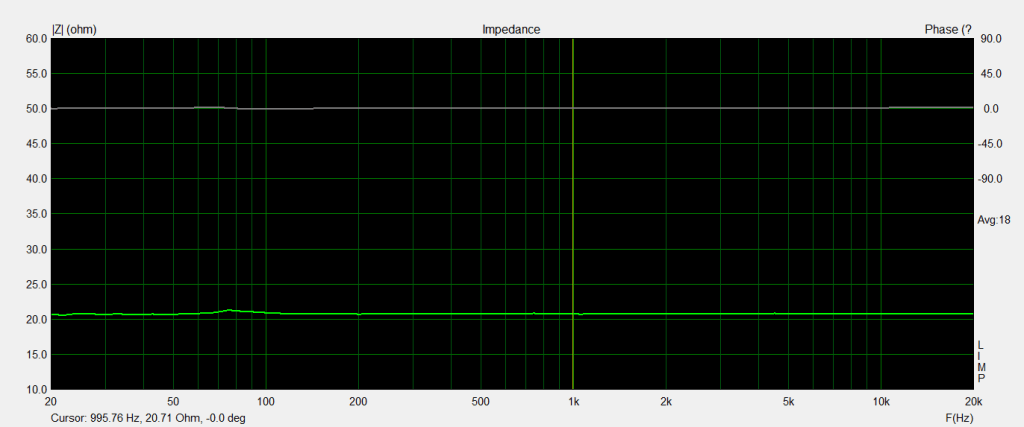
The above graph shows the measured impedance (green) and electric phase (grey), measured under free-air condition (minimal front volume coupling).
END OF THE ARTICLE
Disclaimer: This review is independent and was not sponsored or endorsed by any company or affiliated entity. All headphones reviewed are purchased for review unless otherwise stated. Any links or product references are provided for informational purposes only and are not associated with any financial compensation or affiliate arrangement.

Great review! I’ve bought myself a pair of JT7 just to see the performance of such a cheap planar headphone. It is indeed a decent option for those who are seeking for a budget headphone to begin with their hi-fi journey.
When it comes to the FES system, it is essentially a product of compromise created largely to accommodate the diaphragm’s fundamental resonant frequency (f0). It sacrifices high-frequency extension — and we must also factor in that planar magnetic headphones are prone to high-frequency diaphragm breakup when operating at large amplitudes — in exchange for enhanced low-frequency response, which delivers a more powerful sense of low-end energy when listening to electronic music.
A prime example of planar headphones with deficient low-end performance is, first and foremost, the planar over-ear models from Moondrop. Their headphones typically feature present and audible sub-bass, yet it lacks impact and solidity. That said, the Para II employs a special approach: with a sufficiently large diaphragm area, it achieves a low-frequency boost via pad-rolling of the ear cushions, thus indirectly delivering respectable sub-bass performance. In my personal opinion, however, its sub-bass performance still falls short of the JT7, even though the Para II is exceptionally outstanding in terms of distortion control and high-frequency linearity.
To be frank, for a pair of planar magnetic headphones priced at $100, we have to acknowledge that it has made numerous trade-offs. These include, but are not limited to: bad cable build quality and electrical specifications, insufficient structural strength of the headband joint components which are made of ABS, and the use of ferrite magnets instead of neodymium magnets with skimped dimensions and material usage — a choice that indirectly leads to low sensitivity, among other drawbacks. Despite all this, its wearing comfort and the completeness of its sound tuning are exceptionally high, a true rarity in this price bracket. I would highly recommend that for people who are trying over-ear headphones for the first time to pick up a pair (better to have an amp with decent current flow and low output impedence). You will absolutely like it 🙂
LikeLike
I think good-quality bass is much more important because you can EQ quantity (but not quality).
You sound like a seasoned Fiio rep btw. 🤣
LikeLike
Haha let’s give him a fair go! I treat everyone here as fellow hobbyists unless I see otherwise. So as long as the info adds value to the conversation, I’m all for it.
LikeLike
I would treat that as a compliment lol, but I’m just a normal headphone enthusiast.
LikeLike
Thanks for the thoughtful comment! I actually agree with most the points you raised. Even with the clipping issue, I still consider the JT7 probably one of the best value planars we’ve ever seen, which is exactly why I gave it such a high value rating.
You’re spot on re the bass department. Moondrop planars can feel a bit limp in the low end out of the box. While they take EQ incredibly well, in stock form the FiiO JT7/FT1 Pro offers a much more satisfying fullness and impact.
Regarding the FES system, I’m sure it brings tangible benefits. My main concern is just whether the added strain on QC is justified from a business and user-experience perspective. For a planar with such a low price tag, I imagine that the margins are already very thin. So if that design leads to a higher defect rate, the cost of returns and warranty claims could easily eat up those earnings. It’s really a bold game.
But ultimately, I agree with your conclusion: the JT7’s comfort and tuning defintely make it a fantastic product despite some concessions in build. If Fiio was able to get rid of the clipping issue, I would say this is a non-brainer budget planar.
LikeLike
So it seems like “king” of the budget planars is still the HE400se.
Now you can get is as low as 99$ I believe maybe some open boxes even cheaper, and with EQ these sound really really good.
LikeLike
Yeah, I’d say if you don’t mind using EQ and can get along with the fit, the HE400se is perhaps still the king of value with how low the street prices are getting now.
That said, EQing it isn’t always straightforward. The treble peaks on the HE400se can be tricky to tame perfectly because of how they interact with individual HRTF. For the seasoned ones among us it’s a small hurdle but it’s not exactly plug and play. I really wish the JT7 could have dethroned it cleanly. For those who want out-of-the-box tone I’d say the JT7 defintely wins, so far as they have a good unit.
LikeLike
Great review as always!
Almost bought this as a gift, but ended up with the og Para. This one looks like a great budget gaming pick.
LikeLiked by 1 person
Cheers. Yeah even though they’re both planars they’re actually pretty different beasts in terms of construction, materials and the driver design itself. The lighter weight and that slightly darker response definitely make this one more suited for gaming.
LikeLike
I am interested in a budget planar magnetic OE headphone.
There is this paragraph in the review which is not easy for me to understand.
“Clarity
Clarity is passable, and this stands out as the main downgrade from the FT1 Pro. In some ways, this is a case of “more treble, worse clarity,” where the extra energy highlights the grain rather than help revealing detail. It does not reach the levels of the Hifiman HE400se, but that is the trade-off for a warmer, more forgiving tone.”
Does this mean that the Hifiman HE400se has less treble and a more warm, forgiving tone?
Or the opposite, that the HifiMan has more treble, and the FT7 has a more warm forgiving tone?
Please clarify. Thanks
Otherwise an excellent review. Such a shame about the QC issues. A head worn device already has a low tolerance for channel mismatches, due to the closeness to the ear drum. The challenge for most buyers is that they will not have tools to test for any minor differences in channel imbalances in volume, frequency response or distortion.
LikeLike
Ah, sorry if that was confusing! I meant the latter. The JT7 is darker and smoother, while the HE400se is brighter.
And yeah it’s a shame about the QC. In this case it’s not really a channel matching issue. I’m actually glad Fiio has good control on that front. But the bass clipping is still annoying especially for those who listen to EDM or other bass-heavy genres.
LikeLike
Thanks for the JT7 review! I’m interested to get the Ecos pads from the ebay.au seller you mentioned, would you know which one is the correct mesh hybrid one based on the choices?
a. Football net cloth
b. Ice gel
c. Yellow protein edge
c. Black protein edge
Thanks in advance!
LikeLike
Glad you find it useful! The ear pads I mentioned are the yellow/black protein edge variant. They might have updated the design, as the ones I got do not have perforations on the inner side.
Instead, you may purchase from this seller on Aliexpress: aliexpress.com/item/1005010360546561.html?
LikeLike
Thanks for clarifying! Unfortunately, that Aliexpress store doesn’t have shipping to the Philippines. I may have to risk it with the ebay.au one
LikeLike
Ah too bad. This link seems to match what I have, but it costs more:
https://www.ebay.com.au/itm/317188291424
LikeLike
I found a store from our local retailer shoppee which looks identical! Can you confirm if this is the correct one? https://ph.shp.ee/rC168Wt
LikeLike
I found an even cheaper one: https://ph.shp.ee/7uKG62K
LikeLike
Yup, that looks right!
LikeLike
Awesome! Ordered. Thanks again!
LikeLiked by 1 person