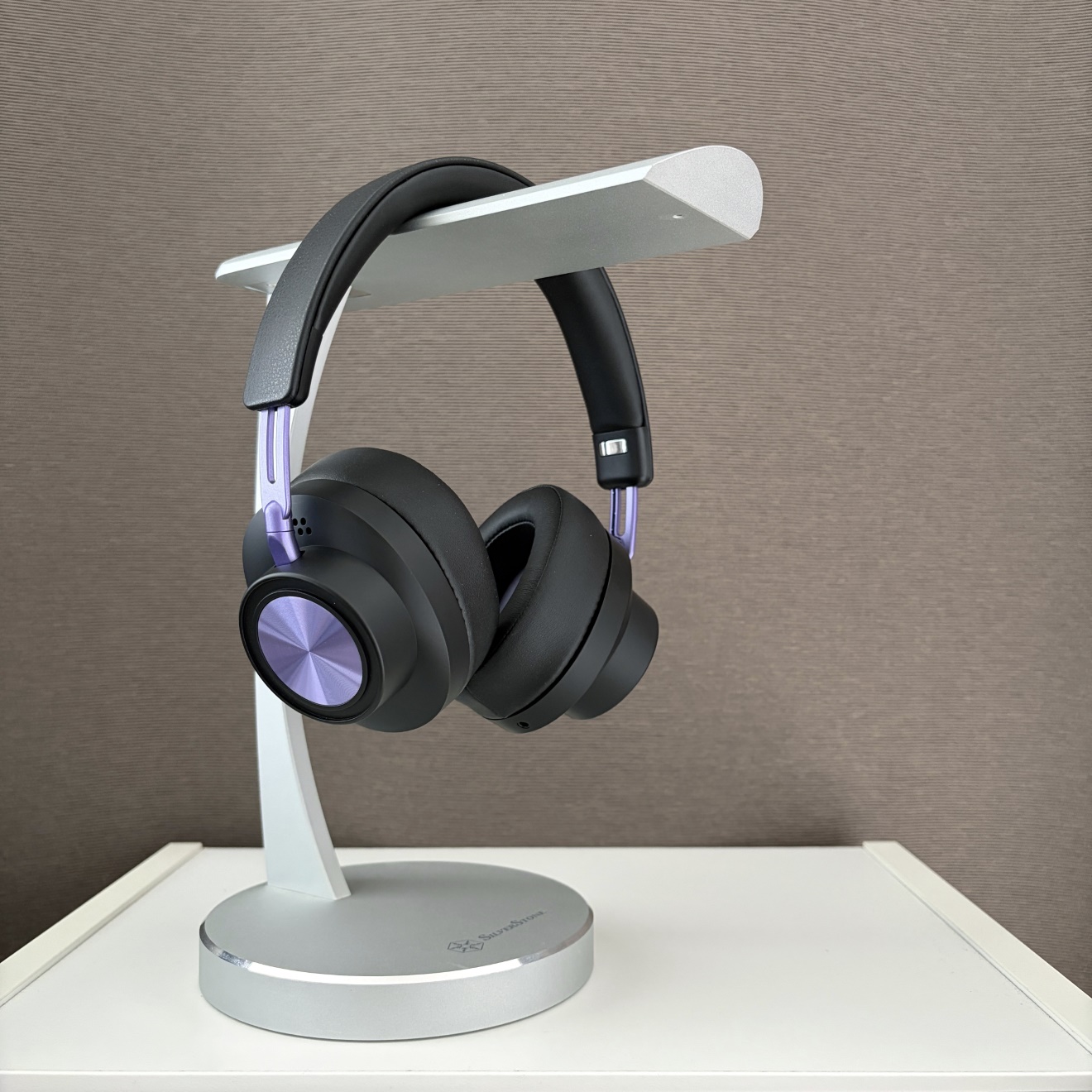
Intro:
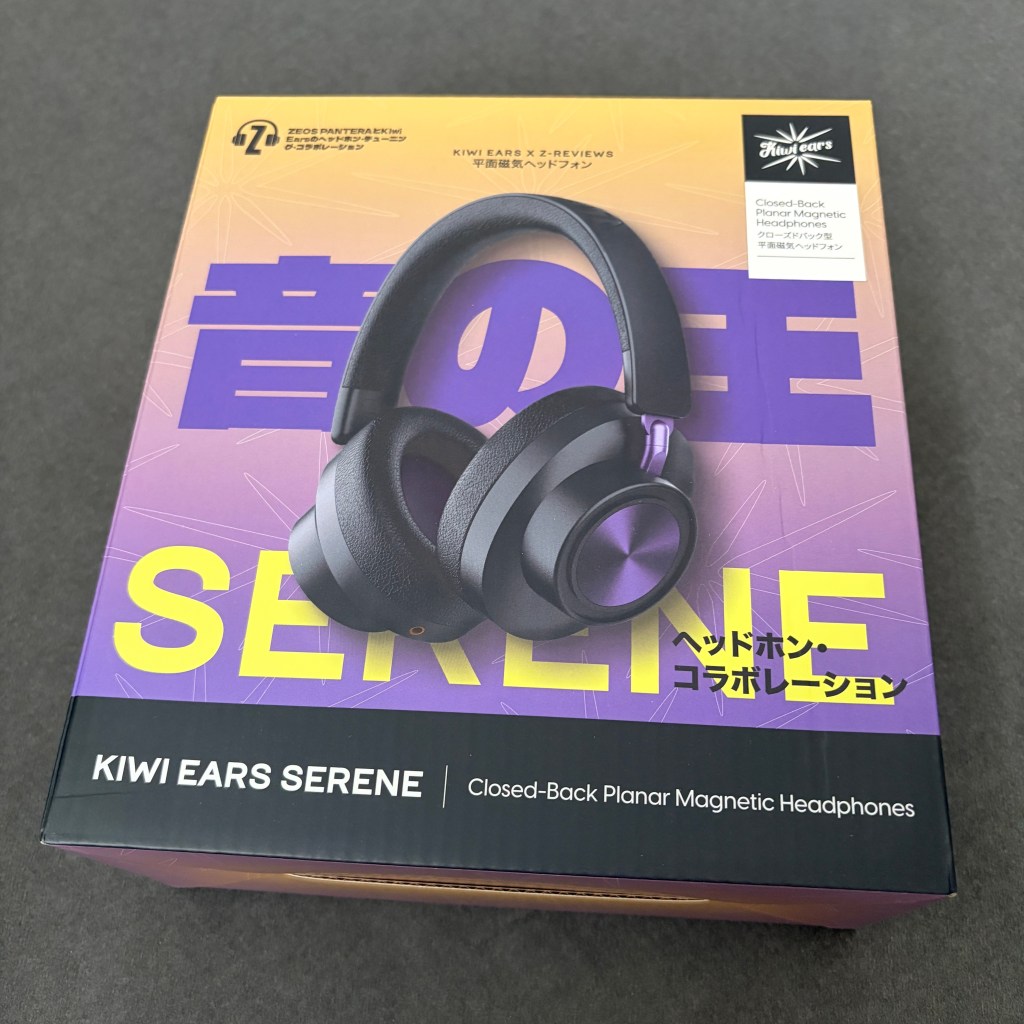
Collabs are a tricky business. Sometimes they result in a genuinely tuned product that fixes the flaws of earlier ones; other times, they feel more like a marketing exercise. The Kiwi Ears x Z Reviews Serene is an interesting case. Priced at $159 USD, this entry-level planar has the potential to shake up a budget market currently dominated by the Hifiman HE400se and the FiiO FT1 Pro.
Named Serene, the goal here, according to Z Reviews, was to create a headphone for quiet listening. This logic could come from the Fletcher-Munson curve: when you turn the volume down, human hearing loses sensitivity to bass and treble first. So, theoretically, a headphone with boosted ends should sound ‘normal’ at quiet levels.
But the execution results in a sound signature that is very specific and frankly quite niche. It isn’t just a ‘loudness compensation’ button in headphone form, but more of a unique, if polarising, shade of lukewarm.
Detailed measurements can be found in the final section of this article.
Disclaimer: This unit was kindly sent over by Kiwi Ears for the purpose of review. There are no strings attached to the content.
Pros:
+ Relaxed, non-fatiguing listen for BGM vibes
+ Ample bass quantity works well at low volumes
+ Competent planar implementation for the price
Cons:
– Lack of articulation and overall clarity
– Blunted dynamics and soft transients
– Niche tuning limits genre versatility
Specs & Comfort
RRP: $159 USD/ ~$249 AUD
Driver size: 72 mm x 89 mm (effective area approx. 33 mm x 33 mm)
Driver type: Planar Magnetic
Sensitivity: 104 dB/Vrms @1kHz
Impedance: 56 Ω at 1kHz
Connector: dual 3.5 mm TRS
Weight: 269 grams (excl. cable)
Clamping force: light-medium
Accessories: 1.5M cable
Build and Comfort:
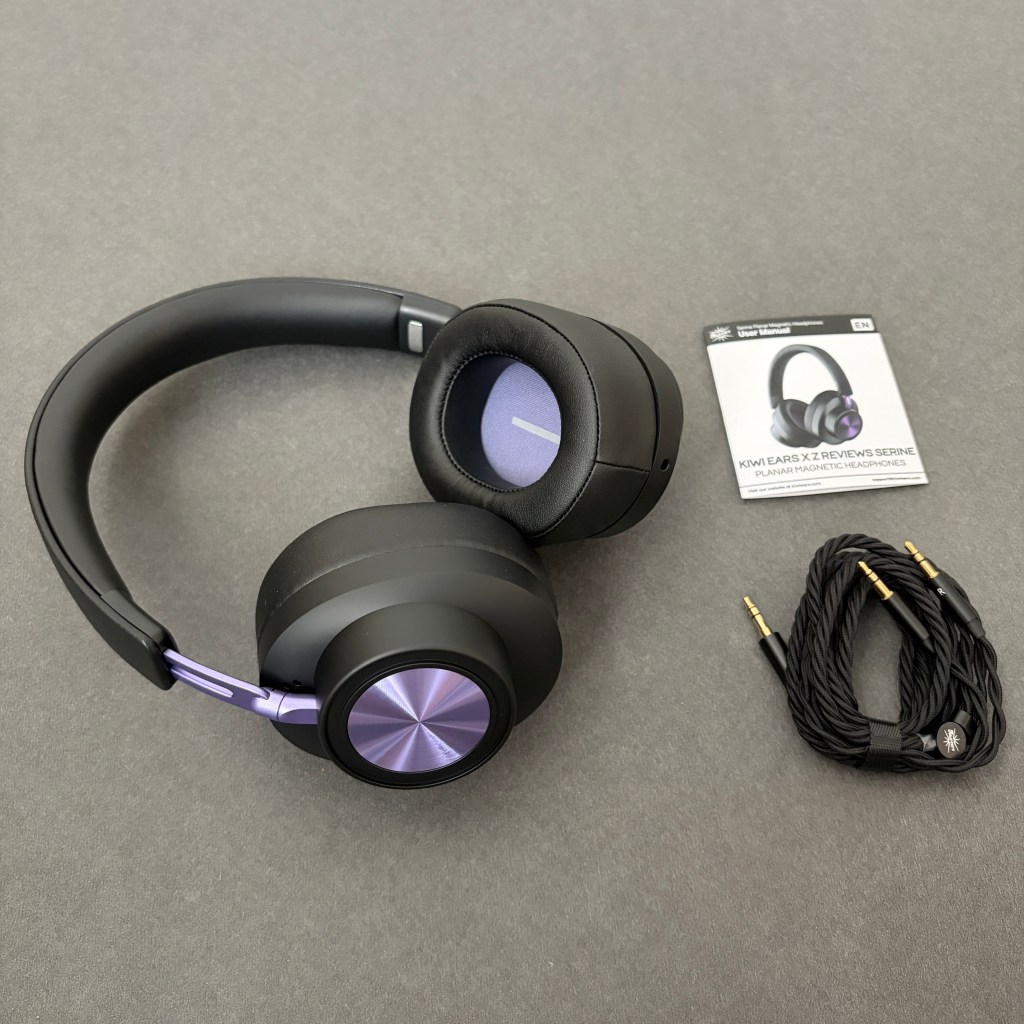
The build itself is a mix of materials. The headband tends to squeak quite a bit when stretched beyond a certain point. The yokes are plastic, which might raise some longevity concerns compared to metal alternatives. The ear pads are made of protein/pleather.
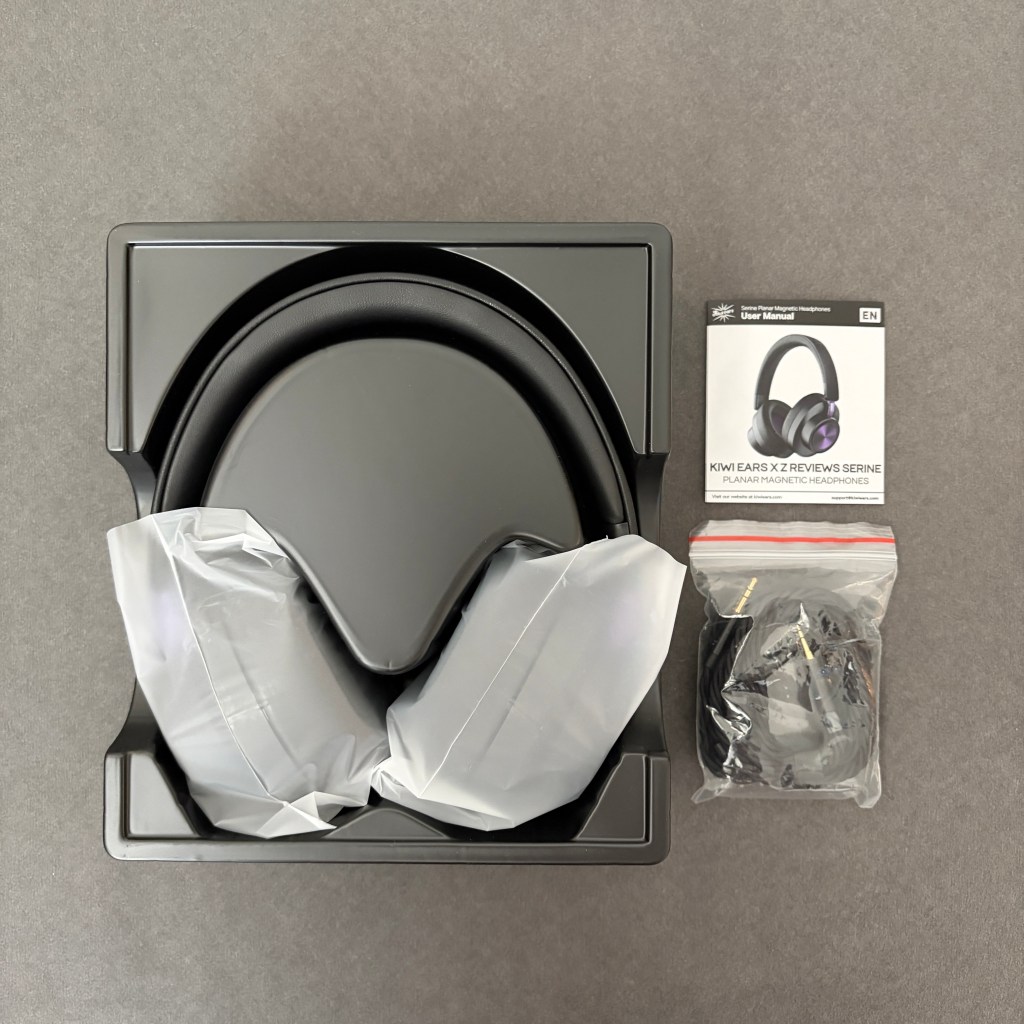
The accessory package is sparse. You get a basic cable and the headphones and that’s it. There is no carrying case. It is understandable given the relative price and the cost of the planar driver.
Upon taking off the ear pads, the drivers are immediately reminiscent of the Fostex planar drivers (specifically the T50RP series). It is very likely an OEM implementation of that design.
Overall comfort is good. The headphone is lightweight, and the fit is secure without creating major hotspots. The clamp force is reasonable, and the pads are plush enough to keep things pleasant for longer sessions.
Sound
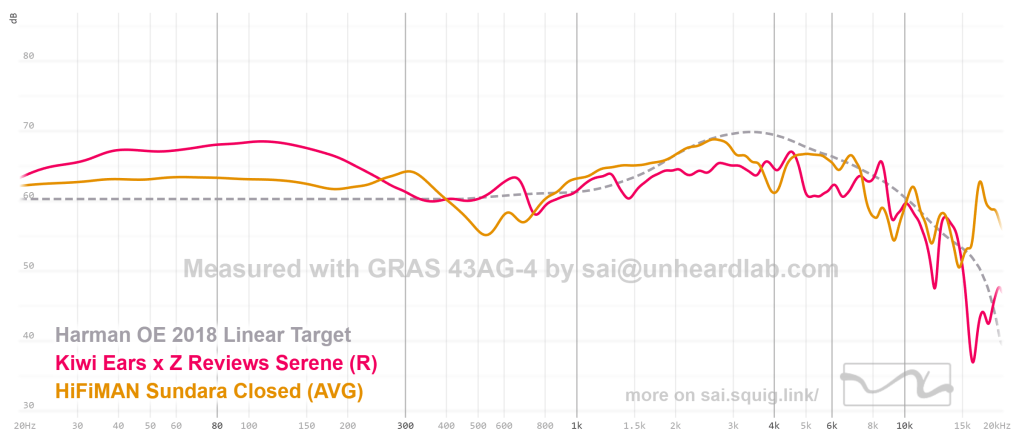
For more comparisons, visit my squiglink database.
Tonal balance:
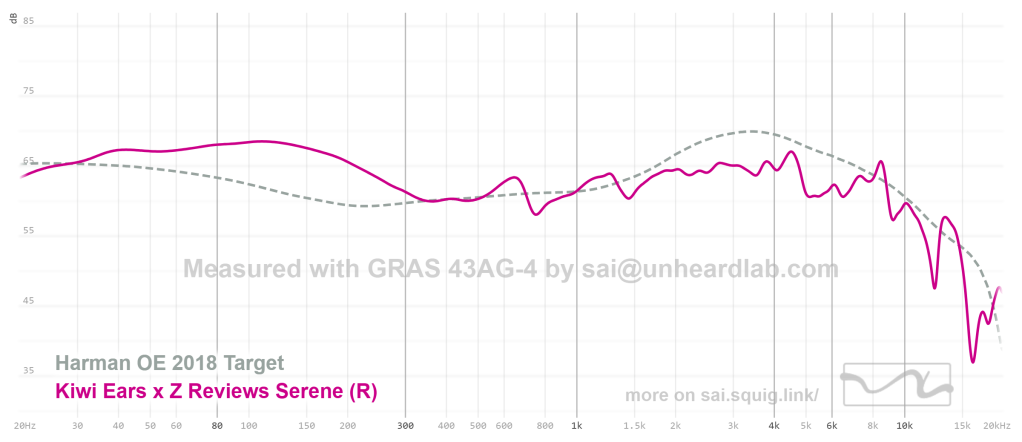
In a nut shell, the Serene sounds warm, laid-back, with ample bass and recessed vocals.
Bass is the star of the show here, or at least the biggest actor on the stage. There is a significant elevation that runs from the sub-bass all the way up into the lower mids. It provides ample bass quantity, which does help when you are listening at very low volumes, as bass is usually the first thing to disappear when you turn the knob down.
Bass quality is subpar. It is warm and thick, giving the sound a heavy, laid-back foundation. But it can also feel like a soup. There isn’t a lot of texture or separation here. It washes over you rather than hitting you with precise impact. If you enjoy a dark, rumbly presence that doesn’t demand your attention, it works, but don’t expect tight transients.
Midrange takes a backseat to that bass. There is a noticeable recession, particularly in the 1–3 kHz range where vocal presence usually lives. This tuning choice pulls vocals and instruments away from the listener, adding to that relaxed feel.
Because the bass bleeds into the lower mids and the upper mids are pulled back, the result is a very warm, almost muffled presentation. Male vocals have plenty of body but lack definition, while female vocals can sound a bit too nasally. It fits the ‘serene’ moniker, I suppose, as nothing here is going to shout at you, but it also means you lose a lot of the engagement factor.
Treble continues the trend of playing it safe to a fault. It is smooth and rolled off, lacking the air and sparkle you might expect from a planar driver. The extension just isn’t there to balance out the heavy low end. This lack of energy in the highs contributes to the issues with articulation and clarity. Cymbals and percussion sound dampened, and there is very little snap to the presentation.
It ensures the sound is never fatiguing, even if you do decide to turn the volume up to try and find some dynamics, but it also makes the overall listening experience feel a bit lukewarm. It is void of any harshness, but it is also void of excitement.
Other qualities:
- Soundstage
The soundstage on the Serene is actually one of its better traits, largely due to that recessed midrange. Because the vocals and lead instruments are pulled back, it creates a sense of distance that feels reasonably spacious. It is not super wide, but it definitely avoids feeling claustrophobic.
Imaging, however, takes a hit from that warm, thick presentation. While you get a sense of space, pinpointing exactly where a sound is coming from can be vague. The bass prominence tends to blur the lines between instruments, so instead of distinct layers, you often get that soup-like presentation where things blend together. It is atmospheric, sure, but it isn’t precise.
- Clarity
This is where the Serene struggles the most. The combination of elevated bass and the safe, rolled-off treble means articulation is quite problematic. Details that usually pop: the breath in a vocal, the decay of a cymbal, are smoothed over or buried.
If you are listening to simple, acoustic tracks or lo-fi beats, this lack of resolution might pass as a stylistic choice for a chill vibe. But for complex tracks or genres that rely on speed and resolution, the lack of bite makes everything sound a bit blunted. It is a very forgiving headphone, but that comes at the cost of transparency.
- Dynamics
The dynamics here is interesting because it ties directly into the quiet listening concept Z Reviews mentioned. At lower volumes, the elevated bass keeps the sound from feeling thin, which is arguably the goal. But if you want a lively, engaging experience with punch and impact, you really have to crank the volume way up.
Even then, the Serene doesn’t hit hard in terms of transient attack. It is a softer, more fluid impact rather than a snappy one. Macro-dynamics feel a bit compressed unless you are pushing decent power, and micro-dynamics are largely obscured by the warmth. It is a consistent sound, just not an energetic, contrast-y one.
Conclusion:
The Kiwi Ears x Z Reviews Serene is a polarising set, and I think that is intentional. It is apparently based on the Fostex T50RP driver design, or at least a very similar planar implementation. In my experience with various T50RP mods and iterations, this is actually one of the better implementations. It avoids the disjointedness that often plague those models, settling instead for something darker and smoother.
At $159 USD/ $249 AUD, it is a modest investment for a planar magnetic headphone. If you are specifically looking for a background listening companion that won’t distract you — something lukewarm and safe for long, quiet sessions — this is a decent offer. But for most people looking for a primary headphone to enjoy music actively, the tuning is likely too esoteric. It is a niche product for a niche use case.
If there are specific comparisons you would like to see, let me know in the comments.
Value Grade:
Earpads and EQ
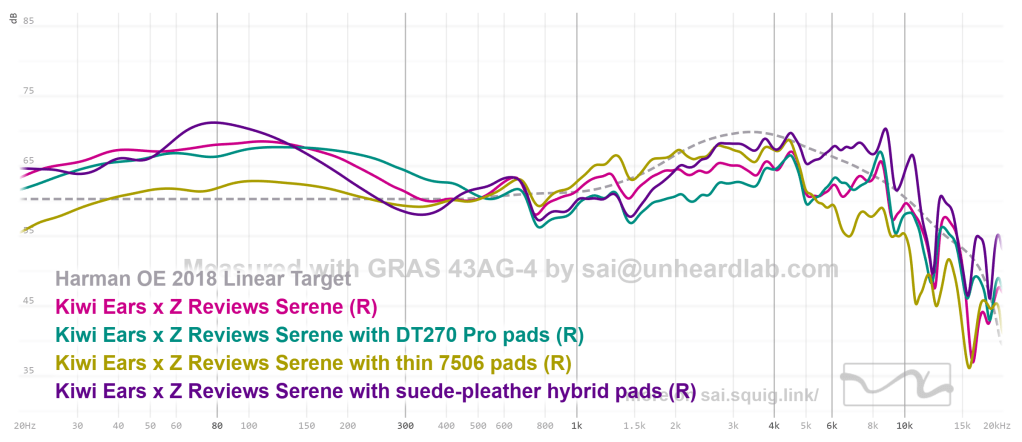
The stock ear pads are actually quite well-designed. They attach using a simple elastic rim, which is always a nice, hassle-free way to handle fitment.
As for sound, I tried a number of other pads with similar dimensions, and none provided as balanced a sound signature as the stock ones.
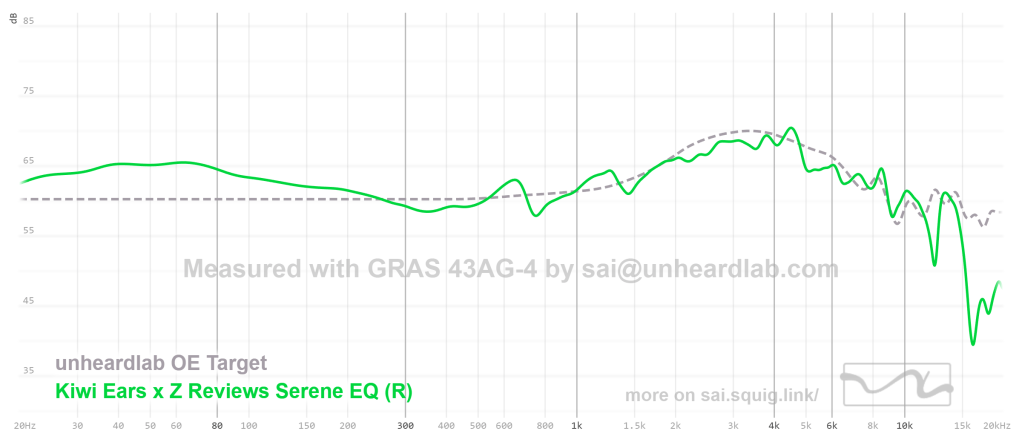
Recommended EQ setting (adjust the bass and treble filters to taste):
Preamp: -4.0 dB
Filter 1: ON PK Fc 65 Hz Gain 3.0 dB Q 1.500
Filter 2: ON PK Fc 90 Hz Gain -4.0 dB Q 0.500
Filter 3: ON PK Fc 130 Hz Gain -2.0 dB Q 1.000
Filter 4: ON PK Fc 1250 Hz Gain -1.5 dB Q 3.000
Filter 5: ON PK Fc 3400 Hz Gain 3.5 dB Q 1.000
Filter 6: ON PK Fc 5600 Hz Gain 2.0 dB Q 3.000
Filter 7: ON PK Fc 8200 Hz Gain -3.5 dB Q 3.000
Filter 8: ON PK Fc 16000 Hz Gain 4.0 dB Q 1.000
If your goal is to EQ the response to match the Harman Target, consider the AutoEQ function provided by Squiglink as a convenient starting point. I personally recommend customising the filters to better suit your own hearing, especially in the treble. While the AutoEQ provides a useful baseline, individual adjustments can often significantly improve your listening experience.
If you’re new to EQ, I’d recommend checking out this video by Resolve from The Headphone Show — it’s a really solid intro and walks through the basics in a clear, no-nonsense way. Great place to start!
MEASUREMENTS
Frequency Response:
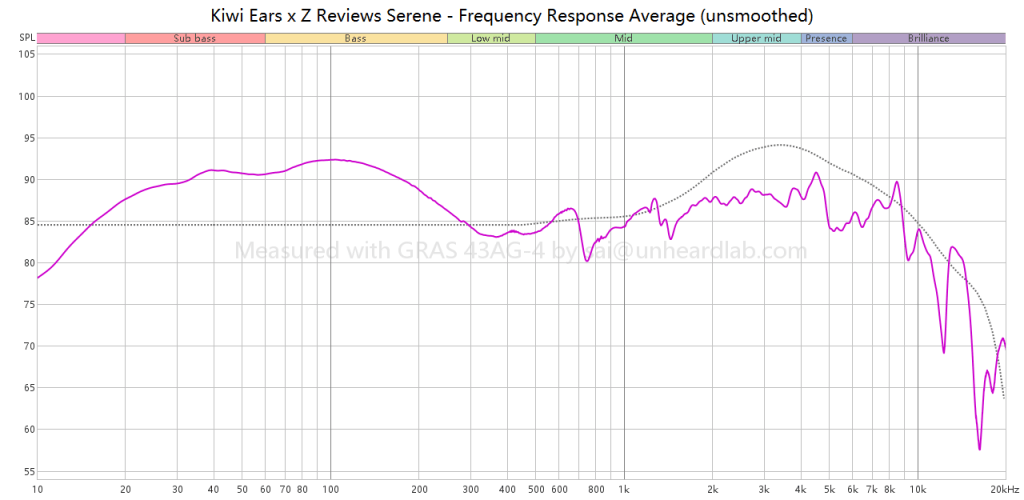
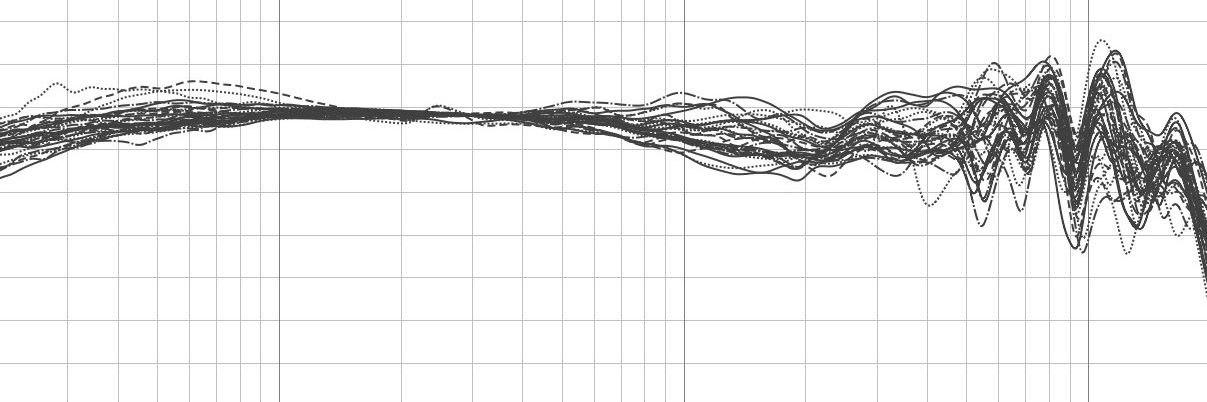
The response is obtained by an average of 5-6 positional variations. The FR shown on the graph is unsmoothed.
Positional Variation:
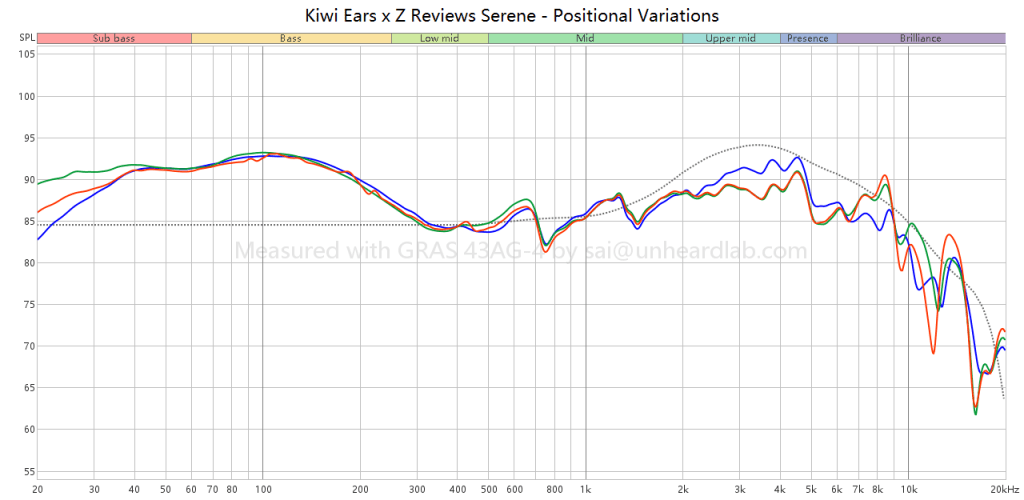
This graph illustrates how headphone placement on the head affects perceived tonal balance: with the ear positioned at the front (blue), centre (green), and back (red) of the headphone. The FRs shown on the graph are 1/48 octave smoothed.
Leakage Tolerance:
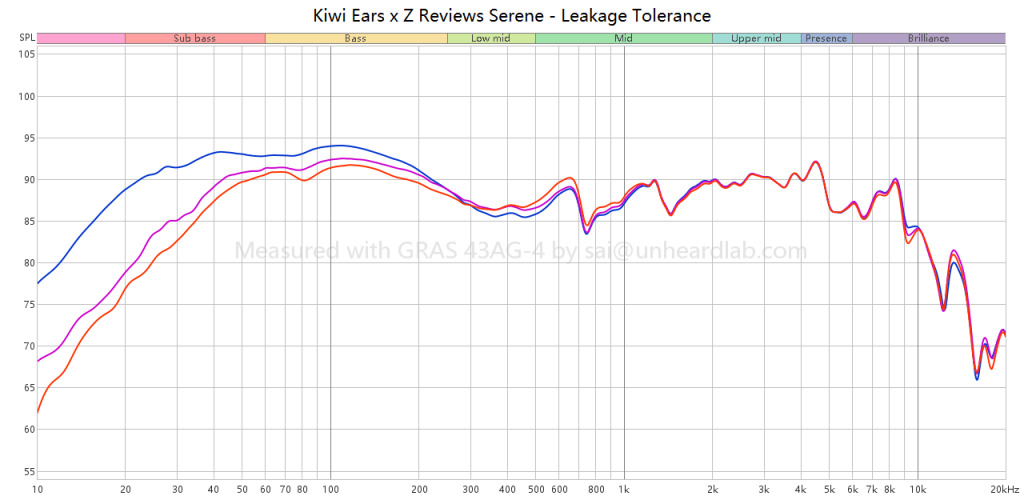
This graph demonstrates how leakages to the front volume can result in FR change: blue (good seal), purple (thin arm glasses), red (thick arm glasses). The FRs shown on the graph is 1/12 octave smoothed.
Comment: Like most closed-back headphones, this headphone shows significant bass loss when the seal is broken. In the of this particular tuning, this might actually be welcomed by some users who find the bass a bit much.
Linearity and Compression:
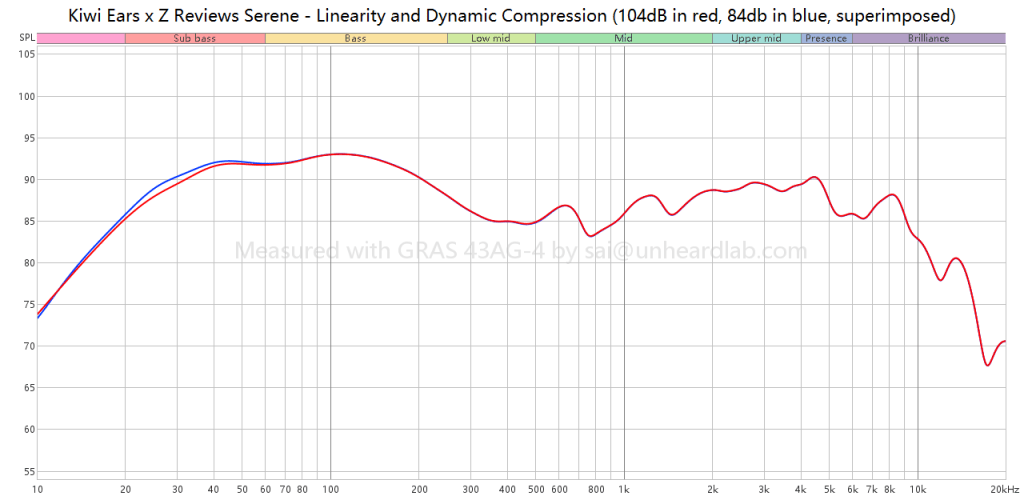
Linearity and dynamic compression testing plots the headphone’s frequency response at two input levels to show how it reproduces signals as loudness changes. Any divergence between the high-level and low-level curves points to where the transducer’s dynamic range begins to compress or distort. Here, the measurements are superimposed to allow direct comparison. The FRs shown on the graph is 1/6 octave smoothed.
Comment: Slight compression below 60Hz (0.5-1dB) at 105dB SPL, which is not an issue in most cases.
Impulse Response:
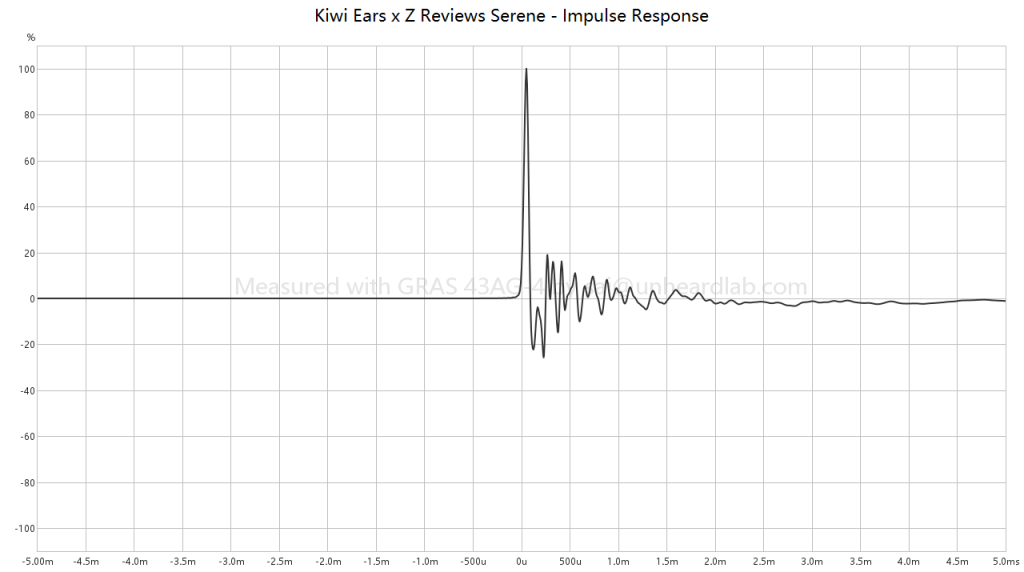
The impulse response test measures the initial response, overshoot, and decay of a transducer upon receiving a signal. An initial upshoot indicates a normal/non-inverted polarity, vice versa.
HpTF Variations (raw, uncompensated):
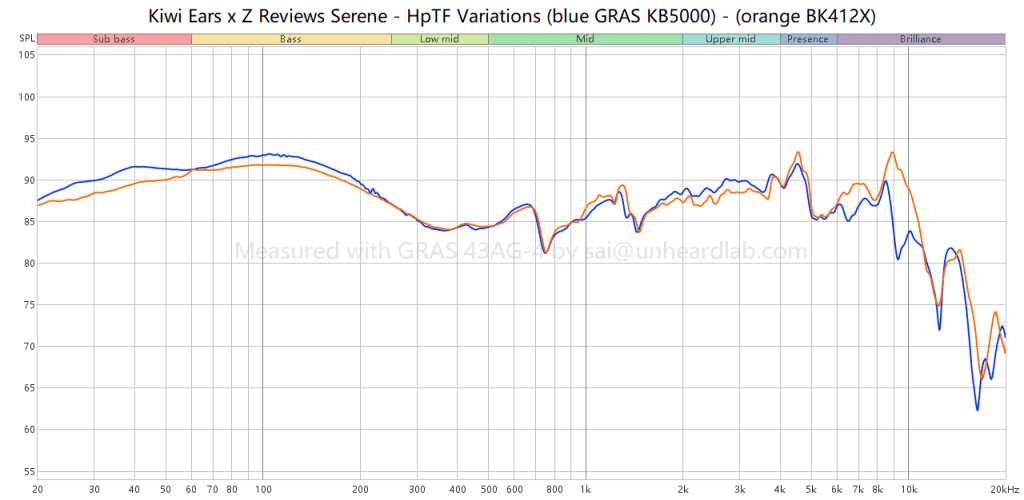
Headphone Transfer Function (HpTF) describes how sound is shaped by headphone design and ear anatomy before reaching the eardrum. Different measurement rigs (with varying pinnae designs) introduce unique reponses/resonances and potential deviations from actual human perception. Understanding HpTF helps translate measured data into real-world listening experiences.
Total Harmonic Distortion (THD% 2nd-9th) & Excess Group Delay (94 dB):
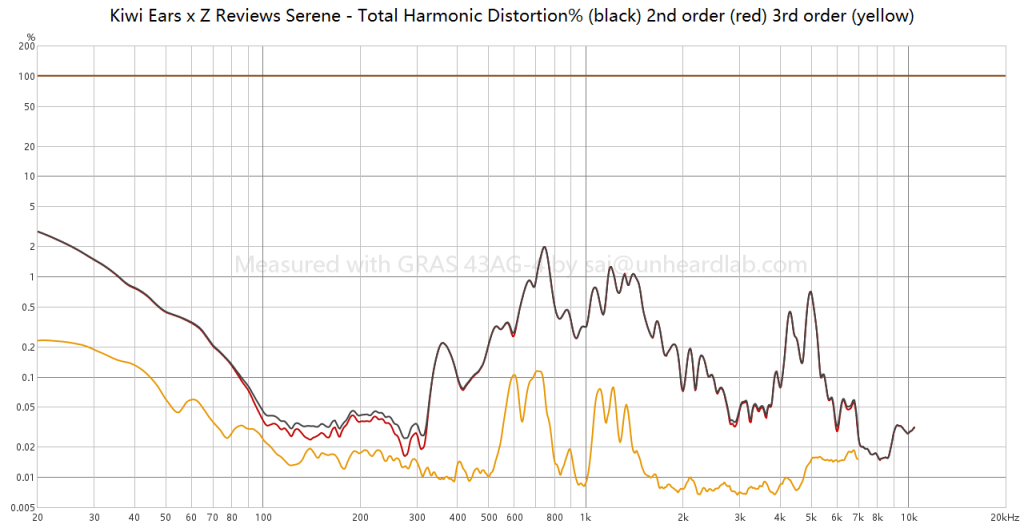
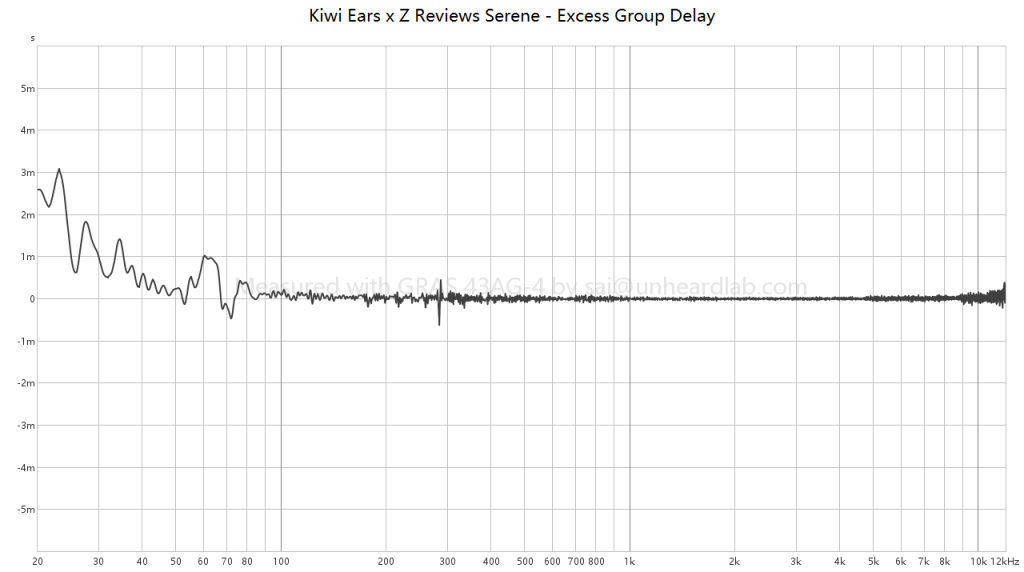
These measurements are conducted in quiet, normal room conditions (as opposed to an anechoic chamber), meaning there may be some influence from ambient room and external noise. These results should be considered a preliminary assessment of performance, primarily for identifying major issues, and do not reflect the best-case performance scenario. Any peaks/dips around 9 kHz are most likely artifacts from pinna interaction/phase cancellation, rather than inherent features of the device under test.
Comment: Distortion is acceptable, but not ideal. We see a slight elevation in THD between 600-2kHz, a region where our hearing tends to be more sensitive.
Channel Matching:
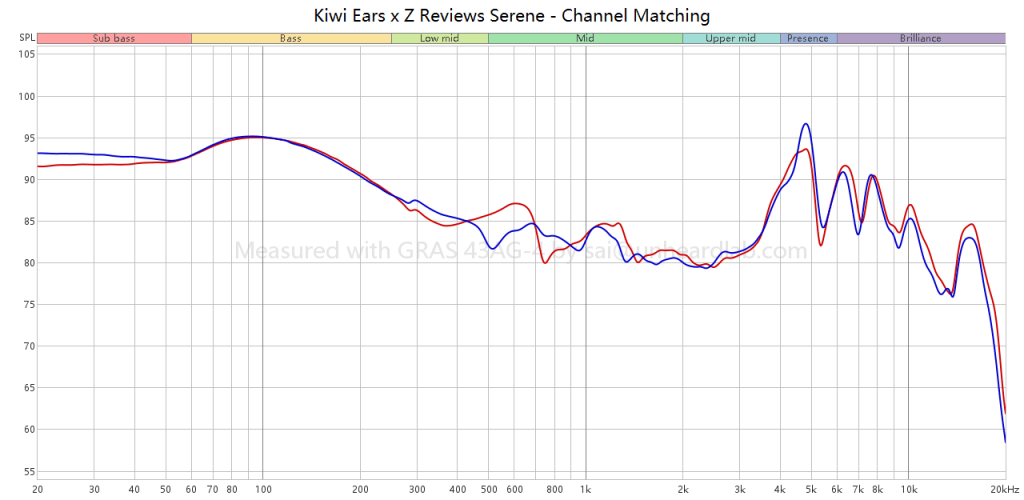
Channel matching graphs are intended for quality control checks and do not relate to the perceived sound profile. A specialised configuration is used in this test to capture differences between channels, mitigating interference from positioning on the rig and the asymmetry in the GRAS pinnae design, a legacy of KEMAR. The left (blue) and right (red) channels are measured using a flat plate coupler with an IEC60318-4 ear simulator.
Electric Phase & Impedance:
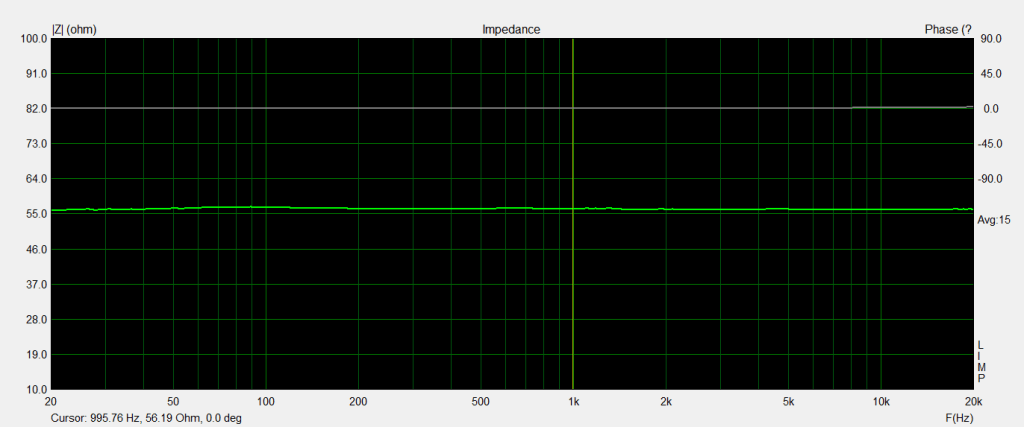
The above graph shows the measured impedance (green) and electric phase (grey), measured under free-air condition (minimal front volume coupling).
Comment: impedance curve is flat all the way, typical of planar headphones.
END OF THE ARTICLE
Disclaimer: This review is independent and was not sponsored or endorsed by any company or affiliated entity. All headphones reviewed are purchased for review unless otherwise stated. Any links or product references are provided for informational purposes only and are not associated with any financial compensation or affiliate arrangement.
