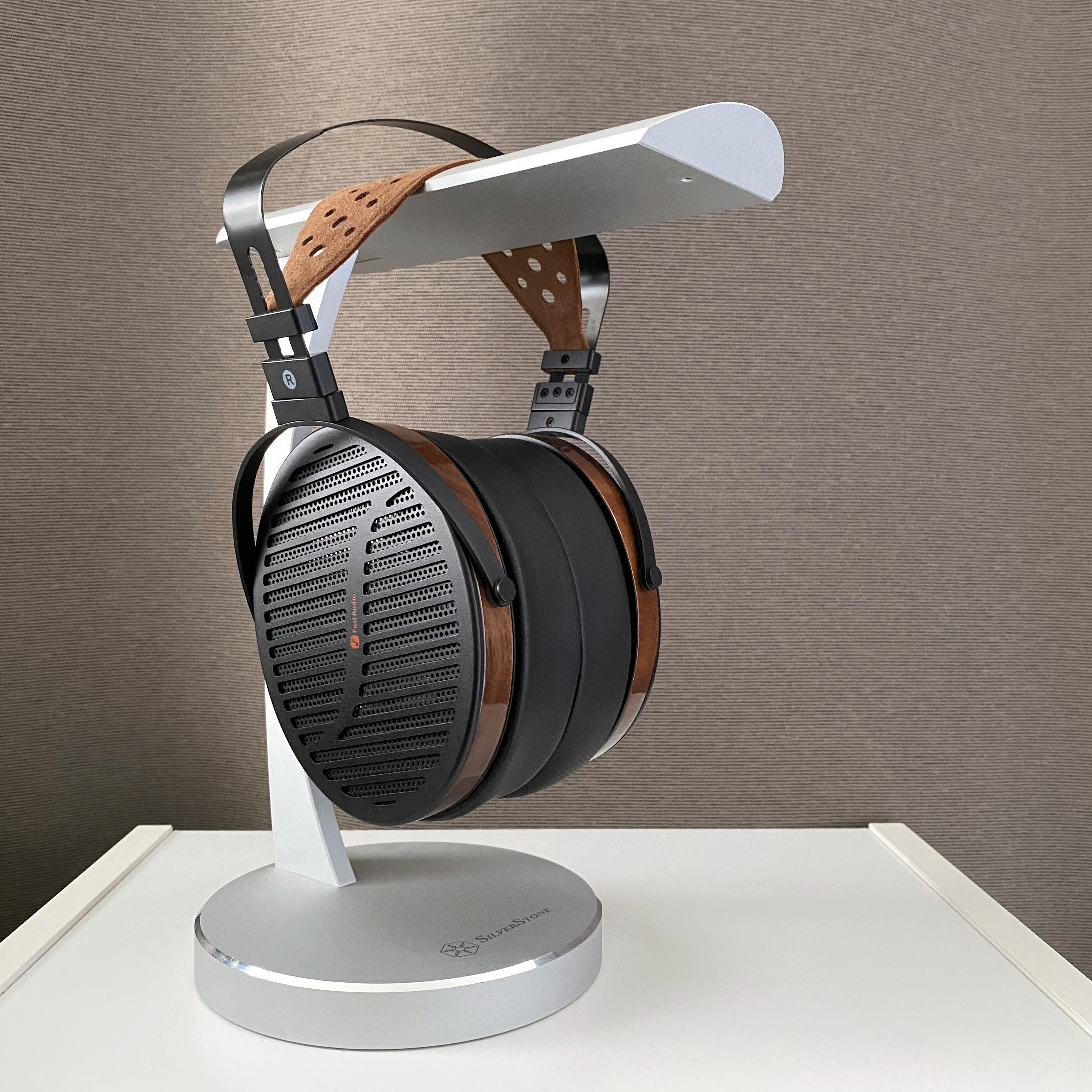
Intro:
Fosi Audio is known for making good-quality, competitively priced DACs and amps. The i5 is their latest step into the headphone scene, and Fosi reached out to see if I wanted to review it. There were no conditions on the content, just an open invitation. So, I took the opportunity.
I call the i5 “a new challenger” in the title, and for most of you, that’s exactly what it is. For me, though, it feels more like meeting an old friend. One glance and I immediately recognised its connection to a boutique planar maker in China, Original Voice.
Original Voice is best known for their 97 series planars, and they offer a wide range of headphones using various diaphragm and trace materials. They mostly sell within China, and not cheaply. In fact, even their lower-end models, like the CS97M which shares a very similar design to the i5, cost more than this Fosi release.
That’s why I’m glad Fosi is making this happen: bringing a boutique-style planar, previously available only in China, to a global audience at a lower price and with some intriguing design tweaks. I won’t drown you in the technical minutiae here — if you want the full breakdown, Fosi’s own product page has the details.
The key question remains: how does it sound? Let’s find out.
For those who want to jump right into detailed measurements, check out the final section of this article.
Disclaimer: This unit was provided by Fosi Audio for testing purposes. There were no conditions placed on the content, and there is no financial involvement or use of affiliate links.
Specs & Comfort
RRP: $399/439/549 USD (depending on tier/package)
Driver size: ~130*105 mm (frame); ~60*50 mm (effective)
Driver type: Planar Magnetic
Sensitivity: 110 dB/Vrms @1kHz
Impedance: 32 Ω at 1kHz
Connector: dual 3.5 mm TRS
Weight: 525 grams (excl. cable)
Clamping force: light
Comfort: 6/10 (acceptable, but weighty)
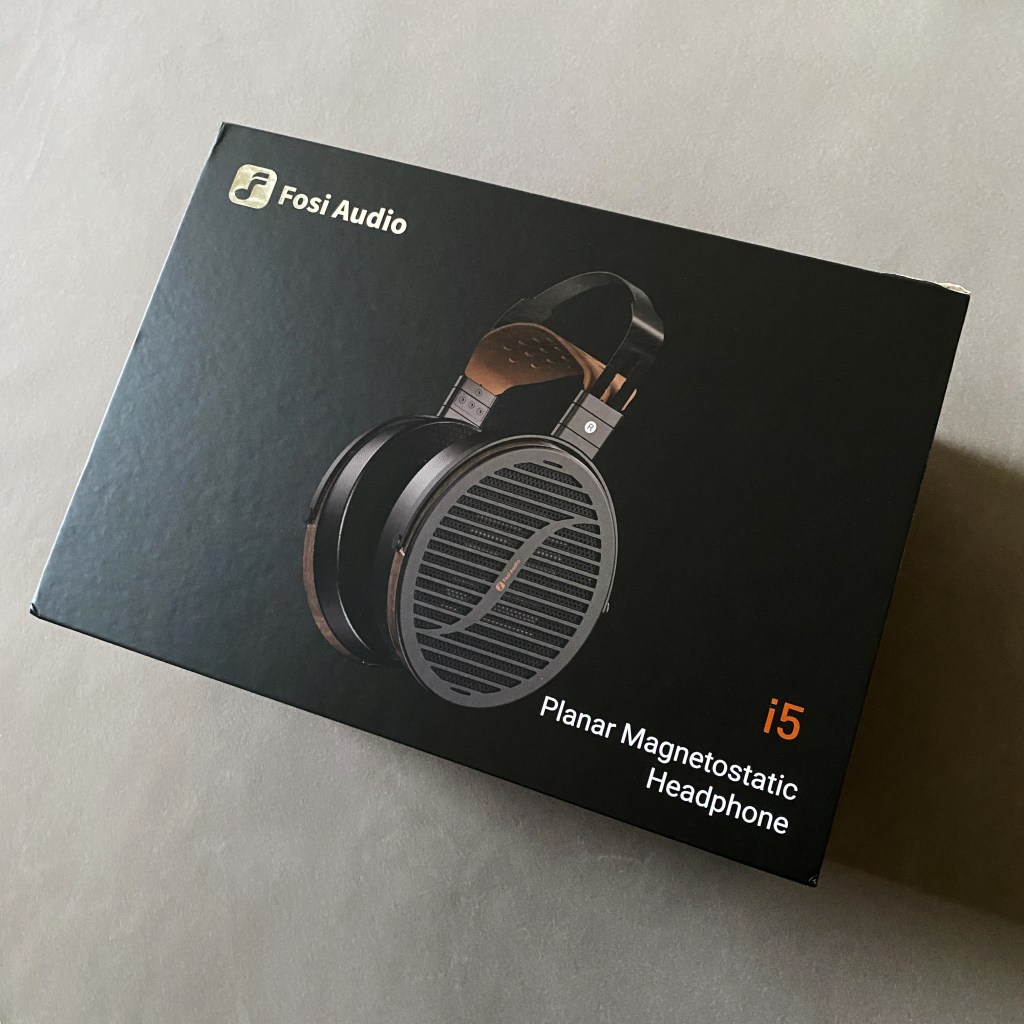
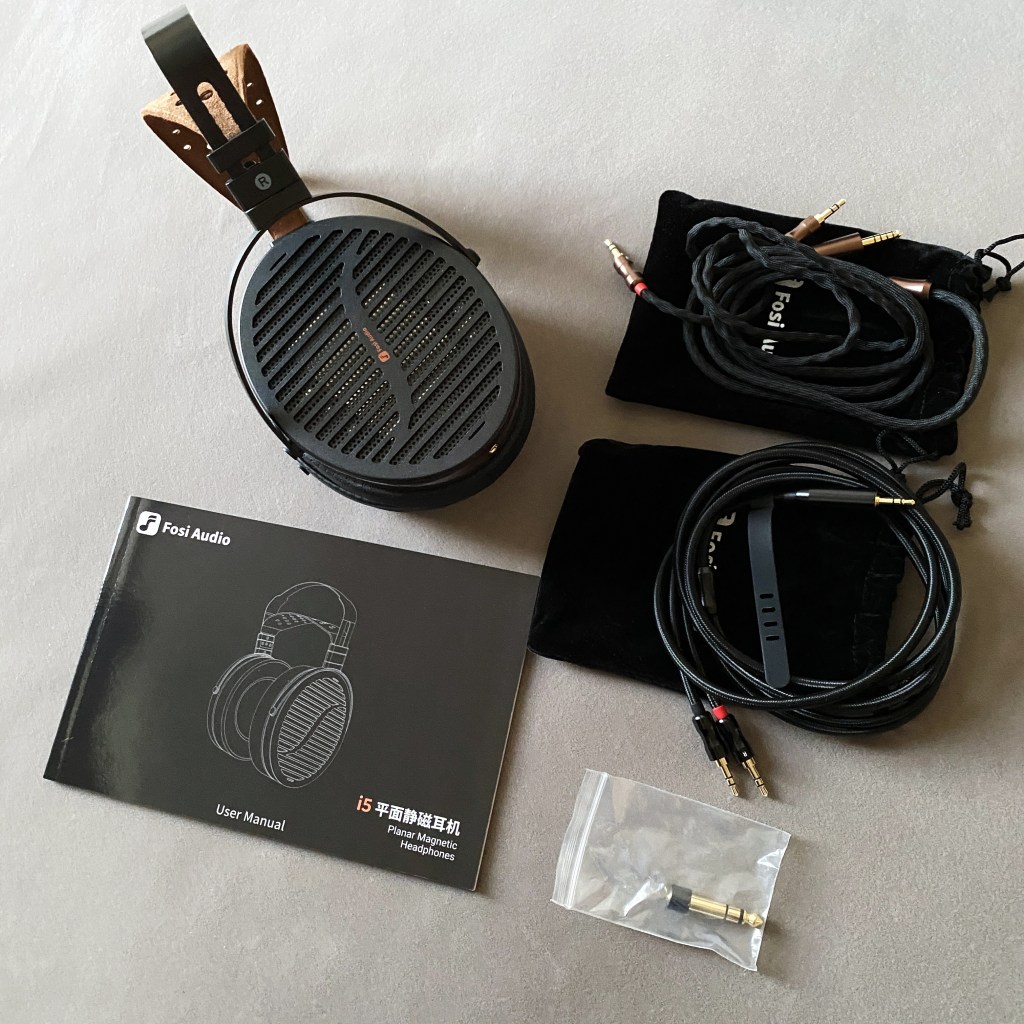
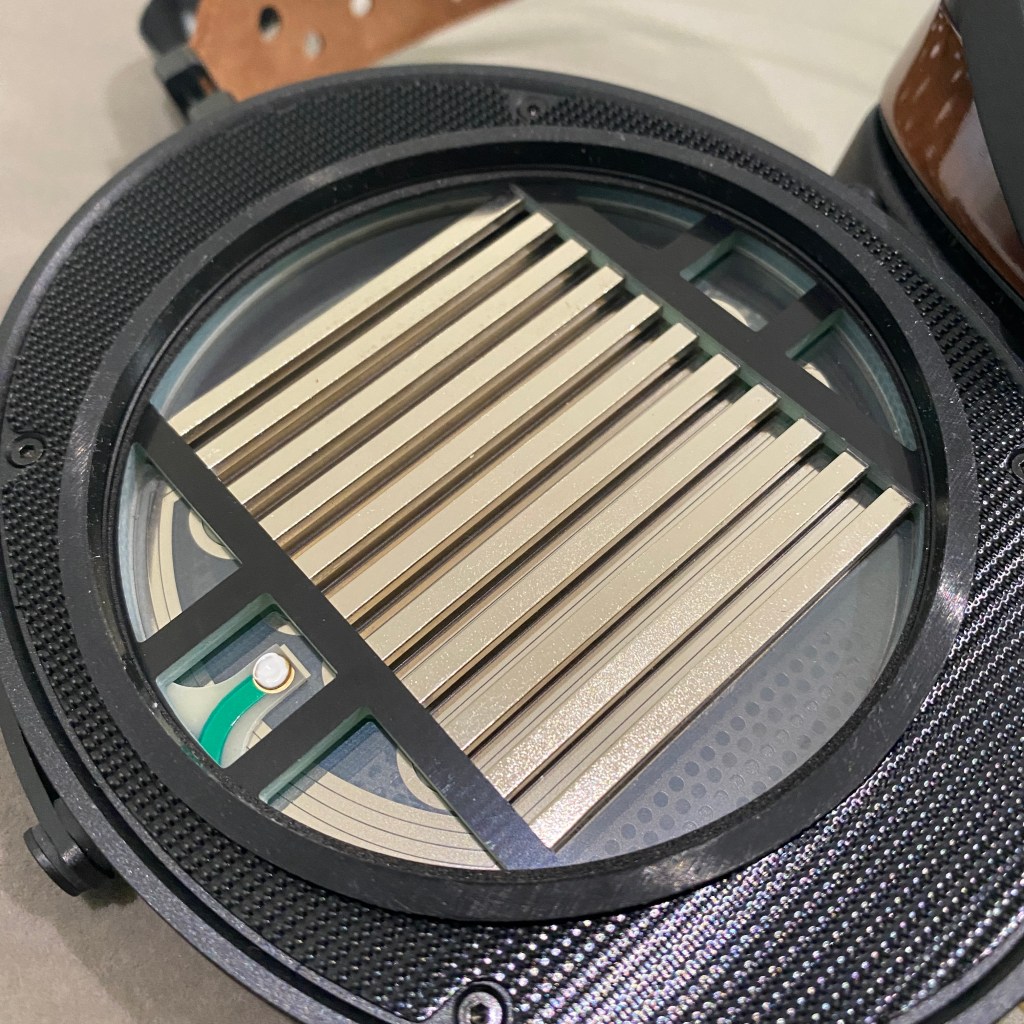
Note: As shown in the last photo, the production version of the i5 includes a pre-installed rubber ring that seals the driver, improving sub-bass extension.
Measurement & Sound
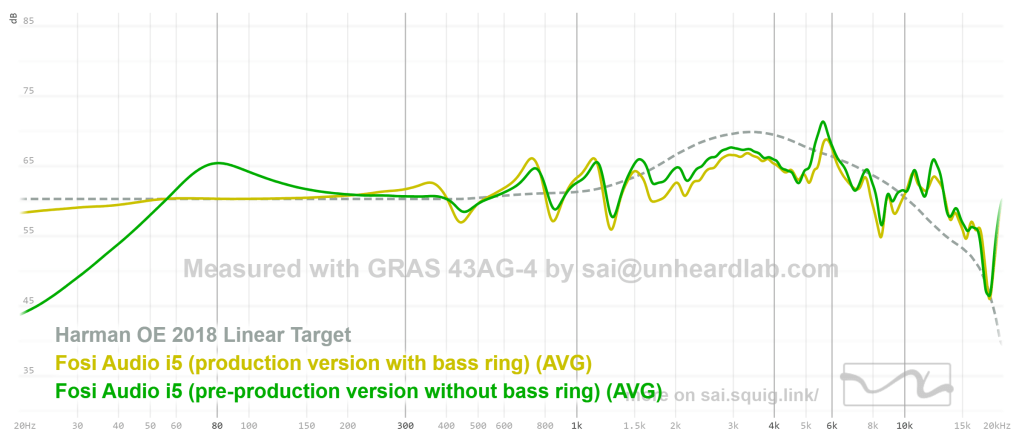
For more comparisons, visit my squiglink database.
Tonal balance:
Overall, the Fosi i5 leans toward a romantic, soft, and airy presentation, with a slightly warm and hazy character. There’s a strong sense of what many describe as the “planar headphone” sound. It’s a tuning that you will likely either love it or hate it, with little middle ground.
Bass
The i5’s bass is quite interesting. In its stock configuration, it has good presence and extension. It can reach deep enough to reproduce sub-bass rumble, but the delivery feels on the softer side — not especially dynamic or hard-hitting. Overall, I find the bass under stock tuning somewhat polite. Not anemic, just not the most energetic or impactful planar bass I’ve heard.
The pre-launch version of the i5 took a different approach. It had intentional leakage built into the design, which boosted bass between roughly 50–150 Hz for a punchier, more dynamic feel. This is similar to the Original Voice house tuning. The trade-off was a sharp roll-off below 50 Hz, leaving much of the sub-bass inaudible — likely why Fosi changed it.
The fix is quite clever: a rubber sealing ring sits between the planar driver and the velcro-mounted ear pad, closing the gap and extending the low end. It’s held in place simply by the pad’s pressure, so you can remove it if you prefer the punchier pre-production bass (again, at the cost of sub-bass extension). But be careful — removing it means working with the driver exposed, and the magnets are strong enough to pull in stray metal objects. If you’ve never handled planar drivers before, I wouldn’t recommend trying it.
Midrange
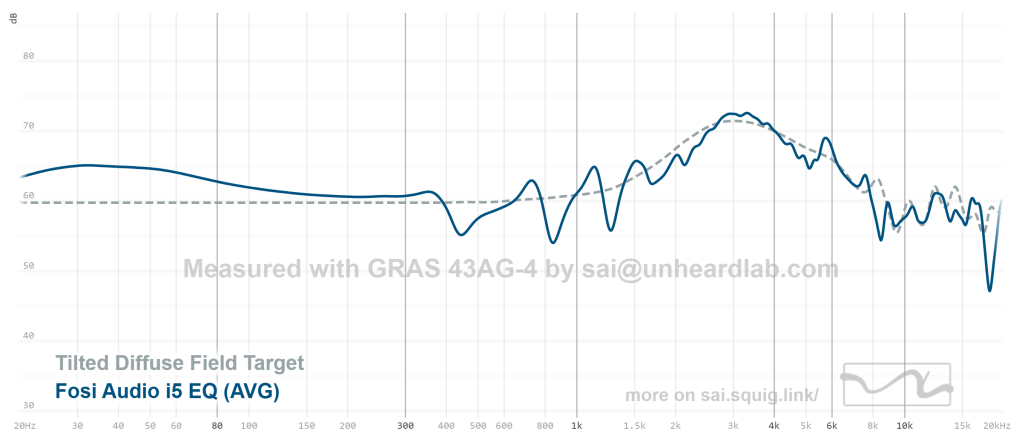
The i5’s mids are noticeably coloured. They’re smooth, but recessed, with a mellow presentation that reminds me of some Audeze tunings. Upper-mid harmonics are more subdued than on “neutral” references like the Sennheiser HD 600 or Hifiman Sundara. By contrast, the fundamentals below about 1 kHz are elevated by roughly 2 dB — in a wobbly, uneven way (more on that in the measurements section). Vocals come across as if the singer is leaning in to whisper, with sharper textures polished away. There’s a “velvety” touch to vocal harmonics — less grain and texture, but more richness and polish.
The Original Voice headphones I’ve tried tend to have a slightly more neutral midrange. The difference here seems to be mainly pad-related. Fosi uses a thicker version of the Original Voice pads, with smaller perforations in the pleather. These factors contribute to the recessed upper mids and fuller lower mids.
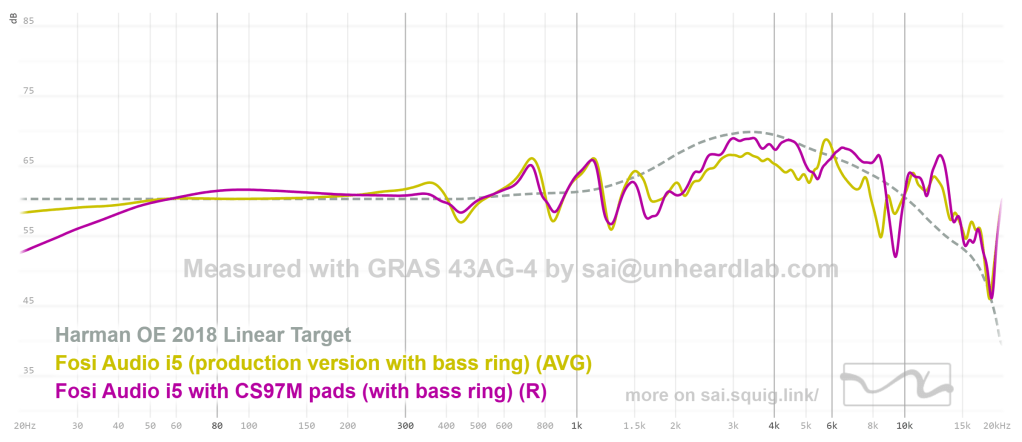
Swapping to the thinner CS97M pads increases articulation in vocals and midrange instruments, bringing the tonal balance closer to neutral. The upper mids remain gently recessed, avoiding any shoutiness, which can make this presentation appealing for those sensitive to forward mids.
Treble
The i5’s treble can be a bit divisive. With the thick stock pads, it’s quite uneven and can get spicy with instruments that reach into the upper-treble region above 8 kHz: cymbal crashes, certain violin overtones, and the shimmer of percussion are where you’ll notice it most. It’s not peaky or shrill, though — the lift above 10 kHz is tempered by a relatively subdued mid-treble between 5–8 kHz. This contrast gives it occasional brightness without turning it into a harsh tuning overall. This contrast can make the treble feel a bit detached from the mids, but it also gives the i5 a sense of air and openness that’s reminiscent of higher-tier planars.
Switching to the thinner Original Voice pads changes the equation. Treble becomes more even overall, with smoother transitions from lower to upper regions, but the 7–8 kHz range is pushed forward more than with the stock pads. This can sharpen certain mid-treble cues — female vocal sibilance, stick hits on ride cymbals — making them more prominent. Which is better comes down to taste: the stock pads offer more contrast and sparkle, while the Original Voice pads offer more cohesion but can be a touch sharper in that lower-treble zone. Personally, I’d prefer a slightly less coloured approach, but I can see Fosi’s tuning appealing to those who are more sensitive to mid-treble tones like female vocal siblances.
Other qualities:
- Soundstage
The i5’s spatial presentation is quite good, though it carries a noticeable colouration. The stage feels wide and open, with sounds often appearing a little farther away than on most headphones in this range. Combined with its fuller fundamental tone, this creates a slightly artificial sense of space — almost like listening in a large, softly furnished hall. It’s a quality that reminds me again of certain Audeze models like the LCD-2 Fazor, where the stage feels large but not entirely natural. This isn’t necessarily a drawback for casual listening or immersive genres, but it’s not the kind of precision you’d want for mixing or mastering.
Imaging has a good holographic quality — instruments and voices have a tangible presence in the stereo field — but the edges are a little fuzzy. Compared to planars like the Arya Stealth, which offer sharp positional cues, the i5 trades some of that precision for a smoother, more blended sense of placement.
- Clarity
Clarity on the i5 is solid, though not class-leading. Despite the warm and slightly hazy tonality, fine detail retrieval is better than expected. Higher-pitched sounds like the leading edge of a piano note or the decay of a cymbal, are articulated cleanly, with good separation from the mix.
Where it stumbles a bit is in the midrange. The somewhat bumpy response lends a distinct colouration to vocals and instruments, which can mask some low-level textures. The presentation isn’t too smeared, but it has a certain polish that trades analytical sharpness for a more relaxed listen. For critical work, that may be a limitation.
- Dynamics
The i5’s dynamics are competent but not standout. In terms of microdynamics — the subtle shifts and phrasing within quieter passages — it performs about average for the $350-500 price point. It’s less nuanced than models like the Moondrop Para 2 or Hifiman Arya Stealth, which resolve tiny gradations more convincingly. In dense arrangements, smaller details can blur together, reducing the sense of fine contrast.
Macrodynamics — big swings and impact — are on the polite side. The positive here is that the i5 doesn’t compress or overly distort even when driven to high volumes around 100 dB, showing that the driver can handle excursion without strain. Still, bass drops, snare hits, and large-scale orchestral swells land with a softer edge, similar to the Hifiman Ananda. This gentler presentation can be pleasing for certain genres but won’t satisfy those chasing maximum slam and immediacy.
Conclusion and value:
Assessing the i5’s value is a bit tricky, given its varying prices depending on which package you’re going for and if you’re buying through Kickstarter or during sale events. At $349–549 USD, it brings a distinctive flavor to the planar market, backed by a competent technical showing. This isn’t an all-rounder I’d recommend to everyone, but it’s a refreshing entry for those looking for something with a clear personality.
What makes the i5 noteworthy is that it introduces a boutique-style planar design — previously limited to the Chinese market — to a wider audience, and at a more accessible price. The tuning is niche, yes, but it will appeal to listeners who enjoy a softer, airier, and more romantic sound signature. The inclusion of the sub-bass sealing ring shows that Fosi listens to feedback and is willing to offer tuning options, leaving room for improvements through pad swaps or other accessories.
Overall, the i5 feels less like a crowd-pleaser and more like a specialised piece. If that taste aligns with yours, it’s a rewarding and unique listen.
If there are specific comparisons with other headphones you would like to see, let me know in the comments.
PROS:
+ Airy, romantic presentation with decent clarity
+ Rich, velvety-sounding midrange
+ Sub-bass seal ring allows tuning choice
+ Unique boutique planar design at reasonable cost
CONS:
– Midrange colouration not for all tastes
– Lacks strong slam and punch
– Treble unevenness noticeable in some genres
– Not for mixing or studio work
Value Grade (assumed RRP $549):
Notes on Ear Pads and EQ
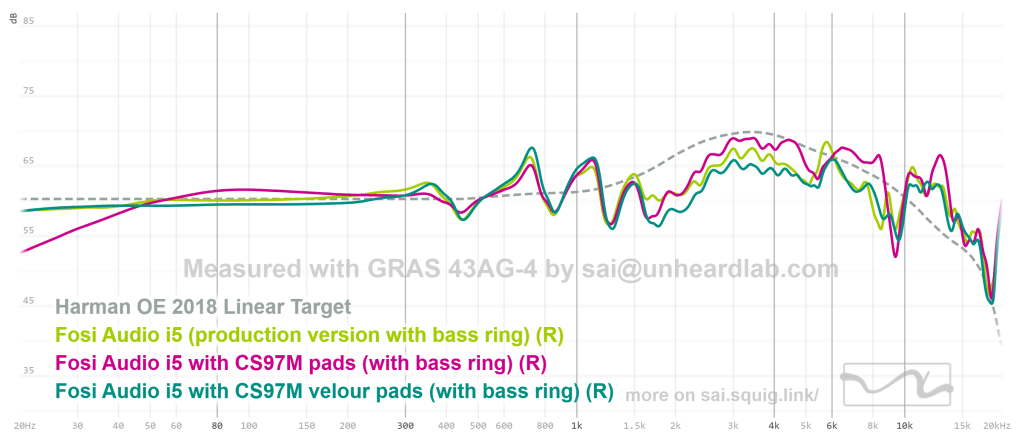
Regarding the earpads, the Fosi i5 uses velcro-mounted pads, making swaps quick and straightforward. The downside is that aftermarket pad options are more limited, as replacements need velcro backing to fit properly. One reliable source is Original Voice’s Taobao store, which offers a range of pads for their 97-series platform. Some AliExpress resellers might stock them as well, though usually at a markup.
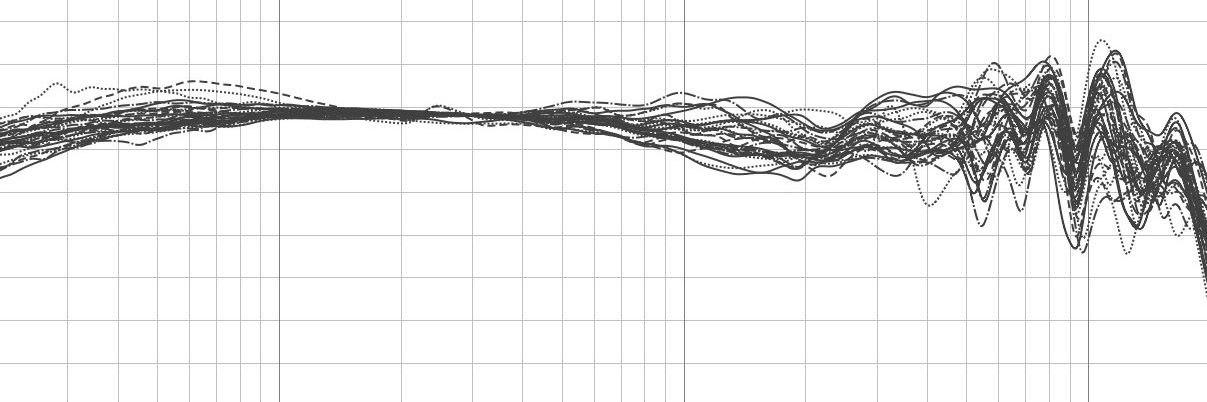
I’ve measured two alternatives: the flatter CS97M pads and the velour CS97M pads. Both change the i5’s tonality in different ways (see FR graphs above), with the flatter pads bringing the sound closer to the Original Voice tuning, and the velour pads doubling down on a more “Audeze-esque” tone.
In terms of EQ, the i5’s stock tuning is intentionally “fun”, so it needs a fair bit of adjustment for a more balanced presentation.
The goal is to refine the balance between midrange fundamentals and their harmonics, giving the mids a more natural and cohesive tone. I also tightened the low end by adding a touch more punch in the bass, while reducing some of the sharper peaks in the upper treble for a smoother top end. Finally, I introduced a small lift around 3 kHz to counter the 700–1500 Hz bumps that can vary with different head shapes, helping vocals and midrange instruments remain clear and present.
Recommended EQ setting for this headphone (adjust the first and the last filters to taste):
Preamp: -6.5 dB
Filter 1: ON PK Fc 30 Hz Gain 6.0 dB Q 0.500
Filter 2: ON PK Fc 450 Hz Gain -1.0 dB Q 0.500
Filter 3: ON PK Fc 850 Hz Gain -3.5 dB Q 1.000
Filter 4: ON PK Fc 2800 Hz Gain 3.5 dB Q 0.700
Filter 5: ON PK Fc 3200 Hz Gain 3.0 dB Q 0.700
Filter 6: ON PK Fc 5850 Hz Gain -2.5 dB Q 3.000
Filter 7: ON PK Fc 11000 Hz Gain -6.0 dB Q 2.500
Filter 8: ON PK Fc 16500 Hz Gain 4.0 dB Q 2.500
If your goal is to EQ the response to match the Harman Target, consider the AutoEQ function provided by Squiglink as a convenient starting point. I personally recommend customising the filters to better suit your own hearing, especially in the treble. While the AutoEQ provides a useful baseline, individual adjustments can often significantly improve your listening experience.
If you’re new to EQ, I’d recommend checking out this video by Resolve from The Headphone Show — it’s a really solid intro and walks through the basics in a clear, no-nonsense way. Great place to start!
MEASUREMENTS
Frequency Response:

The response is obtained by an average of 5-6 positional variations. The FR shown on the graph is unsmoothed.
Comment: The “wobble” in the mids is likely due to modal response of large planar drivers, which can vary between measurements or under different conditions. In this case, the driver’s fundamental resonance frequency is not particularly low (around 140 Hz) compared to some other models we’ve measured, such as the FiiO FT1 Pro (~80 Hz). This suggests other factors are at play, including limited damping and possible non-linearity issues in the design like passive areas. It’s worth noting that DIYAudioHeaven has suggested a damping modification that can reduce this wobbly effect, so if you’re interested in a more neutral, “orthodox” sound, this is defintely worth a look.
Positional Variation:
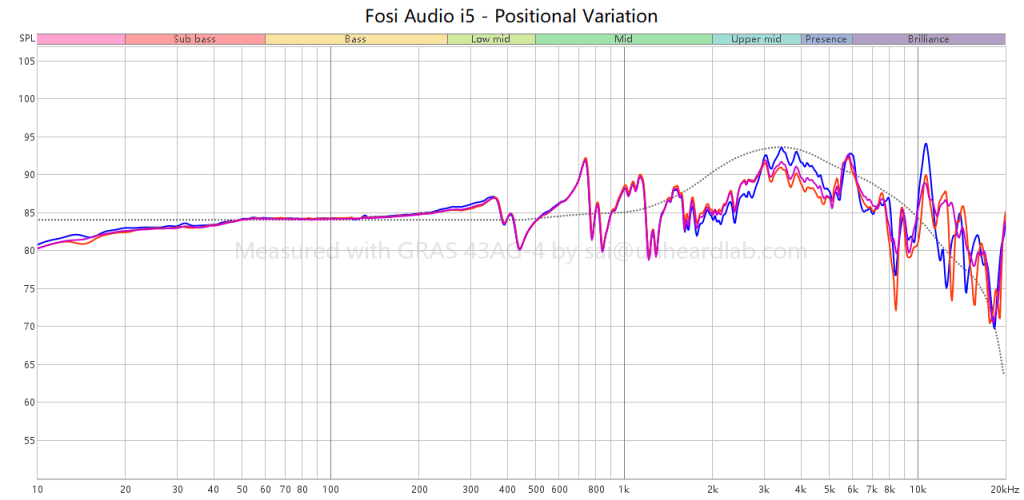
This graph illustrates how headphone placement on the head affects perceived tonal balance: with the ear positioned at the front (blue), centre (purple), and back (red) of the headphone. The FRs shown on the graph are 1/48 octave smoothed.
Leakage Tolerance:

This graph demonstrates how leakages to the front volume can result in FR change: blue (good seal), purple (thin arm glasses), red (thick arm glasses). The FR shown on the graph is 1/12 octave smoothed.
Comment: Like most open-back planars, this headphone can show a slight bass boost when the seal is compromised.
Linearity and Dynamic Compression:
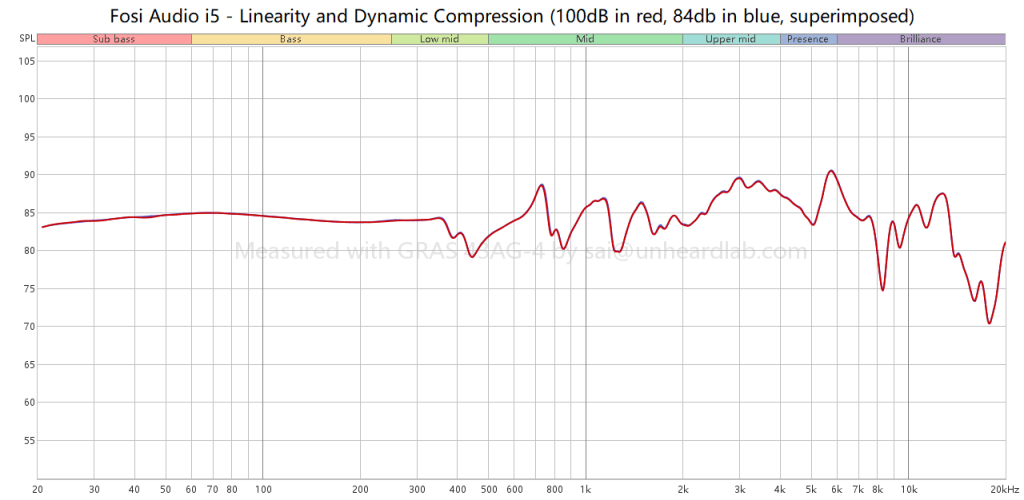
Linearity and dynamic compression testing plots the headphone’s frequency response at two input levels to show how it reproduces signals as loudness changes. Any divergence between the high-level and low-level curves points to where the transducer’s dynamic range begins to compress or distort. Here, the measurements are superimposed to allow direct comparison.
Comment: This is excellent result. There’re no signs of compression at high SPLs.
Impulse Response:
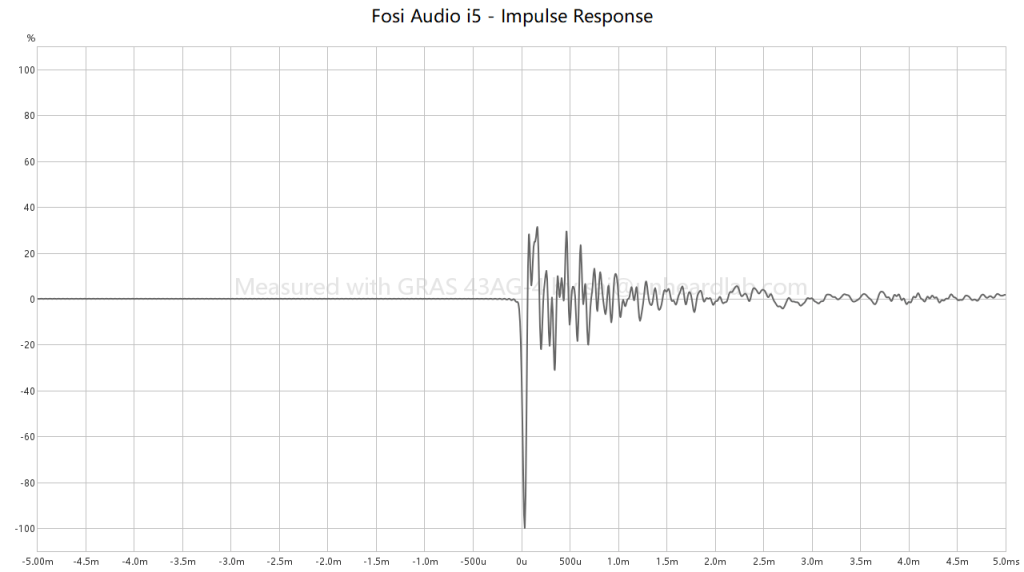
The impulse response test measures the initial response, overshoot, and decay of a transducer upon receiving a signal. An initial upshoot indicates a normal/non-inverted polarity, vice versa.
Total Harmonic Distortion (THD% 2nd-9th) & Excess Group Delay (94 dB):
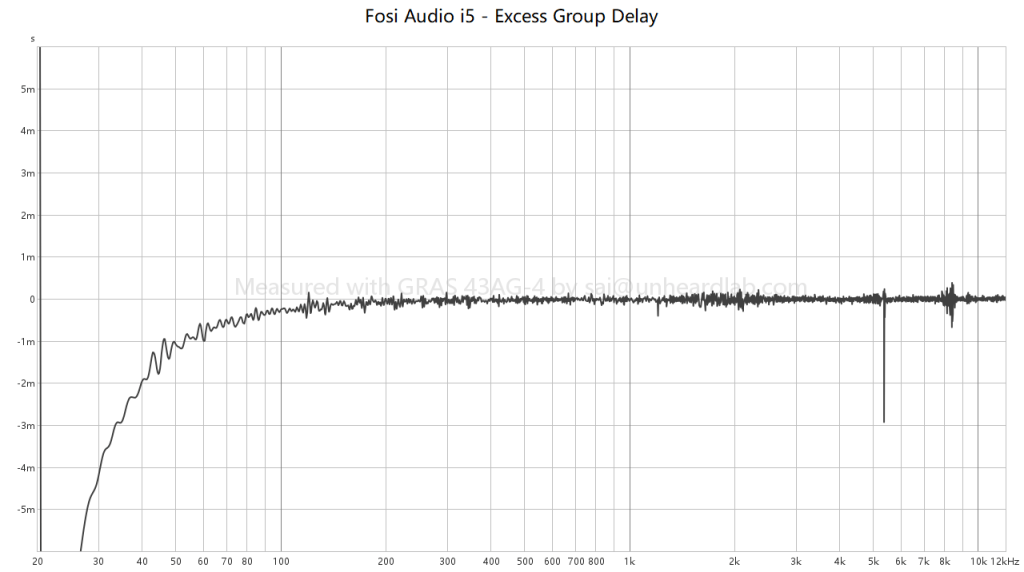
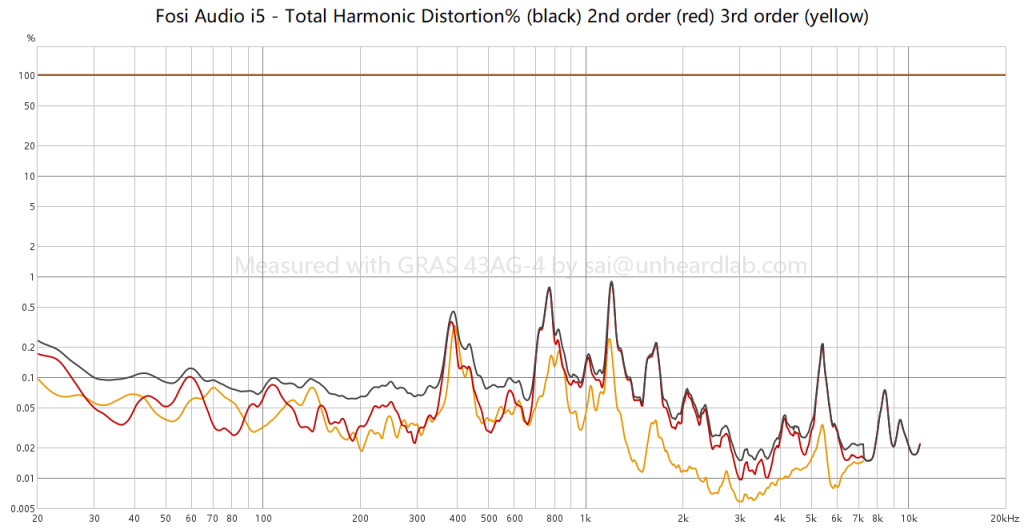
These measurements are conducted in quiet, normal room conditions (as opposed to an anechoic chamber), meaning there may be some influence from ambient room and external noise. These results should be considered a preliminary assessment of performance, primarily for identifying major issues, and do not reflect the best-case performance scenario.
Comment: 94dB distortion levels are slightly higher than ideal in 400Hz to 1400Hz range are slightly higher than ideal. However, they should remain largely inaudible under normal listening conditions.
Channel Matching:
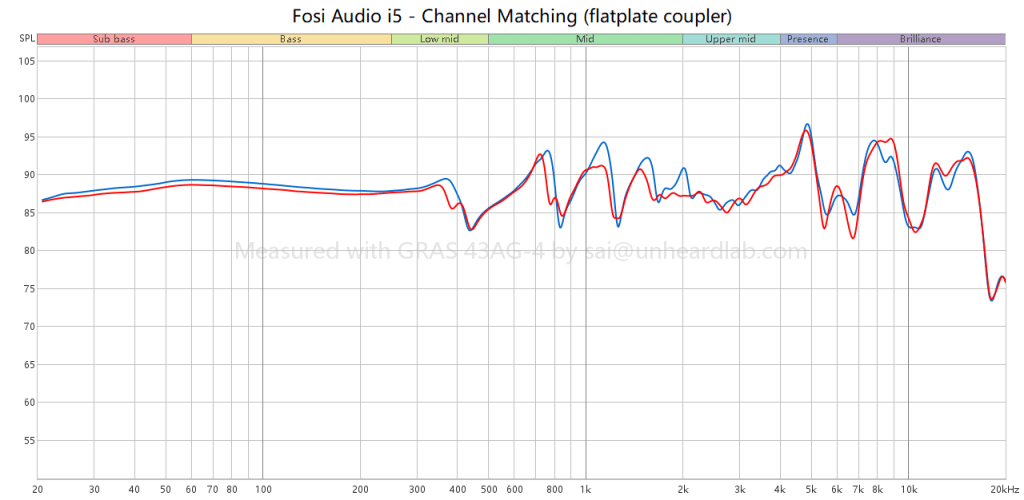
Channel matching graphs are intended for quality control checks and do not relate to the perceived sound profile. A specialised configuration is used in this test to capture differences between channels, mitigating interference from positioning on the rig and the asymmetry in the GRAS pinnae design, a legacy of KEMAR. The left (blue) and right (red) channels are measured using a flat plate coupler with an IEC60318-4 ear simulator.
Comment: Channel matching on this particular unit is good, which may contribute to imaging precision and the clarity of spatial cues.
Electric Phase & Impedance:
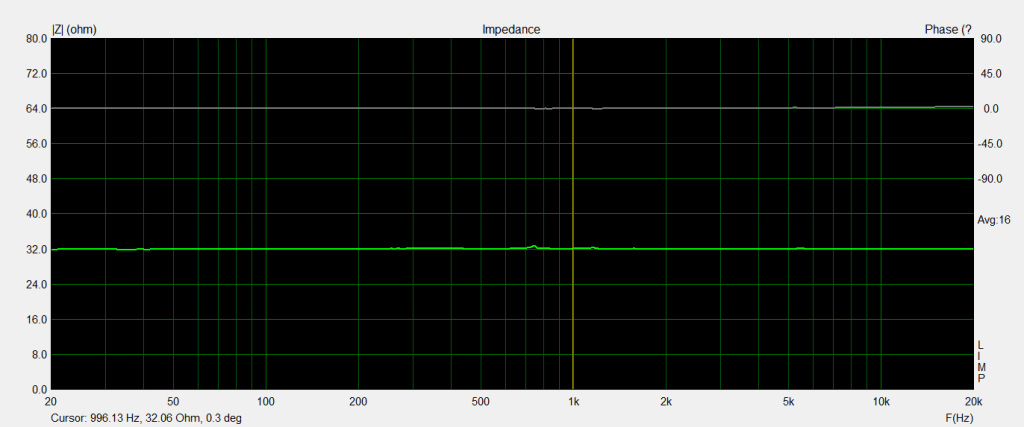
The above graph shows the measured impedance (green) and electric phase (grey), measured under free-air condition (minimal front volume coupling).
Comment: This headphone’s impedance curve is typical of a planar headphone – flat and low.
END OF THE ARTICLE
Disclaimer: This review is independent and was not sponsored or endorsed by any company or affiliated entity. All headphones reviewed are purchased for review unless otherwise stated. Any links or product references are provided for informational purposes only and are not associated with any financial compensation or affiliate arrangement.

Interesting take. I wasn’t able to find much info on the Original Voice headphones like they even existed.
LikeLike
I noticed you have squigged a couple of their headphones. How does the i5 compare to them?
LikeLike
The i5 is very close in presentation to the CS97M. The main difference is that with the i5 you also get the option of the bass seal rings from Fosi. That gives you a bit of flexibility if you want subbass presence. Compared to the older Original Voice models I’ve heard or owned, like the 972 Pro, I’d take the i5 over them. It feels more refined overall, without the quirks those earlier headphones sometimes had.
LikeLike
Nice review! Thank you for introducing us to rare boutique makers!
LikeLike
Thanks – always fun checking out unheard of stuff hehe.
LikeLike
Great review! How would you compare the Edition XV to the Fosi i5 (with and without the sealing ring)? I’m looking for the most impactful bass on hip-hop and pop beats, and relaxed upper mids and top end for metalcore songs with high-pitched vocals.
Example songs:
Gyatt – Latto & Ice Spice
Sports car – Tate McRae
The Bomb Dot Com V2.0 – Sleeping With Sirens
LikeLike
Hey there, thanks for leaving the tracks for reference. I notice that those songs contain quite a bit of bass, mainly in the lower-mids of the bass region. And yeah, I can see why you would want a relaxed upper mids presentation, as the tracks seem to be mixed with forward vocals and a bit of spice in the sibilance range.
I’d recommend the Edition XV for these genres. They are smoother overall while still having impactful, robust bass. The i5 isn’t bad, but in my opinion, it is not as suited to these songs and genres. They are more suited to stuff like vocal jazz and country.
LikeLike
Thank you very much. The Fiio FT1 Pro sounds smooth overall for me, but a bit bass lite. So I got the Meze 105 AER which has a satisfying amount of bass for me, but in turn sounds really sibilant to me, even metallic I would say. I don’t know if I got a faulty unit or if I’m sensitive to some boosted frequency on the AER, but I never experienced this before. I’ll try the XV. Thank you very much!
LikeLike
Yeah, planars are known more for that rumbly bass extension than for sheer slam and weight quality. I haven’t actually heard the 105 AER myself, but the sibilance issue you’re describing seems to be a common complaint about it. Hope you enjoy the XV!
LikeLike